Flatness and weldability are critical quality indicators for Mild Steel Plate—directly impacting structural integrity, fabrication efficiency, and long-term performance in applications ranging from I beam vs H beam frameworks to electrical conduit galvanized installations. As a trusted Structural Steel Manufacturer & Exporter from China, Hongteng Fengda ensures consistent plate flatness and superior weldability through precision rolling, controlled cooling, and strict adherence to ASTM A106 Gr B and other international standards. Whether you're a project manager specifying angle stainless steel, a procurement specialist sourcing steel wire galvanized components, or a quality controller verifying compliance, understanding these factors helps mitigate rework, optimize welding parameters, and ensure seamless integration across construction and industrial projects.
What Manufacturing Processes Influence Flatness?
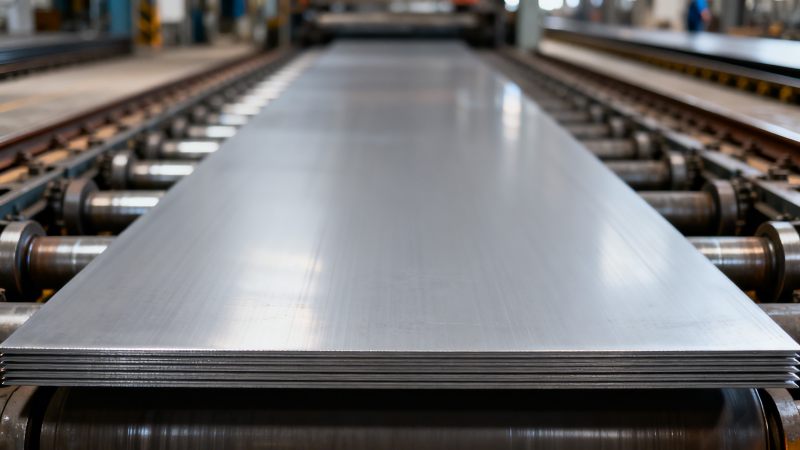
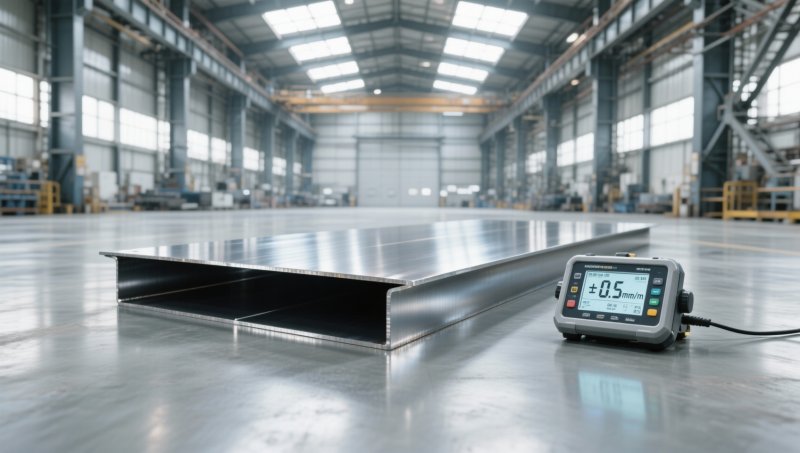
Flatness deviation in mild steel plate is rarely random—it reflects precise control (or lack thereof) across three key production stages: hot rolling, cooling, and leveling. At Hongteng Fengda, we maintain flatness tolerances within ±0.5mm per meter for plates up to 20mm thick, achieved via computer-controlled roll gap adjustment and real-time thermal profiling during hot rolling.
Controlled cooling is equally decisive. Uneven heat dissipation causes differential contraction—especially problematic in thicker sections (>16mm). Our air-cooling beds feature segmented airflow zones calibrated to match plate width and thickness profiles, reducing residual stress by up to 35% compared to conventional batch cooling.
Final leveling uses multi-roll straightening machines with hydraulic force feedback systems. Each pass adjusts roll pressure dynamically based on incoming plate curvature data, ensuring flatness consistency across batches—even under high-volume production (up to 12,000 tons/month).
How Chemical Composition Affects Weldability
Weldability depends heavily on carbon equivalent (CE), which combines the influence of C, Mn, Si, Cr, Mo, V, Ni, and Cu. For standard mild steel (ASTM A36), CE must remain ≤0.40 to avoid cracking risks during SMAW or GMAW. Exceeding this threshold increases susceptibility to hydrogen-induced cracking—particularly in low-temperature environments (e.g., <5°C ambient or sub-zero service conditions).
Hongteng Fengda’s certified mill test reports include full chemical analysis per EN 10204 3.1, with CE values reported for every heat. We also offer S355-grade Tube Carbon Steel variants such as S355J2H and S355K2H—engineered with optimized Mn/Si ratios and ≤0.020% sulfur to support high-deposition welding at speeds up to 80 cm/min without porosity or spatter.
Notably, phosphorus content above 0.025% can degrade notch toughness in welded joints after post-weld heat treatment (PWHT) at 600–650°C. Our S355J0H and S355JRH grades maintain P ≤0.020%, validated through Charpy V-notch testing at −20°C, 20°C, and +40°C.
Key Weldability Parameters for Structural Steel Plates
This table highlights how tightly controlled chemistry translates into predictable field performance—critical when welding structural members for bridges, power station equipment, or lifting machinery where failure modes are non-negotiable.
Why Surface Condition Matters Beyond Visual Inspection
Surface scale, mill oil residue, and localized rust spots may appear cosmetic—but they directly affect arc ignition, shielding gas coverage, and fusion depth. Mill scale thicker than 50μm disrupts current flow in SMAW and increases spatter by 20–30%. Even light oil films (≥0.5 g/m²) cause porosity in GTAW root passes—especially in pipe welding for pipeline engineering or chemical plant installations.
Our plates undergo mandatory shot blasting (Sa 2.5) before packaging, achieving surface roughness Ra = 2.5–4.0 μm—optimal for both mechanical adhesion and uniform primer application. This process removes >99.8% of mill scale while preserving dimensional accuracy within ±0.1mm tolerance.
For clients requiring ultra-clean surfaces—such as those fabricating vessels or high-purity process piping—we offer optional alkaline cleaning and passivation, verified via water-break tests and chloride ion testing (<1 ppm Cl⁻).
How to Verify Flatness & Weldability Before Procurement
Procurement teams should request four verifiable documents before placing orders:
- Mill Test Report (EN 10204 3.1) listing actual CE, S, P, and O contents—not just nominal ranges
- Flatness certification per EN 10029:2013, specifying measurement method (e.g., gap-under-rule at 1m intervals) and max deviation
- Charpy impact test results at specified temperatures (−20°C minimum for cold-region projects)
- Welding procedure qualification records (WPQR) for common processes (SMAW, GMAW, FCAW) using your exact base metal thickness and joint design
At Hongteng Fengda, all export shipments include digital access to these files via our secure portal—available within 24 hours of production completion. Lead time for standard sizes is consistently 7–15 days; custom configurations (e.g., specific S355J2H rectangular tube at 200×300×8mm) require 3–4 weeks with advance planning.
Why Partner With Hongteng Fengda for Structural Steel Solutions?
When sourcing mild steel plate—or complementary products like Tube Carbon Steel—you need more than material specs. You need traceability, predictability, and technical partnership. We provide:
- Real-time production tracking with milestone alerts (rolling start, cooling cycle end, leveling verification)
- Pre-shipment dimensional inspection reports—including flatness mapping for plates >3m length
- On-demand welding parameter guidance (voltage, wire feed speed, travel rate) tailored to your shop’s equipment and joint geometry
- Full compliance with ASTM, EN, JIS, GB, ASME, and BS standards—with third-party inspection options (SGS, BV, TÜV)
Whether you’re evaluating alternatives to angle stainless steel, comparing round vs square tube performance in machinery manufacturing, or validating corrosion resistance for offshore platforms—our engineers collaborate directly with your technical and procurement teams to align specifications, reduce iteration cycles, and accelerate project timelines.
Contact us today to request mill test samples, review weldability data sheets for your exact grade and thickness, or schedule a virtual factory audit. Let’s build reliability—plate by plate, weld by weld.
Please give us a message


Please enter what you want to find