Hot dip galvanized coil is widely used in structural steel applications—from angle steel and steel metal angle to carbon steel pipe stockist projects—thanks to its robust corrosion resistance. But what affects the corrosion resistance of hot dip galvanized coil? Factors like base steel grade (e.g., DX51D steel), zinc coating thickness, surface cleanliness, and post-treatment processes all play critical roles. For engineers, procurement teams, and project managers evaluating materials for construction or industrial use, understanding these variables ensures optimal performance, longevity, and compliance with ASTM/EN/GB standards. As a trusted structural steel manufacturer & exporter, Hongteng Fengda delivers high-quality hot dip galvanized coil alongside steel angle bending solutions and 304L stainless steel pipe—supporting safe, cost-effective, and code-compliant project execution worldwide.
Key Technical Factors Influencing Corrosion Resistance
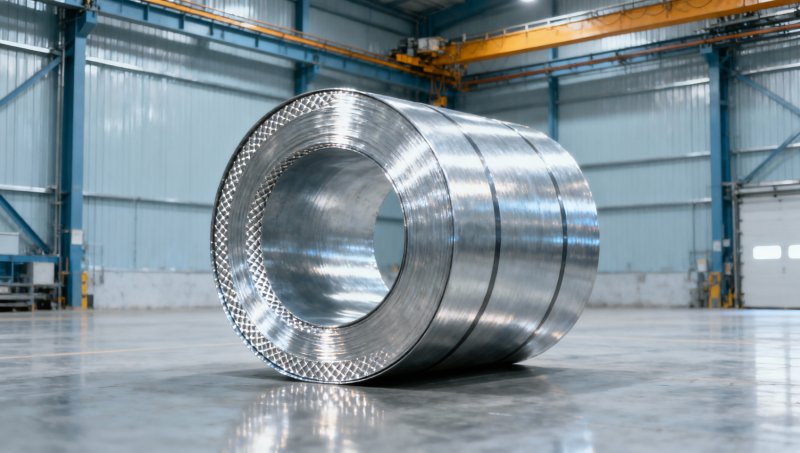
Corrosion resistance in hot dip galvanized coil is not inherent—it’s engineered through precise control of metallurgical, mechanical, and process variables. The zinc-iron intermetallic layer formed during galvanizing acts as both a physical barrier and an electrochemical sacrificial anode. Its effectiveness depends on five interdependent factors: base steel composition, surface preparation quality, galvanizing bath temperature (typically 445–465°C), immersion time (usually 3–8 minutes), and post-dip cooling rate.
For structural steel manufacturers, consistency starts at the substrate. Low-carbon steels like DX51D (Fe–0.12%C max) ensure uniform zinc adhesion and minimal spangle variation. High-silicon or phosphorus content (>0.04% Si or >0.02% P) can trigger Sandelin effect—leading to excessive, brittle Fe–Zn alloy growth that reduces ductility and accelerates white rust formation in humid storage.
Zinc coating mass is directly tied to service life: per ISO 1461, 275 g/m² (≈38 µm single-side) provides 20–25 years in rural atmospheres but only 5–8 years in coastal or industrial zones. At Hongteng Fengda, we maintain ±10 g/m² tolerance across coil widths up to 1,500 mm using real-time X-ray fluorescence (XRF) monitoring—ensuring every batch meets ASTM A653/A924 or EN 10346 requirements before shipment.
Critical Process Parameters & Their Impact
This table reflects real-world production data from our ISO 9001-certified galvanizing line. We validate each parameter against EN 10346 Annex B and conduct salt spray testing (ASTM B117) for 96 hours minimum—ensuring no red rust appears on cut edges or bent specimens. That level of rigor supports global buyers who need predictable field performance—not just lab-passed certifications.
How Application Environment Dictates Material Selection
A coil rated for 25-year service in inland Germany may fail within 3 years near Dubai’s Jebel Ali Port. Environmental aggressiveness determines which protective strategy applies—and whether hot dip galvanizing alone suffices. We classify exposure into four tiers per ISO 9223: C1 (low, indoor), C2 (moderate, urban), C3 (high, coastal/industrial), and C4/C5 (very high, offshore/chemical plants).
In C3 and above zones, we recommend dual-protection systems: hot dip galvanized coil + epoxy primer (e.g., for steel beams in wastewater treatment plants) or hot dip galvanized coil + Stainless Steel Welded Mesh for filtration layers exposed to chloride-laden air. Our 304L stainless steel pipe and welded mesh products are routinely specified together in Middle Eastern desalination projects where galvanized structural framing interfaces with stainless filtration media.
For architectural applications requiring aesthetic longevity—such as façade supports in Singapore—the zinc coating must be supplemented with passivation (chromate or trivalent chromium) to suppress wet storage stain. At Hongteng Fengda, this is applied inline with ≤2 g/m² weight gain, verified via ASTM B622 conductivity testing before coiling.
Procurement Checklist: 5 Non-Negotiable Verification Points
When sourcing hot dip galvanized coil for structural use, procurement teams and technical evaluators must verify beyond mill certificates. These five checkpoints prevent costly rework or premature failure:
- Coating mass verification via cross-section SEM analysis—not just gravimetric test reports
- Batch traceability to heat number, galvanizing date, and operator ID (required for ASTM A653 Section 11)
- Bend test results: 180° around mandrel diameter = 2× sheet thickness, zero cracking per EN 10346 Table 7
- Surface cleanliness: <10 mg/m² oil residue (verified by ASTM D2240 solvent wipe test)
- Packaging compliance: VCI paper wrapping + desiccant packs for shipments >30 days transit time
We provide full third-party inspection support (SGS/BV/TÜV) at loading ports and issue digital COA with QR-coded batch data—reducing procurement cycle time by 3–5 business days versus traditional paper-based verification.
Why Global Projects Choose Hongteng Fengda for Galvanized Structural Steel
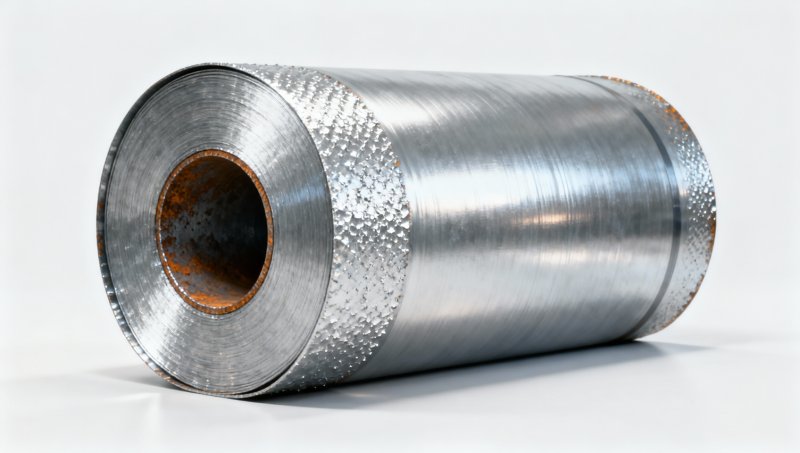
As a structural steel manufacturer & exporter from China, Hongteng Fengda bridges the gap between international compliance and scalable production. Our 120,000-ton annual galvanizing capacity serves over 42 countries—with average lead time of 25–35 days for standard orders and 45–60 days for OEM-spec coils (e.g., custom tensile strength or edge conditioning).
Unlike commodity suppliers, we embed engineering support in every order: free coating thickness modeling for your specific environment, ASTM/EN/GB cross-reference reports, and dimensional validation on coordinate measuring machines (CMM) for critical bends. For distributors and EPC contractors, we offer consignment stock programs in Rotterdam, Dubai, and Houston—reducing landed cost by 7–12% through optimized logistics and duty management.
Ready to align your next structural steel order with proven corrosion performance? Contact us for: (1) Customized zinc coating mass recommendations based on your project location and design life, (2) Full compliance documentation package (including EN 10204 3.2), (3) Sample coil with certified test reports, or (4) Joint review of bending/forming parameters to avoid coating fracture during fabrication.
Please give us a message


Please enter what you want to find