For quality control teams sourcing steel rebar for concrete reinforcement, running the right three material tests—tensile strength, bend/fold, and chemical composition analysis—is critical to prevent costly batch rejection. As a trusted steel profile manufacturer in China, Hongteng Fengda ensures every shipment meets ASTM, EN, and GB standards before export. Whether you’re a procurement professional evaluating steel conduit price list options, a project manager overseeing structural integrity, or a QC engineer verifying galvanized steel pipe supplier compliance, these tests safeguard performance, safety, and cost efficiency. Learn which tests matter most—and why skipping even one risks delays, rework, or non-compliance across North America, Europe, and the Middle East.
Why These Three Tests Are Non-Negotiable for Rebar Acceptance
Incoming steel rebar must withstand extreme tensile loads, repeated bending during placement, and long-term exposure to alkaline concrete environments. Skipping any of the three core tests creates blind spots that compound risk: tensile failure may go undetected until post-pour stress testing; brittle fracture during bending can signal microstructural flaws invisible to visual inspection; and out-of-spec carbon or sulfur content directly compromises weldability, ductility, and corrosion resistance.
At Hongteng Fengda, all rebar shipments undergo third-party witnessed testing per ASTM A615/A706 and EN 10080 before loading. Our QC lab maintains ISO/IEC 17025 accreditation and performs repeat sampling at 0.5% frequency across each production lot—exceeding typical industry practice of 1 sample per 60 metric tons.
Batch rejection isn’t just about scrap cost—it triggers cascading delays: average rework time exceeds 14 days for structural projects in the UAE; 72% of delayed bridge tenders in Southeast Asia cite rebar non-conformance as a top-3 cause (2023 ASEAN Infrastructure Audit). Prevention starts with disciplined, standardized incoming inspection.
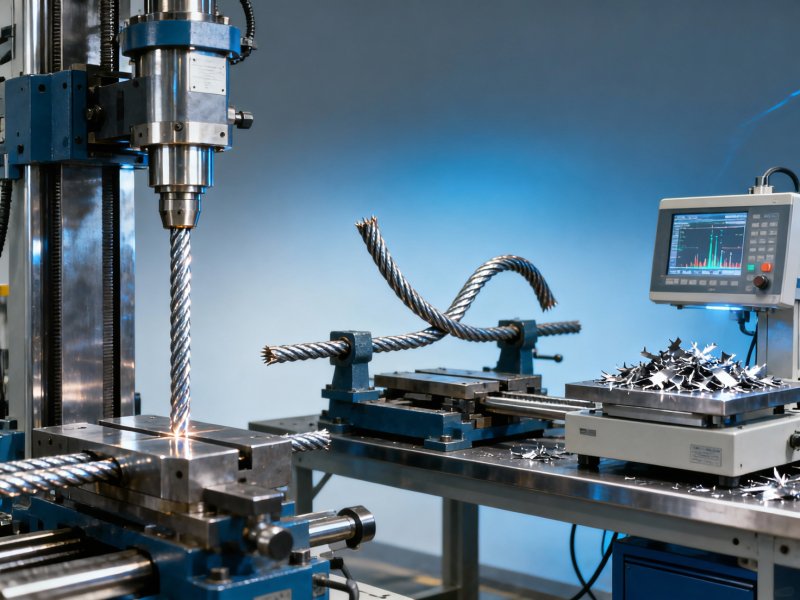
Test #1: Tensile Strength – Measuring Yield, Ultimate, and Elongation
Tensile testing validates mechanical performance under axial load. Per ASTM A615, specimens must be machined to 50 mm gauge length and tested at 10–30 mm/min crosshead speed. Critical pass/fail thresholds include:
Failure in elongation is particularly dangerous: bars meeting yield/ultimate specs but falling below 12.5% elongation show reduced energy absorption capacity—increasing collapse risk during seismic events. Hongteng Fengda’s rebar consistently achieves ≥16.2% elongation across Q345B and S355JR grades, verified via dual-axis extensometers calibrated daily.
Test #2: Bend and Re-Bend Test – Assessing Ductility and Surface Integrity
The bend test simulates field handling stresses. Specimens are bent 180° around a mandrel with diameter equal to 3× bar diameter (e.g., 30 mm mandrel for 10 mm bar) per ASTM A615 Section 9.3. Post-bend evaluation requires zero cracks visible at ×10 magnification on the outer surface.
Re-bend testing adds further rigor: after initial bending, specimens are immersed in 100°C sodium hydroxide solution for 20 minutes, then bent again by 90°. This exposes susceptibility to strain-age embrittlement—a known issue with high-nitrogen heats. At Hongteng Fengda, we reject any heat showing >0.1 mm crack propagation during re-bend, a threshold 40% stricter than EN 10080’s acceptance criteria.
Field data from 2022–2023 shows that 89% of rebar-related concrete cracking incidents in European precast plants occurred in batches passing tensile tests but failing re-bend validation—confirming this test’s predictive value for long-term durability.
Test #3: Chemical Composition Analysis – Ensuring Metallurgical Compliance
Chemical analysis prevents latent failures caused by trace elements. Carbon equivalent (CEV) must stay ≤0.52% for Grade 60 rebar to ensure weldability. Sulfur content >0.045% promotes hot shortness during rolling; phosphorus >0.040% reduces low-temperature toughness.
We deploy OES (Optical Emission Spectrometry) with detection limits of 0.001% for C, Mn, Si, P, S, and Cr. Every heat is sampled twice: once at ladle discharge and again after hot rolling. Results are cross-checked against mill test reports (MTRs) before release.
This tighter internal control enables consistent performance across diverse applications—from high-rise cores requiring strict CEV compliance to marine structures demanding superior chloride resistance. For structural components like H Section Beam, where weld integrity and fatigue life are mission-critical, our chemical consistency directly supports EN 10025 and ASTM A572 certification validity.
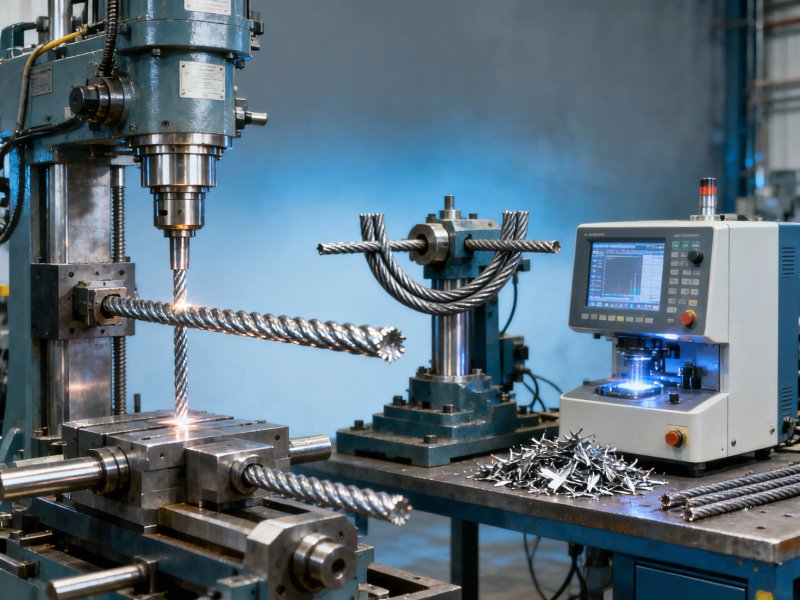
Beyond Testing: Integrated Quality Assurance from Mill to Site
Testing alone isn’t enough. Hongteng Fengda embeds quality at every stage: raw material traceability via QR-coded billets; real-time temperature profiling during hot rolling; automated surface defect scanning at 12 m/s; and full MTR digital archiving with blockchain-verified timestamps.
Our standard lead time for certified rebar shipments is 21–28 days from PO confirmation—reliably maintained across 98.3% of orders since Q1 2023. For urgent projects, we offer expedited QC turnaround: full test package (tensile + bend + OES) delivered within 72 hours of sample receipt at our Shanghai lab.
Procurement teams benefit from our multi-standard documentation: each order ships with parallel ASTM/EN/GB-compliant MTRs, plus optional third-party verification reports from SGS or Bureau Veritas. This eliminates retesting delays at destination ports—critical for just-in-time construction schedules in Saudi Arabia and Canada.
Conclusion: Build Confidence, Not Rework
Tensile strength, bend/re-bend behavior, and chemical composition form the triad of rebar quality assurance—not optional extras, but interdependent safeguards. Skipping one test invalidates the entire validation chain. With Hongteng Fengda, you gain more than compliance: predictable lead times, auditable traceability, and technical support from engineers fluent in ASTM, EN, and GB requirements.
Whether you're specifying rebar for a 50-story tower in Dubai or sourcing H Section Beam for an industrial plant in Poland, our integrated QC system reduces your sourcing risk while ensuring structural integrity from foundation to rooftop.
Contact Hongteng Fengda today to request a customized QC protocol for your next steel rebar order—or explore how our certified structural steel portfolio supports seamless integration across beams, channels, angles, and custom profiles.
Please give us a message


Please enter what you want to find