A strong structural steel connection is the foundation of safe, efficient, and durable construction. Whether you are planning structural steel erection, comparing structural steel properties, or evaluating a reliable structural steel manufacturer, understanding connection strength helps reduce risk, control cost, and improve project performance. This article explores the key factors that influence structural steel connection quality and why they matter in real-world applications.
For engineers, fabricators, procurement teams, and project owners, connection performance is rarely a minor detail. In many projects, beams, columns, bracing members, and cold formed steel profiles may each meet specification, yet the total structure can still underperform if the joints are poorly designed, incorrectly fabricated, or inconsistently installed. That is why connection quality often becomes a deciding factor in safety reviews, construction speed, inspection results, and long-term maintenance cost.
From workshop fabrication to offshore shipment and on-site erection, structural steel connections must work under real conditions: variable loads, vibration, corrosion risk, dimensional tolerances, and project deadlines. For global buyers sourcing from China, a dependable supplier should not only provide compliant steel products under ASTM, EN, JIS, or GB standards, but also support practical connection solutions that match design intent and site execution.
Why Connection Strength Matters Beyond Member Capacity
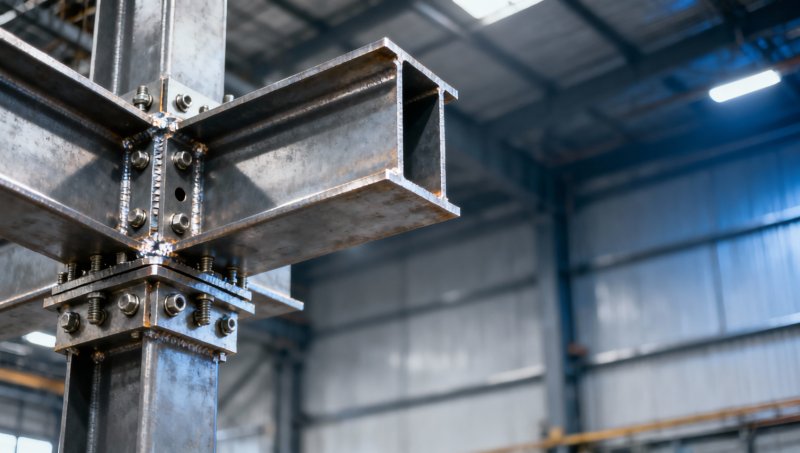
A structural steel member may have high yield strength, stable geometry, and acceptable surface quality, but the system still depends on the connection to transfer force. In practical terms, a connection must safely transmit axial load, shear, bending moment, or a combination of all three. If the joint is weak, the full capacity of the steel section cannot be used, and the design reserve may disappear much earlier than expected.
In industrial buildings, warehouses, workshops, and multi-story frames, connection failure can begin with small issues: bolt slippage, poor hole alignment, insufficient weld throat, distortion from heat input, or inadequate stiffening. These are not abstract risks. Even a 2 mm to 3 mm fabrication deviation in critical fit-up areas can slow erection, create field rework, and increase crane time, labor cost, and safety exposure.
Strong connections also improve schedule reliability. When connection details are standardized and fabrication tolerances are controlled, site teams can erect steel faster, often reducing assembly interruptions over a 7-day to 21-day erection window for mid-sized building packages. For procurement managers, this means fewer claims, fewer replacement parts, and more predictable installation sequencing.
Load Transfer, Stability, and Service Life
The strongest structural steel connection is not simply the heaviest one. It is the connection that matches the design load path, stiffness requirement, and service environment. A pinned connection, for example, may work well in one braced frame, while a moment connection is necessary in another where rotation control is essential. Overdesign can waste steel and fabrication hours, while underdesign can create fatigue or deformation problems in 3 to 5 years instead of the intended service period.
Connection performance is also linked to inspection and maintenance. Bolted joints usually allow easier field verification, while welded joints may demand stricter preheating, qualified procedures, and post-fabrication checks. In coastal, humid, or chemically exposed environments, corrosion protection at joints becomes especially important because moisture tends to remain around overlaps, edges, and discontinuities.
The table below shows how connection quality influences the broader project outcome, not only the strength of a single joint.
The key takeaway is clear: connection strength is a system issue. It affects installation productivity, compliance, structural behavior, and lifecycle cost. Buyers comparing suppliers should therefore assess not only steel grades and section sizes, but also how the manufacturer controls connection-related fabrication and inspection details.
Core Elements of a Strong Structural Steel Connection
A strong connection begins with correct engineering logic and continues through fabrication, coating, packing, and installation. In most structural steel projects, five variables have the greatest influence: connection type, material compatibility, dimensional accuracy, workmanship, and environmental protection. If one of these is neglected, the joint may pass a drawing review but still perform poorly in service.
Connection type must match the actual load case. Common choices include bolted shear connections, end-plate connections, welded moment joints, gusset plate bracing connections, and base plate assemblies. For repetitive industrial buildings, bolted connections often reduce site welding and can improve erection efficiency by 10% to 20% compared with field-intensive welding approaches, depending on access and crew experience.
Material compatibility is equally important. The plate, beam, angle steel, channel steel, or cold formed section should be suitable for the intended process. Welding a heavier section to a thinner plate without proper detailing may create heat-affected distortion. Using incompatible consumables or poor fastener grades can reduce connection reliability even if the main member is manufactured correctly.
Dimensional Control and Fabrication Accuracy
Accurate cutting, drilling, punching, beveling, and assembly are essential. In export projects, tolerance control matters because field correction on overseas sites is usually expensive. A supplier with modern equipment and strict in-process checks can keep hole positions, plate geometry, and member straightness within practical tolerances, reducing installation conflicts across dozens or even hundreds of assembled joints.
Workmanship affects both visible quality and hidden performance. Weld profile, root fusion, bolt tension, contact surface cleanliness, and flange-to-web alignment all influence joint behavior. Quality control should include material traceability, dimensional inspection, and visual checks, and where required, additional nondestructive testing on critical weld zones or load-sensitive assemblies.
Five practical checkpoints before approving production
- Confirm the connection type matches the design force: shear, axial, moment, or combined loading.
- Verify bolt grade, plate thickness, and weld size are coordinated with the steel section and standard.
- Review tolerance requirements for hole spacing, fit-up edges, and member squareness before fabrication starts.
- Check whether galvanizing, painting, or color-coated surfaces will affect welding, friction, or assembly sequence.
- Define inspection points at at least 3 stages: raw material, fabrication, and pre-shipment packing.
The mid-project interface between structural frames and building envelope components also deserves attention. In many factories, warehouses, public buildings, and agricultural structures, roof and wall systems connect to the main steel frame through purlins, girts, clips, and support brackets. When corrosion resistance and lightweight installation are priorities, buyers often evaluate roofing solutions such as Color Coated Galvalume Steel Sheet PPGL for exterior applications.
This type of sheet uses aluminized zinc steel composed of 55% aluminum, 43.3% zinc, and 1.6% silicon, with typical thicknesses from 0.2 mm to 1.2 mm and widths from 600 mm to 1250 mm. For roofing and cladding systems attached to steel frames, its high corrosion resistance, heat resistance above 300 degrees, and service life of more than 25 years under normal conditions can help protect the full structure, especially where joint areas are exposed to rain, condensation, or temperature cycling.
Design Choices: Bolted, Welded, and Hybrid Connections
There is no single connection method that fits every project. The right choice depends on structural behavior, fabrication capability, transport conditions, erection speed, site safety controls, and inspection requirements. Bolted, welded, and hybrid connections each have strengths and limitations, and experienced project teams compare them based on more than initial material cost.
Bolted connections are widely used in steel buildings because they simplify site assembly and reduce weather-sensitive field welding. They are practical for beam-to-column joints, bracing nodes, and secondary steel. High-strength bolts can provide stable performance when hole quality, pretension, and contact surfaces are properly managed. On international projects, bolted systems also make replacement and future modification easier.
Welded connections are often selected where continuity, compact geometry, or high rigidity is required. They can reduce the number of visible components, but demand stronger fabrication discipline. Heat input, weld sequence, preheating, and welder qualification become increasingly important as plate thickness rises. In some cases, hybrid connections combine shop welding with field bolting to balance precision and installation speed.
Comparison for technical and commercial evaluation
The following table helps technical assessors, purchasers, and project managers compare common connection approaches for structural steel applications.
For most B2B buyers, the decision should consider at least 4 dimensions: structural demand, fabrication complexity, field conditions, and inspection burden. A lower unit price can become more expensive if it increases field welding, site delays, or rejection rates. The best solution is usually the one that supports both structural reliability and smooth project execution from shop drawing to final handover.
Common decision errors
- Choosing welded joints only to reduce visible hardware, while ignoring site access and weather limits.
- Focusing on steel tonnage but not checking connection detailing effort, which can add hidden fabrication hours.
- Using standard connection details in corrosive environments without upgrading protective systems around joint areas.
- Approving shop drawings before confirming field equipment capacity, bolt tightening methods, and erection sequence.
A disciplined supplier helps reduce these errors by coordinating engineering review, fabrication detail checks, and practical shipping considerations. This is especially useful for cross-border procurement where rework may add 2 to 6 weeks to the project cycle.
Quality Control, Standards, and Inspection in Real Projects
Connection quality should be controlled through the full production chain, not only at the final inspection stage. For structural steel manufacturers serving North America, Europe, the Middle East, and Southeast Asia, the ability to work according to ASTM, EN, JIS, and GB requirements is valuable because projects often involve mixed documentation, local consultant review, and project-specific acceptance criteria.
A practical quality control plan usually covers 3 levels. First, raw material verification confirms section size, plate thickness, chemistry, and mechanical properties. Second, fabrication control checks cutting accuracy, hole alignment, bevel condition, and assembly dimensions. Third, pre-shipment inspection confirms marking, coating condition, packing stability, and traceability so the right parts arrive at the right installation zone.
For critical joints, inspection may include visual examination, dimensional measurement, bolt verification, and selected nondestructive methods depending on project demands. Not every project requires advanced testing on every weld, but the manufacturer should be prepared to match the specified inspection scope. For buyers, the key issue is consistency: repeated quality at scale is more valuable than isolated perfect samples.
Inspection priorities for purchasers and QC teams
The table below can be used as a practical reference when reviewing a structural steel supplier or shipment.
A good manufacturer will also support communication between engineering, production, and logistics. This matters because connection-related problems are often caused by coordination gaps rather than steel strength alone. A missing plate tag, damaged coated surface, or mixed bolt package can interrupt installation just as seriously as a fabrication defect.
Four signs of reliable process control
- Stable production capacity with repeatable procedures for standard and OEM structural steel components.
- Clear document flow covering drawings, inspection records, material traceability, and packing lists.
- Ability to coordinate multiple standards such as ASTM, EN, JIS, and GB depending on project needs.
- Responsive technical support when the buyer needs revisions, substitution review, or assembly clarification within 24 to 72 hours.
For global sourcing, these process factors are often more useful than broad claims. They help reduce sourcing risk, support predictable lead times, and protect project budgets when structural steel packages involve many connection-intensive components.
How to Select a Structural Steel Supplier for Connection Reliability
When buyers evaluate a structural steel manufacturer, they often compare price, grade, and delivery time first. Those factors matter, but they are not enough when connection quality influences the success of the entire project. A strong supplier should demonstrate manufacturing discipline, detail accuracy, and practical export support, especially for customized structural members and connection assemblies.
For project managers and decision-makers, the better question is not only “Can the supplier make the steel?” but also “Can the supplier make the steel connect correctly at the site?” This includes fit-up consistency, packing logic, identification marks, and the ability to coordinate standard specifications with customized project drawings. On large jobs, even a 1% to 2% mismatch rate can create substantial field disruption.
A manufacturer with experience in angle steel, channel steel, steel beams, cold formed profiles, and customized structural components can offer more practical support because connection behavior varies by product category. For example, thin-walled profiles may require different fastening and local reinforcement strategies than heavy rolled beams or built-up members.
Supplier evaluation checklist
Before placing an order, procurement and technical teams can use the checklist below to compare suppliers on connection-related capability rather than price alone.
For projects that also include roofing and cladding over the steel frame, it is useful to review how primary structure and envelope components work together. Lightweight, corrosion-resistant roofing sheets can reduce dead load and maintenance pressure while supporting faster installation. In these cases, product options such as wavy or trapezoidal profiles, PE/SMP/HDP/PVDF coatings, and custom RAL colors may be relevant to the overall building solution, not only the exterior appearance.
Questions that help avoid procurement mistakes
- What international standards can the supplier work with for materials and fabrication documents?
- How are customized connection plates, brackets, and OEM components checked before shipment?
- What is the typical lead time for standard sections versus project-specific fabricated assemblies, such as 2 to 4 weeks or longer?
- Can the supplier support technical clarification quickly if field teams identify a fit-up issue during erection?
A supplier that can answer these questions clearly is usually better positioned to support complex B2B projects. This is where long-term value appears: fewer installation surprises, better schedule control, and lower total project risk.
Practical FAQ for Engineers, Buyers, and Project Teams
Below are common questions that arise when evaluating structural steel connection performance in manufacturing and construction projects. These points are especially useful for information researchers, technical reviewers, safety teams, and commercial evaluators who need actionable guidance rather than general descriptions.
How do I know if a connection design is strong enough for my project?
Start by matching the connection to the actual force demand and service condition. A strong connection should be checked for load type, deformation limits, fabrication feasibility, and corrosion exposure. In practical procurement terms, ask whether the supplier can provide clear drawings, material matching, and inspection records for the exact joint type rather than only for the main steel member.
Are bolted connections always better than welded connections?
Not always. Bolted joints are usually easier to install and inspect on site, especially when schedules are tight and weather conditions are variable. Welded joints can be more suitable where continuity, stiffness, or compact detailing is required. The better choice depends on at least 4 factors: structural function, workshop capability, site conditions, and inspection resources.
What should procurement teams check before ordering connection-intensive steel packages?
Review material standards, tolerance control, drawing approval flow, inspection steps, and packing logic. Also check whether related building materials, such as roof and wall sheets, are compatible with the structural system. For example, if the project uses lightweight coated roofing, confirm how purlins, clips, fasteners, and drainage details connect back to the main frame.
How can project teams reduce connection problems during erection?
The most effective approach is early coordination. Approve drawings carefully, confirm erection sequence, verify bolt packages, and inspect marking before shipment. On site, keep a 3-step control routine: receiving inspection, trial fit confirmation at critical zones, and final tightening or weld verification. This reduces avoidable delays and supports safer assembly.
Strong structural steel connections are created through the combined effect of sound design, suitable materials, accurate fabrication, controlled inspection, and reliable project coordination. For buyers and project teams, the safest approach is to evaluate the whole connection process rather than focusing only on steel section strength or unit price.
Hongteng Fengda supports global construction, industrial, and manufacturing projects with structural steel products, customized components, and practical supply solutions built around stable production, consistent quality, and dependable lead times. If you are comparing suppliers, reviewing connection details, or planning a new steel project, now is a good time to get technical input before fabrication begins.
Contact us today to discuss your drawings, request a customized structural steel solution, or learn more about connection-ready products for your next project.
Please give us a message


Please enter what you want to find