Welding stainless steel tubing cleanly is often more demanding than many buyers expect, especially when appearance, corrosion resistance, and dimensional accuracy all matter. For technical evaluators, the main issue is not whether stainless can be welded, but why some tubing welds consistently while other batches create discoloration, distortion, sugaring, or rework. In most cases, weld difficulty comes from a combination of material chemistry, surface condition, heat control, joint design, shielding quality, and fabrication discipline.
For projects where tubing will be visible, carry fluid, resist corrosion, or fit into tight assemblies, these factors should be assessed early. A clean-looking weld is also a technical quality signal. It often reflects better process control, lower contamination risk, and more stable downstream performance.
Why Stainless Steel Tubing Often Shows Welding Problems Faster Than Carbon Steel
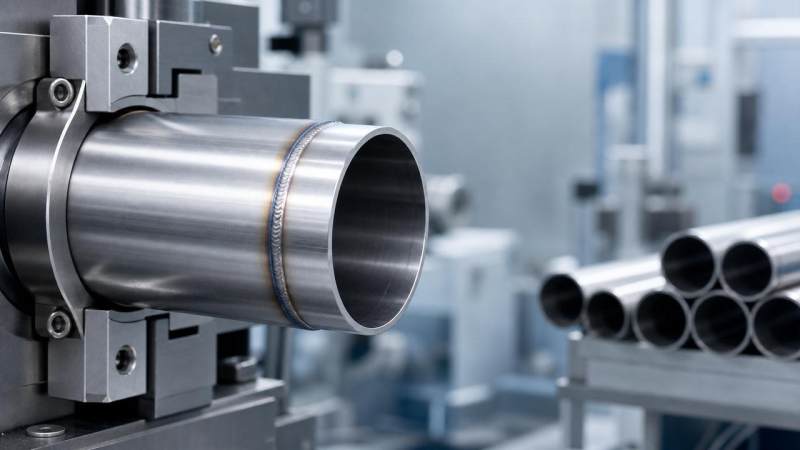
Stainless steel tubing is less forgiving than ordinary carbon steel because its performance depends heavily on surface integrity and microstructure. The chromium-rich oxide layer that gives stainless its corrosion resistance can be damaged by poor welding practice, excessive heat, or contamination.
With tubing, the challenge becomes greater because wall thickness is often relatively thin, heat buildup occurs quickly, and round or shaped sections are easier to distort. A plate or heavy section may absorb heat without obvious shape change, but tubing can ovalize, warp, or discolor after a short weld cycle.
Technical evaluators should also note that tubing applications usually impose higher visual and dimensional expectations. In food equipment, architectural systems, process lines, medical components, and precision frames, weld appearance and inside-surface quality may be as important as strength.
That is why stainless steel tubing can seem harder to weld cleanly: defects become visible sooner, tolerance loss happens faster, and poor process control directly affects both aesthetics and service life.
Material Grade Differences Can Change Weld Behavior Significantly
Not all stainless grades respond the same way to welding. Austenitic grades such as 304 and 316 are generally considered weldable, but even these require careful heat input and shielding. Ferritic, martensitic, and duplex grades each introduce different concerns related to cracking, toughness, or phase balance.
Grade selection matters because alloy composition affects thermal conductivity, thermal expansion, oxidation tendency, and sensitization risk. Stainless steel generally has lower thermal conductivity than carbon steel, so heat stays more concentrated in the weld area. At the same time, many stainless grades expand more during heating, which increases distortion.
For example, 316 and 316L are often preferred where corrosion resistance is critical, but they still demand proper shielding and purge protection if a clean root is required. Low-carbon “L” grades help reduce carbide precipitation, which can improve corrosion performance after welding.
By contrast, lower-cost stainless options may be suitable for some fabricated parts, but they can behave differently during heat exposure and finishing. In related stainless product categories, buyers often compare formability, strength, and cost tradeoffs. For reference, 316L Stainless Square steel rod is commonly evaluated alongside 201-grade stainless products in applications where forming, pressure resistance, and standards compliance must be balanced against budget and environment.
For technical assessment, the key point is simple: if the alloy is chosen mainly by purchase price without considering weld response and final service conditions, fabrication quality may become harder to control.
Thin Walls and Tubular Geometry Make Heat Control More Difficult
One of the biggest reasons stainless steel tubing is harder to weld cleanly is geometry. Tubing usually has thinner walls than structural sections, and the curved profile changes how heat spreads around the joint. This creates a narrow process window between incomplete fusion and overheating.
Excessive heat input can cause burn-through, excessive bead width, tinting, distortion, and internal oxidation. Too little heat can cause lack of penetration, poor fusion, or an unstable bead profile. Because the wall thickness is limited, small parameter changes have a large effect.
Round tubing also complicates fit-up and torch positioning. If the joint gap varies around the circumference, the welder or automated process must continuously adjust. Inconsistent root opening leads to inconsistent penetration, which is especially problematic in sanitary or pressure-related applications.
Square and rectangular tubing may be easier to fixture in some setups, but corners can still create localized heat concentration. Technical evaluators should verify whether the supplier has appropriate fixtures, orbital systems, purge methods, and distortion control plans for the specific tube geometry.
Surface Contamination Is a Major Cause of Dirty or Discolored Welds
Many “welding problems” in stainless steel tubing are actually contamination problems. Stainless surfaces can be affected by oil, shop dust, adhesive residue, moisture, marking compounds, and especially embedded iron from carbon steel tooling or storage areas.
During welding, these contaminants burn, react, or become trapped in the weld zone. The result may be porosity, excessive spatter, unstable arc behavior, visible staining, or reduced corrosion resistance near the joint. Even fingerprints can matter in high-finish applications.
Clean welding therefore starts before the arc is struck. Dedicated stainless handling tools, clean storage, protective packaging, and surface preparation all influence the result. If tubing arrives with scale, scratches, rough cut ends, or inconsistent finish, fabrication quality becomes harder to maintain.
For buyers evaluating suppliers, this is an important checkpoint. Ask whether stainless products are segregated from carbon steel processing, whether finishing and passivation procedures are controlled, and whether internal tube surfaces are protected before welding.
Shielding Gas and Back Purging Strongly Affect Weld Cleanliness
When people ask why stainless steel tubing is hard to weld cleanly, shielding quality is often part of the answer. Stainless reacts readily with oxygen at welding temperatures. If shielding is insufficient, discoloration appears on the outside, and sugaring or heavy oxidation forms on the inside.
External shielding gas helps protect the weld pool, but tubing usually also needs internal purge gas when root quality matters. Without proper back purging, the inside surface can oxidize severely. That oxidation is not only cosmetic. It can reduce corrosion resistance, trap contamination, and create flow disturbance.
Purge failure may come from leaks, poor sealing, excessive gas flow, inadequate purge time, or process shortcuts. Technical evaluators should not assume that a visually acceptable outside weld means the inside is also clean. For many tubing systems, internal inspection or borescope verification is valuable.
Gas selection and flow stability also matter. Argon is common, but application requirements may call for different mixtures or more precise control. A supplier with consistent tube welding capability should be able to explain purge setup, oxygen targets, and acceptance criteria.
Heat Tint Is More Than an Appearance Issue
Heat tint is the discoloration that appears around a stainless weld after exposure to elevated temperatures. It can range from light straw to dark blue or black. Many buyers treat it as a cosmetic issue, but for technical evaluators it should be considered a process quality indicator.
Darker tint usually suggests higher oxidation and less effective shielding. That means the protective chromium oxide condition at the surface has been altered, and corrosion resistance in that area may be lower unless appropriate post-weld cleaning and passivation are performed.
On visible architectural tubing, heat tint may trigger rejection because appearance matters. In chemical, marine, or hygienic environments, it may also signal a service-life concern. Therefore, weld cleanliness should be defined by end-use requirements, not by appearance alone.
Acceptance standards should address the allowable tint level, internal oxidation condition, and whether pickling, electropolishing, or passivation is required after welding. This helps avoid disputes between purchasing, fabrication, and installation teams.
Fit-Up Quality and Tube Tolerance Have a Direct Effect on Weld Results
Even skilled welding cannot fully compensate for poor tubing consistency. If wall thickness varies, ends are not square, outside dimensions drift, or straightness is unstable, the joint becomes difficult to align and repeat. That increases cycle time and raises defect risk.
In stainless steel tubing, clean welds depend on predictable root gap, consistent edge condition, and stable clamping. Irregular fit-up causes the weld pool to behave differently around the joint, especially in automated or orbital welding where repeatability is essential.
This is why technical evaluators should look beyond material certificates. Tube dimensional tolerance, cut quality, seam condition, and surface finish all influence weldability. A lower-priced tube with broader tolerance may increase total fabrication cost through rework, slower setup, and more scrap.
Reliable suppliers understand that weldability is partly built into the product before fabrication begins. Strong production control, standards compliance, and consistency from batch to batch can reduce welding variability significantly.
Welding Process Selection Also Determines How Cleanly Tubing Can Be Joined
Different welding methods produce very different outcomes on stainless steel tubing. TIG welding is commonly preferred for clean, precise results, especially on thin-wall tubing and applications with visible or corrosion-sensitive joints. Orbital TIG can improve consistency further for repeat production.
Laser welding may offer low heat input and reduced distortion in some applications, but equipment cost, joint preparation, and process qualification requirements are higher. MIG can be productive, yet it may not deliver the same level of cleanliness or appearance control for fine tubing work.
Resistance welding and other specialized processes may be appropriate in certain manufacturing lines, but they also require precise material control. The right process depends on wall thickness, joint configuration, finish expectations, production volume, and service environment.
Evaluators should therefore ask not only whether a supplier can weld stainless steel tubing, but which process they use, why they use it, and what defect controls support that process.
Post-Weld Cleaning and Finishing Are Often Necessary, Not Optional
Even a well-made stainless tube weld may need post-weld treatment. Depending on the application, this can include mechanical cleaning, chemical pickling, passivation, polishing, or electropolishing. These steps help restore surface condition and improve corrosion performance.
If post-weld cleaning is ignored, residual oxide, embedded contaminants, and rough surface areas may remain. In corrosive or hygienic environments, those areas can become early failure points. In decorative applications, they may simply fail appearance inspection.
Buyers should confirm whether the supplier’s quotation includes these finishing steps or assumes raw weld condition is acceptable. The difference can materially affect both price comparison and final performance. A low initial fabrication cost may conceal a higher finishing burden later.
Where stainless components interface with broader structural assemblies, this planning is especially important. A manufacturer serving international standards-based projects should be able to align fabrication and finishing methods with the end-use requirement rather than offering a generic weld only.
How Technical Evaluators Can Assess Risk Before Approving a Supplier
For technical evaluators, the practical question is not only what makes stainless steel tubing harder to weld cleanly, but how to screen suppliers before problems appear. The best approach is to assess process capability, not just base material availability.
Start with the grade and application. Confirm that the selected stainless is suitable for the environment, forming demands, and weld condition. Then review dimensional tolerances, tube finish, and batch consistency. These factors affect welding repeatability directly.
Next, examine fabrication controls. Ask about joint preparation, dedicated stainless handling, shielding gas management, internal purge procedure, heat input control, distortion prevention, inspection methods, and post-weld treatment. If the answers are vague, weld quality risk is usually higher.
Sample parts, macro sections, weld procedure records, and photos of internal root condition are often more useful than broad capability claims. If the application is critical, requesting trial fabrication can reveal distortion behavior, appearance stability, and finishing needs before full production starts.
It is also useful to compare related stainless product capabilities within the supplier’s portfolio. A company experienced in supplying standard and customized steel components to ASTM, EN, JIS, and GB requirements may be better positioned to support technically controlled fabrication programs. In some sourcing cases, products such as 316L Stainless Square steel rod are reviewed together with tubing and profiles when buyers need coordinated material solutions across multiple fabrication processes.
Conclusion: Clean Stainless Tube Welding Depends on More Than Welding Skill
Stainless steel tubing is harder to weld cleanly because the material and the geometry are both unforgiving. Alloy composition, thin walls, thermal expansion, contamination sensitivity, purge quality, tolerance control, and post-weld treatment all influence the result.
For technical evaluators, the most useful takeaway is that clean welding should be treated as a system capability, not a single workshop operation. If material selection, tube quality, process control, and finishing are aligned, stainless steel tubing can be welded reliably. If they are not, even experienced fabricators may struggle with discoloration, distortion, or inconsistent corrosion performance.
In other words, cleaner welds usually start upstream. Better evaluation at the sourcing and process-planning stage reduces rework, lowers fabrication risk, and improves final project reliability.
Please give us a message


Please enter what you want to find