When designing outdoor enclosures for electrical cabinets, telecommunications equipment, or industrial storage, the material selection directly dictates the asset's lifespan and maintenance costs. While alternatives like aluminum, stainless steel, or painted carbon steel are available, a high-quality galvanised steel sheet remains the industry standard for demanding external applications. Understanding exactly why this material performs so well—and where its limitations lie—is essential for making informed engineering and sourcing decisions.
The Science of Protection: Beyond a Simple Barrier
The primary reason galvanised steel sheet excels in outdoor environments lies in its corrosion protection mechanism. Unlike standard painted steel, which relies solely on a physical barrier to keep moisture away from the base metal, galvanised steel utilizes a process called cathodic protection.
During the galvanising process, a layer of zinc is metallurgically bonded to the steel substrate. Zinc is more electrochemically active than steel. This means that if the coating is scratched, cut, or damaged down to the bare steel, the surrounding zinc will act as a sacrificial anode. It will corrode preferentially to protect the underlying steel. This self-healing characteristic is critical for outdoor enclosures, which are inevitably subjected to physical impacts, flying debris, and abrasion during their service life.
Furthermore, the zinc-iron alloy layers formed during galvanising are harder than the base steel itself, providing excellent resistance to mechanical damage during handling, transportation, and installation. The zinc surface also reacts with the atmosphere to form a dense, protective patina (zinc carbonate) that significantly slows down further corrosion, ensuring long-term durability even in fluctuating weather conditions.
Structural Integrity and Lifecycle Economics
Outdoor enclosures must withstand significant environmental loads, including high winds, snow accumulation, and potential physical impacts. Galvanised steel sheet offers a superior strength-to-weight ratio compared to aluminum. This structural rigidity allows engineers to design thinner, lighter enclosure panels without compromising their ability to resist denting or deformation, ultimately reducing the overall weight of the structure and the load on its supporting framework.
From a financial perspective, the initial material cost of galvanised steel is often lower than that of stainless steel or aluminum. However, the true value is realized in the total cost of ownership. Because the galvanised coating is metallurgically bonded and provides dual protection (barrier and cathodic), it typically requires zero maintenance for decades in standard atmospheric conditions. There is no need for periodic repainting, surface scraping, or touch-ups, which translates to substantial savings in labor and downtime over the enclosure's lifecycle.
Fabrication Realities: What Designers Often Overlook
While the material itself is highly durable, the fabrication process introduces variables that can compromise its performance if not managed correctly. This is where many standard enclosures fail prematurely.
When galvanised steel sheet is cut or welded, the intense heat burns away the zinc coating in the heat-affected zone (HAZ). If these exposed areas are left untreated, they become the exact weak points the material was chosen to prevent. To maintain the integrity of the enclosure, fabricators must employ specific strategies:
- Cold Cutting Methods: Using shearing, punching, or laser cutting with appropriate assist gases minimizes the heat-affected zone, preserving more of the surrounding zinc layer.
- Welding Techniques: If welding is unavoidable, the area must be thoroughly cleaned of zinc fumes (which can cause weld porosity and toxic emissions) before welding, and the exposed weld seam must be treated immediately with a high-zinc-content cold galvanizing compound.
- Edge Protection: The cut edges of the sheet are naturally protected by the "zinc fringe" that forms at the edge during the galvanising bath. However, if the sheet is sheared, the exposed steel edge must be sealed or painted to prevent edge creep corrosion.
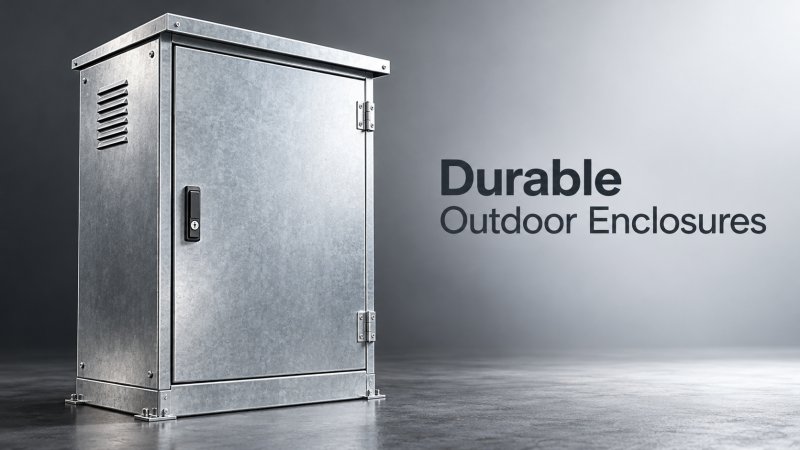
Proper fabrication ensures that the enclosure maintains its continuous protective envelope. Specifying the correct coating thickness (such as G90 or Z275 depending on regional standards) during the procurement phase also provides a larger sacrificial reserve for harsher environments.
Integrating Structural Frameworks and Internal Components
An outdoor enclosure is rarely just a protective shell; it requires a robust internal skeleton to mount heavy equipment, manage cable routing, and maintain structural rigidity. The choice of external sheet metal must be matched with compatible internal structural components.
This is where partnering with a comprehensive structural steel supplier becomes highly advantageous. Companies like Hongteng Fengda specialize in manufacturing and exporting a wide range of structural steel components, including angle steel, channel steel, and custom cold-formed profiles. By sourcing both the enclosure shell and its internal framework from a single manufacturer that adheres to strict international standards (ASTM, EN, JIS, GB), buyers ensure material compatibility and consistent quality control.
For enclosures that house complex industrial equipment, internal support structures or fluid/gas transfer systems may be required. In such cases, integrating high-quality structural tubing, such as a durable A36 Steel Pipe, provides the necessary mechanical strength for internal framing or heat exchange applications. Ensuring that all internal structural elements are either galvanized, properly coated, or manufactured from compatible grades prevents galvanic corrosion between dissimilar metals inside the enclosure.
Environmental Boundaries: When to Reconsider
While galvanised steel sheet is highly versatile, it is not a universal solution. Understanding its environmental limitations prevents premature failure.
In standard rural or urban atmospheres, galvanised steel can easily last 40 to 50 years. However, in highly corrosive environments, the consumption rate of the zinc layer accelerates significantly. These environments include:
- Marine and Coastal Areas: High concentrations of chloride salts from sea spray can break down the protective zinc patina, leading to faster white rust formation and eventual base metal corrosion.
- Heavy Industrial Zones: High levels of sulfur dioxide (SO2) and acidic pollutants in the air can lower the pH of rainwater, causing acidic corrosion that rapidly consumes the zinc coating.
- Constant High Humidity or Condensation: If an enclosure is subjected to continuous wet-dry cycles without adequate ventilation, the zinc may corrode faster than in environments where it can dry out completely.
In these specific scenarios, simply using standard galvanised steel may not be sufficient. Engineers must either specify a heavier zinc coating class, apply an additional duplex system (powder coating over galvanised steel), or pivot to alternative materials like marine-grade stainless steel or specialized aluminum alloys, despite the higher initial cost.
Making the Final Sourcing Decision
Selecting a galvanised steel sheet for outdoor enclosures is a decision driven by a need for predictable, long-term performance with minimal lifecycle intervention. The material offers an unmatched combination of structural strength, self-healing corrosion resistance, and cost-efficiency for the vast majority of external applications.
To ensure success, the focus must extend beyond just the material specification. It requires a holistic approach: specifying the appropriate zinc coating weight for the local environment, enforcing strict fabrication protocols to protect cut edges and welds, and ensuring that internal structural frameworks are sourced from reliable manufacturers capable of delivering consistent, compliant steel products. When these factors are aligned, a galvanised steel enclosure will reliably protect its contents against the elements for decades.
Please give us a message


Please enter what you want to find