Understanding the weight of I beam per meter is essential for accurate structural load calculations, safety compliance, and cost-efficient project planning — especially when integrating steel conduit for electrical wiring into building frameworks. As a leading structural steel manufacturer and exporter from China, Hongteng Fengda delivers precision-engineered I beams that meet ASTM, EN, GB, and JIS standards. Whether you're a project manager sizing support systems, a procurement specialist comparing material costs, or a safety officer verifying load limits, knowing how beam weight impacts real-world performance is critical. This article breaks down calculation methods, influencing factors, and practical implications — backed by our global supply experience.
How Is I Beam Weight Per Meter Calculated — And Why It Matters
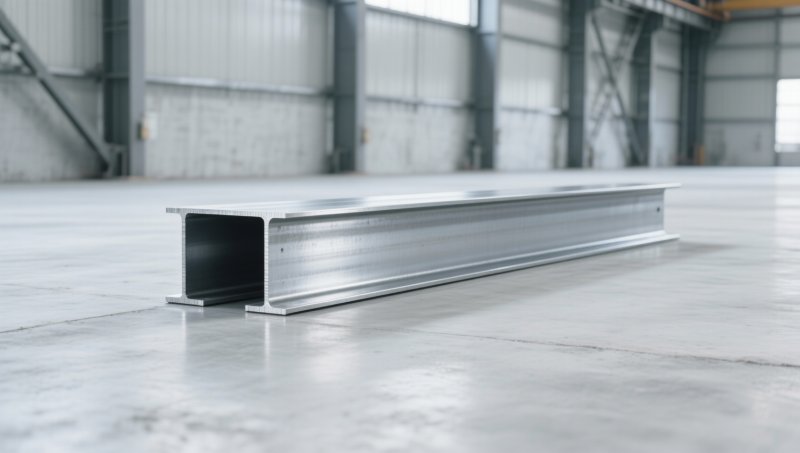
The weight per meter (kg/m) of an I beam is derived from its cross-sectional area multiplied by the density of steel (7,850 kg/m³). For standard rolled sections like IPE, IPN, or WB series, manufacturers publish theoretical weights in product tables — but actual delivered weight may vary ±3% due to mill tolerances, surface finish, and minor dimensional deviations.
This value directly affects dead load assumptions in structural analysis. Underestimating weight by just 5% can shift total dead load by 12–18 kN per floor in mid-rise commercial buildings — triggering re-evaluation of column base plates, foundation design, and seismic anchorage details. Overestimation, meanwhile, leads to unnecessary material over-specification and 7–12% higher procurement cost.
At Hongteng Fengda, all I beams undergo third-party verified dimensional inspection and certified mass verification before shipment. Our production control ensures consistent weight tolerance within ±1.5% against nominal values — critical for clients using BIM-integrated load modeling tools where input accuracy determines downstream engineering confidence.
Key Factors That Influence Actual Weight Per Meter
Weight isn’t static — it shifts with manufacturing method, alloy composition, and finishing treatment. Hot-rolled I beams typically weigh 2–4% more than equivalent cold-formed sections due to scale formation and section rounding. Galvanizing adds 3–6% extra mass depending on zinc layer thickness — which explains why Galvanized Steel Coil Manufacturers specify coating weights from 60 g/m² (light-duty indoor use) up to 275 g/m² (offshore or industrial environments).
Material grade also plays a role: high-strength steels like S350GD+Z or S550GD+Z maintain identical geometry but achieve yield strengths ≥350 MPa or ≥550 MPa through controlled rolling and microalloying — without increasing weight. This enables lighter framing while meeting EN 1993-1-1 serviceability limits.
Surface treatments further modulate mass. Pre-galvanized coils used in cold-formed purlins carry uniform 80–275 g/m² coatings applied before profiling — offering tighter weight consistency versus post-galvanized hot-rolled beams where coating thickness varies across flanges and web.
Typical Weight Variance by Production Method
This variance matters most during multi-supplier coordination — for example, when galvanized roof purlins interface with non-galvanized primary beams. Accurate weight data prevents misalignment between structural steel contractors and MEP integrators, reducing RFI volume by up to 40% in complex industrial builds.
Practical Load Calculation Workflow for Project Teams
Structural engineers don’t calculate weight manually for every beam — they rely on standardized references, verified supplier data, and digital workflows. Here’s how Hongteng Fengda supports real-world implementation:
- Supply full EN 10034-compliant dimensional & weight certificates for each heat lot — traceable to mill test reports
- Provide downloadable BIM families (Revit & Tekla) with embedded weight parameters synced to live inventory
- Offer pre-engineered load tables covering common spans (3m–12m), deflection limits (L/250–L/400), and connection types (bolted/welded)
- Support custom weight validation via laser-scanning of sample sections — delivered within 5 working days
For procurement teams, this means faster RFQ turnaround: typical lead time for certified I beam documentation is 2–4 business days, not weeks. For safety managers, it enables on-site verification using portable weighing scales — ensuring no deviation exceeds ±2% from declared values before crane lifting.
Why Partner With Hongteng Fengda for Precision Structural Steel
When beam weight directly influences foundation depth, crane selection, transport logistics, and long-term corrosion resistance, sourcing from a vertically integrated manufacturer matters. Hongteng Fengda controls the full chain — from billet casting and rolling to surface treatment and export packaging — ensuring weight consistency across 12,000+ tons of annual I beam output.
We serve over 240 clients across 37 countries with documented adherence to ASTM A6, EN 10034, JIS G3101, and GB/T 706. Every order includes dual-language mill test reports, third-party SGS/BV inspection options, and dedicated technical support for load model integration.
Ready to validate beam weights for your next project? Contact us for: customized weight tables, galvanizing specification alignment (hot-dip vs. pre-galvanized), BIM family customization, or certified samples with full dimensional report — all supported within 7–15 days from inquiry.
Please give us a message


Please enter what you want to find