Galv steel conduit is a common choice in commercial and outdoor wiring because it adds a tough metal barrier around electrical conductors. In practice, that barrier matters where moisture, impact, corrosion, and long service life all influence project decisions.
It also sits at the intersection of electrical safety and steel performance. For projects that balance code compliance, weather exposure, installation cost, and maintenance risk, understanding where galv steel conduit fits helps narrow the right wiring method.
Where galv steel conduit fits in modern wiring work
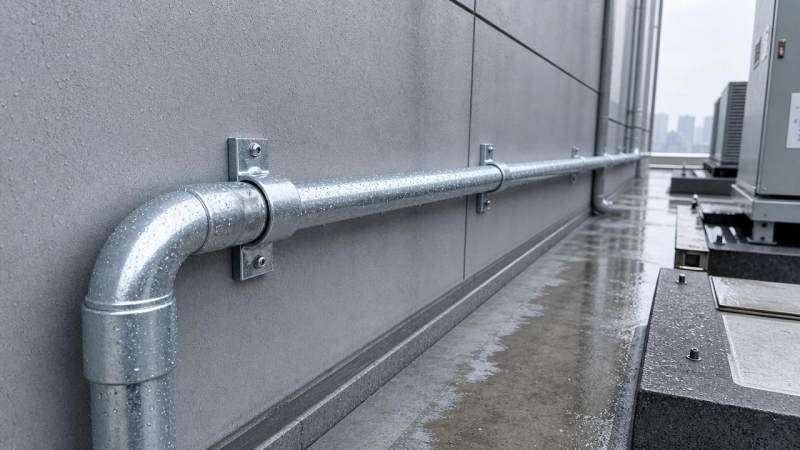
Commercial buildings rarely operate in gentle conditions. Service corridors, parking decks, rooftops, loading zones, utility yards, and exposed exterior walls all create stress for wiring systems.
That is why galv steel conduit remains relevant even as many projects compare multiple raceway materials. Its zinc-coated steel body offers physical protection and improved corrosion resistance in places where plastic conduit may not be enough.
In office towers, retail centers, schools, warehouses, and mixed-use sites, it is often selected for branch circuits, feeder runs, equipment connections, and exposed installations that need a durable enclosure.
What galv steel conduit actually does
At a basic level, galv steel conduit is a steel tube with a galvanized surface treatment. It routes and shields insulated conductors while helping the installation resist mechanical damage, weather contact, and surface rust.
Its value is not only in strength. A properly specified conduit system can also support grounding continuity, reduce accidental cable exposure, and create a more stable wiring pathway over time.
This makes it especially useful where wiring is visible, accessible to traffic, or likely to face vibration, washdown, temperature shifts, or repeated maintenance activity.
Why the steel base matters
The steel substrate gives the conduit impact resistance and load-bearing reliability. The galvanized layer helps delay corrosion, which is critical outdoors or in humid service zones.
That broader steel performance is also why structural steel suppliers often understand related project needs beyond one single item. Companies such as Hongteng Fengda serve global construction and industrial work with steel products made to ASTM, EN, JIS, and GB requirements.
Typical commercial uses
In commercial environments, galv steel conduit is chosen less for appearance and more for controlled risk. It helps protect circuits in spaces where daily use creates wear.
In these settings, the decision is often practical. Repair access, protection against accidental hits, and reduced replacement frequency may outweigh a lower upfront material cost elsewhere.
Why outdoor wiring often favors galvanized steel
Outdoor wiring introduces a different level of exposure. Rain, UV, airborne salts, dust, freeze-thaw cycles, and temperature variation can shorten the life of less robust raceways.
Galv steel conduit is commonly used for site lighting, perimeter systems, rooftop equipment feeds, traffic-related infrastructure, and utility connections mounted on exterior surfaces.
The galvanized finish does not make every environment equal. Coastal zones, chemical plants, and heavy industrial washdown areas may still require additional coating, stainless alternatives, or different specifications.
Common outdoor scenarios
- Pole lighting circuits in parking and access roads
- Exterior HVAC and rooftop power runs
- Security camera, gate, and perimeter control wiring
- Service entrances and exposed wall-mounted raceways
- Industrial yards where impact and corrosion both matter
What buyers and project teams usually compare
The real question is rarely whether galv steel conduit works. The question is whether it is the best fit for the exact location, code environment, and lifecycle target.
Several comparison points usually shape that decision.
- Exposure level: indoor dry areas differ greatly from exterior, wet, or corrosive spaces
- Mechanical risk: exposed runs near traffic need stronger protection
- Installation method: threaded, coupled, or bent layouts affect labor
- Compliance needs: local codes may define where metallic conduit is preferred
- Long-term maintenance: fewer failures can justify higher material cost
This is also where the wider steel supply chain becomes relevant. Reliable projects depend on consistent material standards, coating quality, dimensional accuracy, and stable lead times, not only on the conduit type named in drawings.
Steel quality behind durable installation systems
Even when the topic is conduit, supporting steel components often influence the final result. Mounting brackets, frames, supports, guards, and custom assemblies need compatible strength and finish performance.
For that reason, some projects source related steel items from one experienced supplier. A product such as Q235 Carbon Steel Round Bar may be used in fabricated supports, protective barriers, handrails, or other site steel elements around electrical routes.
With options in 2m, 5m, 6m, and 12m lengths, diameter ranges from 5mm to 2500mm, and finishes including galvanized, passivation, oiling, and anti-rust treatments, this kind of carbon steel stock supports practical fabrication flexibility.
That does not turn the article into a product pitch. It simply reflects how electrical protection often depends on adjacent steelwork that must also handle strength, wear resistance, transport, and standard compliance.
How to judge suitability on a real project
A good assessment starts with location rather than catalog language. The same galv steel conduit may be ideal on one job and less suitable on another.
Key checks before specification
- Map wet, exposed, corrosive, and impact-prone zones separately
- Confirm the applicable electrical code and approved conduit types
- Review whether the route is concealed, exposed, underground, or rooftop
- Check fitting compatibility, grounding needs, and support spacing
- Compare lifecycle cost, not only initial purchase price
It also helps to ask whether corrosion is only atmospheric or linked to chemicals, salt, or standing water. Galvanized steel performs well in many outdoor conditions, but harsh environments require a more exact review.
Why this topic matters in sourcing and planning
Galv steel conduit is not just an electrical accessory. It reflects a broader planning choice about protection, steel durability, maintenance exposure, and project reliability.
That is why global buyers often look for suppliers that understand both product standards and application context. Hongteng Fengda’s background in structural steel, cold formed profiles, steel beams, angle steel, and custom components aligns with projects that need coordinated steel solutions rather than isolated items.
When reviewing options, it is useful to organize the decision around environment, code, support steel, coating quality, and installation method. That approach gives a clearer picture than comparing conduit price alone.
If the next step is evaluation, start by listing exposure conditions, expected service life, and nearby steel support needs. From there, compare conduit specifications and related materials on the same performance basis.
Please give us a message


Please enter what you want to find