ERW black pipe is widely used in structural frames, low-pressure water lines, fencing, and general fabrication because it offers a practical balance of strength, availability, and cost.
But not every steel project should use ERW black.
Changing code expectations, corrosion risks, and lifecycle cost pressures are pushing buyers to compare applications more carefully than before.
Understanding what ERW black pipe is used for, and when to avoid it, supports safer design, better durability, and more stable sourcing decisions.
Where ERW black pipe still fits current steel demand
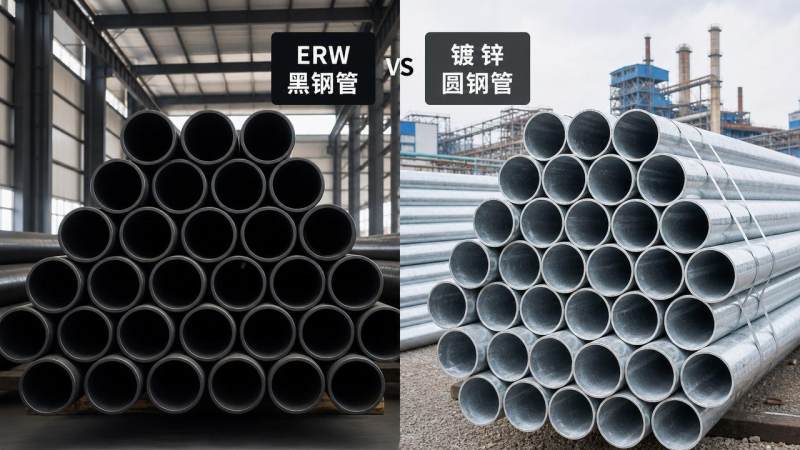
ERW black pipe remains relevant because many projects do not need premium corrosion protection or extreme pressure ratings.
For dry indoor use, sheltered structures, and basic fabrication, ERW black often delivers enough performance at a competitive cost.
In the steel industry, this matches a broader trend.
Projects increasingly split materials by service condition instead of using one pipe type everywhere.
That shift makes ERW black valuable in the right zone, but risky in the wrong one.
Common uses that continue to support demand
- Structural frames for light industrial buildings and secondary supports
- Fencing systems, gates, rails, and barrier fabrications
- Low-pressure water conveying lines in controlled environments
- Fire sprinkler components where standards permit specific grades
- Furniture, racks, mechanical guards, and workshop fixtures
- General steel fabrication, cutting, welding, and forming applications
ERW black is especially attractive when processing speed matters.
It is widely available, easy to fabricate, and usually less expensive than galvanized or seamless alternatives.
Why application rules around ERW black are becoming stricter
The market is not moving away from ERW black completely.
It is moving toward more selective use.
Several signals explain this change across construction, industrial maintenance, and export projects.
Main factors driving the shift
- Outdoor exposure increases corrosion risk quickly
- Weld seam quality must align with service requirements
- Pressure and temperature conditions limit suitable pipe choices
- End users want longer intervals between repairs and coating work
- Export projects often require ASTM, EN, JIS, or GB compliance checks
This is why the question is no longer simply whether ERW black is strong enough.
The better question is whether ERW black matches the full service environment.
When ERW black works well, and when it should be avoided
ERW black pipe performs best where moisture, corrosive media, and high internal stress are limited.
It should be avoided when those conditions become central to service life.
Good-fit scenarios
- Indoor structural supports with paint or controlled exposure
- Temporary lines or utility installations with low corrosion demand
- Workshop fabrication where easy cutting and welding matter
- Projects with budget pressure and manageable maintenance access
Avoid-use scenarios
- Marine or coastal environments with salt exposure
- Buried pipelines without suitable coating systems
- High-pressure or high-temperature service beyond specification
- Critical systems where seamless pipe is required by code
- Applications needing long-term corrosion resistance without repainting
This practical divide is shaping purchasing behavior across the steel sector.
More projects now use ERW black only in protected sections, while exposed sections shift to coated steel.
A useful comparison appears in support hardware and secondary structure details.
Where anti-corrosion life matters more than bare finish cost, products such as Galvanized Round Steel become a practical alternative.
This material is available in DC01, with diameters from 16 mm to 250 mm, customized lengths, and tensile strength from 570 to 820 MPa.
Its hot galvanizing surface supports longer anti-corrosion life in power towers, communication towers, highways, street light poles, marine components, and building steel structure parts.
It also suits precision processing sectors because tighter tolerances, straightening, milling, chamfering, ultrasonic control, and spectrotest checks can be arranged.
How the ERW black decision affects cost, risk, and project stability
The biggest mistake is comparing materials only by ton price.
ERW black may start cheaper, yet become more expensive if maintenance is frequent or failure risk is high.
Impact across business stages
- Design stage: wrong assumptions can create code or durability conflicts
- Procurement stage: low unit price may hide coating or replacement costs
- Fabrication stage: ERW black offers efficient cutting and welding workflows
- Installation stage: exposed service may demand extra protection steps
- Operation stage: moisture exposure can accelerate repair frequency
This is where experienced structural steel suppliers add value.
Hongteng Fengda, a structural steel manufacturer and exporter from China, supports global construction and industrial projects with angle steel, channels, beams, cold formed profiles, and customized steel components.
With modern facilities and strict quality control, products can align with ASTM, EN, JIS, and GB requirements.
That matters when ERW black selection must fit both engineering needs and export compliance.
What to check before choosing ERW black for a new project
A better material decision starts with a short technical review.
These checkpoints reduce avoidable errors.
- Confirm if the pipe is structural, fluid carrying, or both
- Check internal pressure, temperature, and medium type
- Review exposure to rain, humidity, chemicals, or salt
- Verify required standards, testing, and inspection level
- Compare painting, galvanizing, or alternative material options
- Estimate total service life cost, not only initial supply cost
The next move is smarter matching, not automatic replacement
ERW black is not outdated.
It remains useful where service conditions are controlled and costs must stay efficient.
The real trend is more precise matching between steel product, exposure level, and project life expectations.
If a project includes both protected and exposed steel sections, compare ERW black with galvanized or customized structural options before finalizing supply.
That approach improves durability, reduces sourcing risk, and helps maintain predictable project performance over time.
For steel applications needing dependable standards support, stable production, and tailored structural solutions, a detailed specification review is the most effective next step.
Please give us a message


Please enter what you want to find