When specifying materials for long-term infrastructure or industrial projects, the term galvanized frequently appears in material requirements. But what does it actually mean for the physical durability and operational lifespan of the steel? At its core, galvanized means the steel has been coated with a layer of zinc, typically through a hot-dip process. This treatment is not merely a cosmetic surface finish; it is a metallurgical modification that fundamentally alters how the base metal interacts with corrosive environments. For engineers, procurement managers, and builders, understanding this process is the first step in predicting maintenance cycles, calculating life-cycle costs, and ensuring structural integrity over decades of service. The true value of this coating lies in its ability to transform standard carbon steel into a highly resilient material capable of withstanding aggressive atmospheric conditions without continuous upkeep.
The Metallurgical Reality of Galvanized Protection
The durability of galvanized steel relies on a combination of physical and electrochemical mechanisms that work simultaneously to prevent degradation. The primary defense is barrier protection. The zinc coating physically seals the underlying steel away from moisture, oxygen, and other corrosive agents. Unlike organic paints, which can chip, scratch, or degrade under UV exposure and immediately expose the base metal to rust, the zinc layer is metallurgically bonded to the steel surface. During the hot-dip galvanizing process, the steel is immersed in molten zinc at temperatures around 450°C. This creates a reaction that forms a series of zinc-iron alloy layers beneath the outer pure zinc layer. These alloy layers are often harder than the base steel itself, providing exceptional resistance to mechanical damage during handling, transportation, and installation on the construction site.
The second, and arguably more critical, mechanism is cathodic or sacrificial protection. Zinc is more electrochemically active than iron. If the coating is scratched, cut, or damaged down to the bare steel, the surrounding zinc will corrode preferentially to protect the exposed area. This sacrificial action prevents the formation of red rust at the damage site. For structural components where small scratches are inevitable during assembly, this self-healing characteristic is vital for maintaining the structural continuity and load-bearing capacity of the framework over time.
Translating Zinc Coating into Predictable Lifespans
Understanding what galvanized means for lifespan requires looking at the predictable corrosion rate of zinc in different atmospheres. Zinc corrodes at a significantly slower rate than the underlying steel, typically between 1/30th and 1/100th of the rate, depending on the environment. This slow, predictable consumption allows engineers to accurately forecast the service life of the material based on the initial coating thickness.
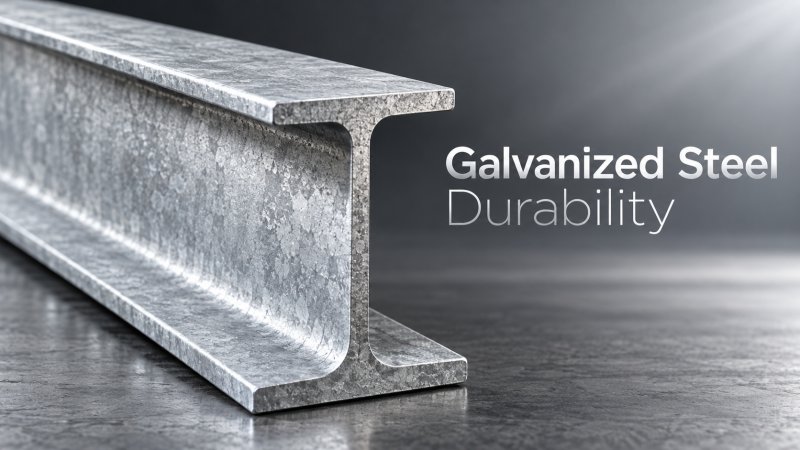
In a rural environment with low pollution and minimal salt exposure (classified as C1 or C2 under ISO 9223), a standard galvanized coating can provide corrosion protection for 50 to 100 years with zero maintenance. In suburban or industrial settings, where atmospheric pollutants, sulfur dioxide, and moderate moisture are present (C3 category), the expected lifespan typically ranges from 20 to 50 years. Even in highly corrosive marine or coastal environments, where salt spray heavily accelerates oxidation (C4 or C5 categories), galvanized steel can reliably perform for 15 to 25 years. This predictability is why galvanized components are heavily specified in public infrastructure, telecommunications towers, and outdoor industrial frameworks where future maintenance access is difficult, dangerous, or prohibitively expensive.
Environmental and Operational Variables
While the baseline performance is impressive, several variables dictate the actual durability achieved in the field. The pH level of the surrounding environment plays a significant role in zinc consumption. Zinc is amphoteric, meaning it corrodes rapidly in highly acidic conditions (pH below 6) or highly alkaline conditions (pH above 12.5). If galvanized steel is in constant contact with fresh concrete, which is highly alkaline, the zinc may be consumed faster than anticipated until the concrete fully carbonates and the pH drops. Similarly, exposure to certain chemical fumes, acidic rain, or standing water in poorly designed structures can accelerate zinc depletion.
Temperature and humidity cycles also impact longevity. In environments where the steel surface frequently cycles above and below the dew point, condensation forms repeatedly, accelerating the corrosion process. For structures requiring extended lifespans in these aggressive environments, specifying a heavier coating class or utilizing duplex systems—where galvanizing is combined with a protective paint or powder coating—can multiply the service life. The paint acts as an additional barrier, while the zinc provides the underlying sacrificial protection, resulting in a synergistic effect where the combined lifespan is greater than the sum of the two individual systems.
Application in Heavy Structural Frameworks
In large-scale structural applications, the durability of individual components dictates the safety and longevity of the entire framework. Load-bearing elements are particularly vulnerable because their failure can lead to catastrophic structural compromise. When sourcing critical structural components, buyers often look for reliable I Beam Manufacturers to supply the primary skeleton of industrial buildings, bridges, and heavy equipment supports. These beams, typically produced from carbon steel grades like Q235, Q345, A36, or SS400, provide the necessary economic section characteristics and load distribution for heavy-duty applications.
The physical dimensions of these structural members, such as flange widths ranging from 100mm to 400mm and web thicknesses between 6mm and 28mm, require precise manufacturing. When these wide flange or light beams are galvanized, the molten zinc penetrates the complex geometries of the flanges and webs, ensuring that even the inner corners and hard-to-reach areas are shielded from moisture ingress. The same principle applies to angle steel, channel steel, and cold formed steel profiles used in secondary structures and support frameworks.
However, the manufacturing sequence matters. Processes like bending, welding, decoiling, punching, or cutting are often required to customize the beams for specific project needs. If these modifications are performed after the initial galvanizing, the exposed bare steel must be properly prepared and treated with a zinc-rich paint to restore the sacrificial protection. Proper coordination between the steel fabricator and the galvanizer ensures that the final product maintains its specified tolerance of ±1% and its full corrosion-resistant capabilities.
Quality Verification and Standard Compliance
For procurement professionals evaluating material specifications, understanding what galvanized means also involves knowing how to verify its quality. A proper galvanized finish should exhibit a continuous, uniform coating without bare spots, excessive dross inclusions, or uncoated edges. The adherence of the coating is just as important as its thickness; a coating that flakes or peels offers no long-term protection. The visual appearance can vary from a bright, shiny finish to a matte gray, depending on the silicon content in the base steel and the cooling rate, but the protective performance remains consistent as long as the coating mass meets the required standards.
This is where international manufacturing standards come into play. Reputable suppliers adhere to strict specifications such as ASTM A123 for heavy-duty coatings in North America, EN ISO 1461 for European markets, or JIS H 8641 for Japanese specifications. These standards dictate the minimum coating mass, thickness, and testing methods, ensuring consistency across batches. When working with structural steel exporters, it is essential to request mill test certificates and galvanizing inspection reports that verify compliance with these specific standards. Checking the coating thickness with a magnetic gauge and verifying the adhesion through standard testing protocols provides the necessary assurance that the material will perform as expected throughout its intended lifespan.
Making Informed Material Decisions
Ultimately, specifying galvanized steel is a decision to prioritize long-term asset value over short-term initial cost savings. The metallurgical bond and sacrificial protection provided by the zinc coating fundamentally change the degradation curve of the base metal. By understanding the mechanisms of protection, the environmental factors that influence zinc consumption, and the importance of sourcing compliant materials, project stakeholders can accurately forecast the lifespan of their structures. This knowledge allows for more informed material selection, reducing lifecycle costs and ensuring that critical infrastructure and industrial facilities perform reliably for decades without the need for disruptive and expensive maintenance interventions.
Please give us a message


Please enter what you want to find