Understanding SS 304 Pipe Microstructure: How Austenitic Grain Structure Affects Weldability and Stress Corrosion Cracking
SS 304 pipe is routinely specified for structural and process-critical applications where corrosion resistance, formability, and high-temperature stability are required. Yet technical evaluators frequently overlook a decisive metallurgical variable: the austenitic grain structure — not merely its presence, but its size, uniformity, and intergranular chemistry. This microstructural reality governs two performance thresholds that directly impact field reliability — weldability and susceptibility to stress corrosion cracking (SCC). Neither can be inferred from nominal composition or tensile strength alone.
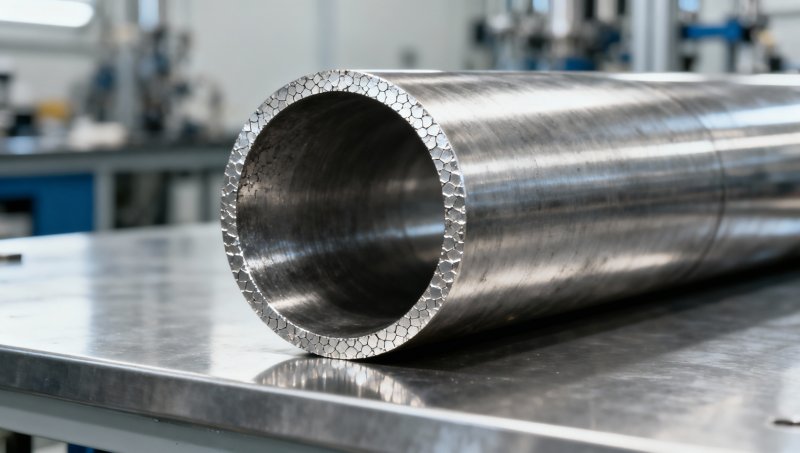
Grain size in solution-annealed SS 304 pipe is typically controlled within ASTM A240 and EN 10088-2 limits, targeting ASTM grain size numbers 5–8 (mean linear intercept ~25–50 μm). Pipes with finer grains (e.g., ASTM No. 8–9) exhibit higher yield strength and improved ductility at room temperature, but they also increase solidification cracking risk during multipass welding — especially when heat input exceeds 1.5 kJ/mm. Coarser grains (ASTM No. 3–4), often resulting from excessive annealing time or slow cooling rates, reduce hot-crack sensitivity but promote preferential SCC initiation along grain boundaries under chloride exposure. The critical threshold lies not in absolute grain size, but in *grain boundary character distribution*: pipes with >65% coincident site lattice (CSL) boundaries — particularly Σ3 twin boundaries — demonstrate measurably lower SCC propagation rates in simulated seawater environments (ASTM G36, 6% FeCl₃ at 50°C).
Annealing history exerts direct influence on both grain structure and intergranular chemistry. Standard solution annealing at 1040–1100°C followed by rapid water quenching suppresses carbide precipitation and maintains chromium-rich grain boundaries. However, pipe sections subjected to localized heating during fabrication — such as near weld zones or cold-bent regions — may experience sensitization even without full thermal cycling. Chromium depletion occurs when Cr₂₃C₆ precipitates form at boundaries between 425–850°C, reducing local Cr content below the ~12 wt% threshold required for passive film stability. This effect is not uniformly distributed: longitudinal seam-welded pipe shows greater variability in boundary chemistry across the weld heat-affected zone (HAZ) than seamless pipe, requiring stricter post-weld solution annealing per ASTM A312.
Intergranular sulfur segregation further modulates SCC behavior. While SS 304 is classified as “low-sulfur” (<0.030 wt%), residual sulfur (0.015–0.025 wt%) does not remain homogeneously dispersed. During solidification and hot working, sulfur migrates to grain boundaries, forming MnS inclusions. These inclusions act as local anodes and crack nucleation sites under tensile stress and chloride ingress. Pipes produced via continuous casting — now standard in most Chinese mills supplying export markets — show higher MnS stringer density compared to ingot-cast material. This difference becomes operationally significant only when combined with elevated residual stresses (e.g., from unrelieved bending or improper support spacing in piping systems), accelerating crack initiation by up to 40% in accelerated SCC testing (ASTM G123).
Weld metal compatibility depends less on filler selection than on base metal grain structure consistency. When welding SS 304 pipe with ER308L filler, dilution rates of 20–30% mean the final weld metal composition reflects both filler and base metal. If the base pipe exhibits non-uniform grain size — for example, coarse grains near the OD surface and fine grains near the ID due to uneven thermal history during annealing — dilution creates localized compositional gradients across the fusion line. These gradients induce microsegregation of Ni and Cr, lowering local pitting resistance equivalent number (PREN) by 1–2 units. Such variation rarely triggers failure in laboratory tests but correlates strongly with field-reported weld root cracking in high-humidity, low-velocity service environments (e.g., HVAC condensate lines or offshore platform utility piping).
For infrastructure and industrial system designers, this means specification language must move beyond “ASTM A312 Type 304” and include explicit microstructural requirements:
- Maximum grain size deviation: ±1 ASTM number across wall thickness (verified by ASTM E112);
- Intergranular corrosion test: ASTM A262 Practice E (copper sulfate–sulfuric acid) mandatory for all lots;
- Residual stress verification: X-ray diffraction measurement on 10% of lot samples if pipe undergoes cold bending >3° per meter;
- Sulfur content reporting: actual value per heat, not just compliance with <0.030 wt%.
 Hongteng Fengda applies these criteria during mill certification audits and third-party lab verification for SS 304 pipe supplied to North American and EU projects. Our production controls ensure consistent grain refinement through optimized hot rolling reduction ratios and tightly regulated solution annealing cycles — critical for customers specifying pipe in chloride-laden coastal infrastructure or chemical processing systems where SCC remains the dominant failure mode.
In contrast, materials like PPGI Steel Sheet serve entirely different functional roles — primarily barrier protection and aesthetic finish in non-structural applications. Their performance hinges on coating integrity, zinc layer mass, and polymer adhesion rather than bulk microstructure. Confusing the metallurgical drivers for SCC resistance in austenitic stainless with those governing coating durability in galvanized steel leads to misaligned material specifications and premature field failures.
The bottom line for technical evaluators: grain structure in SS 304 pipe is not a passive attribute — it is an active design parameter. Its influence on weld HAZ toughness and SCC initiation kinetics cannot be compensated for by post-fabrication treatments alone. Evaluation must begin at the mill certificate level, scrutinizing not just chemistry and mechanical test results, but grain size reports, sensitization test outcomes, and thermal history documentation. Where pipe will operate under sustained tensile load in aggressive environments, grain boundary engineering — not just alloy selection — determines long-term integrity.
Hongteng Fengda applies these criteria during mill certification audits and third-party lab verification for SS 304 pipe supplied to North American and EU projects. Our production controls ensure consistent grain refinement through optimized hot rolling reduction ratios and tightly regulated solution annealing cycles — critical for customers specifying pipe in chloride-laden coastal infrastructure or chemical processing systems where SCC remains the dominant failure mode.
In contrast, materials like PPGI Steel Sheet serve entirely different functional roles — primarily barrier protection and aesthetic finish in non-structural applications. Their performance hinges on coating integrity, zinc layer mass, and polymer adhesion rather than bulk microstructure. Confusing the metallurgical drivers for SCC resistance in austenitic stainless with those governing coating durability in galvanized steel leads to misaligned material specifications and premature field failures.
The bottom line for technical evaluators: grain structure in SS 304 pipe is not a passive attribute — it is an active design parameter. Its influence on weld HAZ toughness and SCC initiation kinetics cannot be compensated for by post-fabrication treatments alone. Evaluation must begin at the mill certificate level, scrutinizing not just chemistry and mechanical test results, but grain size reports, sensitization test outcomes, and thermal history documentation. Where pipe will operate under sustained tensile load in aggressive environments, grain boundary engineering — not just alloy selection — determines long-term integrity.
Previous page: Already the first one
Next page: Already the last one
Please give us a message


Please enter what you want to find