Choosing between U Channel Steel and flat bar can directly affect strength, stability, fabrication efficiency, and total project cost. For buyers, engineers, and project teams comparing Steel Construction Material options, understanding how C-beam steel, ASTM C-beam, galvanized C-beam, and Q235B channel differ from flat bar is essential for safer framing, smarter sourcing, and better structural performance.
Why does the difference matter so much in framing projects?
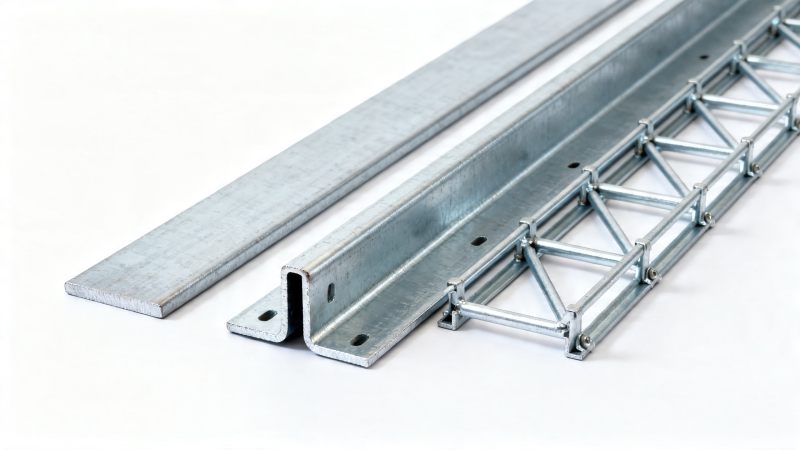
In steel framing, section shape is not a minor detail. A U channel steel section forms a profile with flanges and a web, while a flat bar is a simple rectangular strip. That geometric difference changes load behavior, stiffness, connection options, and material efficiency. In light to medium structural framing, these distinctions often decide whether a member performs reliably or causes avoidable deflection, welding time, and reinforcement cost.
For information researchers and technical evaluators, the key issue is not just “which is stronger,” but “stronger in which direction, under what load, and at what fabrication cost.” A flat bar may work well for bracing straps, base plates, support tabs, and edge restraints. A channel section is usually more suitable for rails, secondary frames, equipment supports, wall girts, and structural members exposed to bending over spans such as 1.5–6 m in common industrial layouts.
For procurement teams and financial approvers, the difference shows up in total installed cost. A lower unit price per ton does not always mean a lower project cost. If flat bar requires more stiffeners, more weld length, or tighter spacing, the total cost may exceed a properly selected ASTM C-beam or Q235B channel. That is why framing decisions should compare material, labor, coating, logistics, and compliance together rather than by raw steel price alone.
For project managers and quality control staff, section choice also affects inspection points. A framing package often includes 4 core checkpoints: dimensional tolerance, straightness, surface condition, and coating quality where galvanizing is required. Choosing the right profile early reduces rework during shop fabrication and improves fit-up consistency during site installation.
- U channel steel is commonly selected where bending stiffness and directional stability are needed.
- Flat bar is commonly selected where the part mainly works in tension, as a connector, or as a non-primary support piece.
- Galvanized C-beam is often preferred in outdoor, humid, or mildly corrosive environments where coating durability matters over multi-year service cycles.
- Section misuse usually appears in 3 forms: excessive deflection, twisting during installation, and unnecessary fabrication complexity.
U Channel Steel vs Flat Bar: what are the structural and fabrication differences?
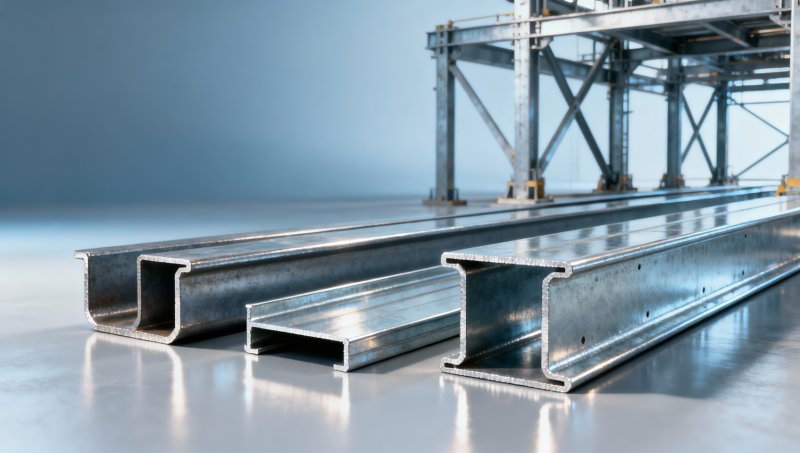
The most direct comparison is shape efficiency. A channel section places more material away from the neutral axis than a flat bar of similar mass, which usually gives it better resistance to bending. In practical terms, when a member acts as a rail, frame edge, support arm, or light beam, U channel steel often delivers higher stiffness without needing a dramatic increase in weight.
Flat bar, however, remains useful because it is simple to cut, drill, and weld. It fits applications where load transfer is mainly tensile or where the part acts as a joining element rather than a spanning element. In short lengths such as 100–600 mm brackets, clips, backing strips, and cover plates, flat bar is often the more economical and practical choice.
The table below summarizes how a channel profile and flat bar differ in framing selection, fabrication behavior, and commercial impact. This comparison helps users, engineers, and sourcing teams judge where C-beam steel provides real value and where a simpler strip product is enough.
The main takeaway is simple: U channel steel is usually a structural framing choice, while flat bar is often a component or accessory choice. There are exceptions, but if the member must carry repeated bending or maintain alignment over a span, flat bar often becomes a compromise unless the design is very short, heavily restrained, or lightly loaded.
How ASTM C-beam, galvanized C-beam, and Q235B channel fit real projects
ASTM C-beam is commonly specified in export-oriented or North America-linked projects where documentation consistency and standard familiarity matter. Q235B channel is widely used in general structural fabrication where cost control, weldability, and availability are key. Galvanized C-beam becomes a strong option for outdoor support frames, agricultural structures, cable support systems, and humid plant environments where corrosion protection can influence maintenance cycles over 3–10 years depending on service conditions.
In procurement practice, the section type and steel grade should be reviewed together. A buyer may compare 3 layers at once: profile shape, base material standard, and surface treatment. That is more useful than comparing only nominal size because two members with similar depth can perform very differently depending on flange shape, thickness tolerance, and whether the installation environment requires paint, pre-galvanizing, or hot-dip galvanizing.
In some mixed-material systems, project teams also combine carbon structural framing with stainless components in heat- or corrosion-sensitive lines. For example, where framing supports nearby thermal equipment or process piping, it is useful to separate the load-bearing structure from media-carrying components such as 321 Stainless Steel Pipe. This titanium-stabilized stainless option is commonly considered for boilers, heat exchangers, aerospace piping, petroleum and chemical industries, and machinery fields because it addresses intergranular corrosion concerns and offers superior high-temperature strength, oxidation resistance, and machinability.
That distinction matters in engineering reviews. The frame may be Q235B channel or another structural carbon steel section for cost efficiency, while the process line may use stainless tubing or pipe selected by temperature range, corrosion medium, and code needs. Good sourcing decisions do not force one material to solve every problem; they assign the right product to the right function.
Which applications are better for channel steel, and which are better for flat bar?
Application fit is where many expensive mistakes begin. Buyers often see similar thickness values and assume the products are interchangeable. They are not. In structural steel manufacturer practice, application review usually starts with 5 questions: what is the load type, what is the span, what is the support condition, what is the environment, and what fabrication method will be used. These five checks usually eliminate the wrong option quickly.
For framing and support applications, channel steel is generally preferred where the member must resist bending, keep alignment, or provide a stable mounting surface. Examples include wall support frames, equipment skids, solar support subframes, warehouse partitions, machine bases, and cable tray supports. In these uses, a U channel profile often reduces the need for additional braces and keeps assembly more repeatable across medium production batches.
Flat bar is generally preferred in connection and detailing tasks. It is effective for anchor straps, cleats, fish plates, splice plates, protective edging, ladder rung supports, and reinforcement strips. In many workshops, flat bar is stocked in a wide range of widths and thicknesses such as 3–20 mm thickness and can be processed quickly for urgent replacement or maintenance parts.
The application table below helps project teams choose based on service role rather than habit. That matters for distributors, resellers, and end users who need to balance inventory flexibility with end-use suitability.
A practical rule is this: if the part behaves like a beam, rail, edge member, or frame line, review channel first. If the part behaves like a strip, plate, tie, or connector, review flat bar first. This simple screening rule helps reduce overdesign and underdesign in the early quoting stage.
Common mistakes when matching products to use cases
One common mistake is choosing flat bar because it is easier to source, then discovering the frame needs extra angle stiffeners or closer support spacing at 300–800 mm intervals. Another is choosing a channel section without checking connection orientation, which can create avoidable eccentricity in the joint. A third is ordering pre-galvanized members for an environment that really needs a heavier protective system.
- Do not compare only thickness. Section depth and shape often influence framing behavior more than thickness alone.
- Do not ignore installation direction. A member that works well vertically may perform poorly if rotated without restraint.
- Do not skip corrosion review. Indoor dry service and coastal outdoor service should not use the same surface assumption.
- Do not separate purchase from fabrication planning. Drilling, punching, and weld access affect real cost.
Experienced suppliers reduce these errors by reviewing drawings, load direction, finish requirements, and destination market standards before production. That is especially important for export projects where EN, ASTM, JIS, or GB references must align with customer drawings and inspection expectations.
What should buyers, engineers, and QA teams check before ordering?
A good procurement process for steel construction material should move through 4 steps: define application, confirm section and standard, verify coating or surface condition, and lock down inspection and delivery terms. This approach protects not only technical performance but also budget approval and schedule control. Many delays happen not in manufacturing, but in unclear specifications.
For technical evaluation, confirm at least 6 points before placing an order: grade, section dimensions, length tolerance, straightness, surface finish, and applicable standard. For example, if a buyer requests ASTM C-beam, the quotation should clearly state dimensions, grade assumptions, coating condition, and whether lengths are fixed or random. If the project requires galvanized C-beam, zinc coating method and post-processing expectations should also be clarified.
For quality and safety teams, incoming inspection should include dimensional checks, visual surface review, packing condition, marking consistency, and document review. In many export transactions, document review covers mill-related paperwork, packing lists, and order identification details. Even a 2–3 mm dimensional mismatch can create assembly problems when the steel is part of modular framing or pre-drilled systems.
The checklist below is designed for procurement, project control, and supplier comparison. It is especially useful when multiple suppliers offer similar prices but different execution reliability.
Buyer checklist for section selection and supplier review
- Confirm whether the part is a framing member or a connector. This single step determines whether channel steel or flat bar should be the first option.
- Match the requested standard to the destination market or project drawing, such as ASTM, EN, JIS, or GB, and avoid mixed assumptions.
- Check if the environment requires bare steel, primer, pre-galvanized, or hot-dip galvanized finish for the expected maintenance cycle.
- Verify processing needs such as cutting, punching, slotting, bending, or OEM fabrication to reduce on-site labor.
- Ask for realistic lead time ranges such as 2–4 weeks for standard material and longer for custom fabrication, depending on quantity and finish.
- Review packaging, container loading, and delivery batch planning, especially for distributors and overseas project buyers.
Why manufacturer capability affects purchasing risk
When sourcing from China, supplier capability matters as much as product price. Hongteng Fengda focuses on structural steel manufacturing and export, covering angle steel, channel steel, steel beams, cold formed steel profiles, and customized structural steel components. For global buyers, this matters because one supplier with stable production capacity can simplify 3 critical areas: drawing interpretation, quality consistency, and shipment coordination.
A capable structural steel manufacturer can also support standard specifications and OEM solutions in the same sourcing cycle. That helps project teams that need both stock-size members and processed components. Modern manufacturing facilities and strict quality control are especially important when customers need products aligned with ASTM, EN, JIS, and GB references across North America, Europe, the Middle East, and Southeast Asia.
For commercial reviewers, dependable lead times reduce hidden cost. A small delay in a framing package can affect installation crews, crane scheduling, or follow-on trades. Reliable production planning is often worth more than a marginally lower unit price from an uncertain source.
FAQ: practical questions before choosing channel steel or flat bar
The questions below reflect common search intent from engineers, purchasers, contractors, and distributors comparing steel framing materials. They also help narrow supplier discussions faster and reduce revision cycles during quotation.
Is U channel steel always stronger than flat bar?
Not always in every direction or every use. Strength depends on section orientation, load type, span, restraint, and connection detail. In bending-dominant framing applications, a channel profile is often more efficient. In direct tension, a flat bar may perform adequately and economically. The correct question is not “which is stronger overall,” but “which section matches the actual load path and installation geometry.”
When should I choose galvanized C-beam instead of black steel channel?
Choose galvanized C-beam when the frame will operate outdoors, in humid spaces, in agricultural settings, or near washdown and weather exposure. If maintenance access is difficult or service life expectations extend across several years, galvanizing often improves lifecycle value. For dry indoor use with controlled exposure, untreated or painted channel may be sufficient depending on project specifications.
What are the main risks when buyers replace channel steel with flat bar to save cost?
The main risks are increased deflection, local twisting, extra reinforcement demand, and more shop labor. What looks cheaper at purchase can become more expensive after adding plates, braces, and weld time. This is especially common when flat bar is used as a rail or unsupported frame member over spans where a channel would have been a more natural fit.
What should be confirmed in an export quotation for channel steel?
At minimum, confirm section size, steel grade, standard reference, length, tolerance expectations, finish or coating, quantity, packing method, and lead time. If processing is included, also confirm hole positions, slots, cuts, and part identification. These details prevent disputes and reduce delays at the manufacturing and installation stages.
Can one supplier handle both standard structural steel and customized fabricated parts?
Yes, and that is often the preferred model for B2B projects. A supplier that can provide standard channels, beams, angle steel, cold formed profiles, and OEM structural components can reduce coordination steps, improve drawing consistency, and make batch delivery easier. This is especially useful when project schedules are tight and quality documentation must stay aligned across multiple product categories.
Why work with a structural steel manufacturer that understands framing decisions?
Choosing between U channel steel and flat bar is not only a design question. It is a sourcing, fabrication, compliance, and schedule question. The right supplier helps customers compare 3 decision layers at the same time: structural suitability, commercial efficiency, and delivery reliability. That support is valuable for engineers, purchasers, project leaders, and distributors who need practical answers rather than generic catalog descriptions.
Hongteng Fengda supports global construction, industrial, and manufacturing projects with structural steel products and customized solutions from China. Our scope includes angle steel, channel steel, steel beams, cold formed steel profiles, and custom structural components. We work with standard specifications and OEM requirements, helping buyers reduce sourcing risk, control cost, and keep installation plans on schedule.
If you are comparing ASTM C-beam, galvanized C-beam, Q235B channel, or flat bar for a current project, you can send drawings, section requirements, destination market standards, and quantity plans for review. We can help you confirm section selection, processing feasibility, coating requirements, documentation alignment, and realistic lead-time ranges before ordering.
Contact us to discuss product sizing, custom fabrication, standard compliance, sample support, packing method, shipment planning, and quotation details. If your project also includes mixed-material needs, we can help you separate framing products from process-line materials clearly so the final solution fits performance, cost, and delivery priorities.
Please give us a message


Please enter what you want to find