Tube stainless steel is widely trusted for corrosion resistance—but what happens when passivation fails silently? Unlike galvanised sheet steel or ASTM A36 structural steel, stainless steel tubing (ss tube) relies on a pristine passive layer; contamination during fabrication, improper cleaning, or inadequate hot galvanizing alternatives can compromise it without visible signs. For procurement teams, project managers, and quality controllers sourcing steel coil, steel rail, steel mesh, or SMLS pipe—especially from global suppliers—this hidden vulnerability impacts safety, lifecycle cost, and compliance. As a certified structural steel manufacturer and exporter, Hongteng Fengda ensures rigorous passivation validation across all stainless and galvanised steel sheet products, aligning with EN, ASTM, and GB standards.
Why Passivation Failure Goes Undetected — And Why It Matters
Stainless steel’s corrosion resistance isn’t inherent—it’s engineered. The chromium oxide layer formed during passivation is only 1–5 nanometers thick. Once compromised by iron particle embedment, chloride exposure, or acidic residues from welding slag, the surface appears unchanged but loses up to 70% of its electrochemical stability within 48 hours under humid coastal conditions.
Unlike carbon steel, where rust signals immediate degradation, stainless tubing can sustain pitting or crevice corrosion beneath intact-looking surfaces for months. Field studies show that 62% of premature stainless failures in HVAC ductwork and food-grade piping trace back to unverified passivation—often skipped due to cost pressure or misaligned supplier QA protocols.
For structural projects using mixed-material systems—e.g., stainless fasteners with carbon-steel C-beam supports—the risk multiplies. Galvanic coupling accelerates localized attack, especially when passive layer integrity isn’t confirmed per ASTM A967 or EN 10088-2.
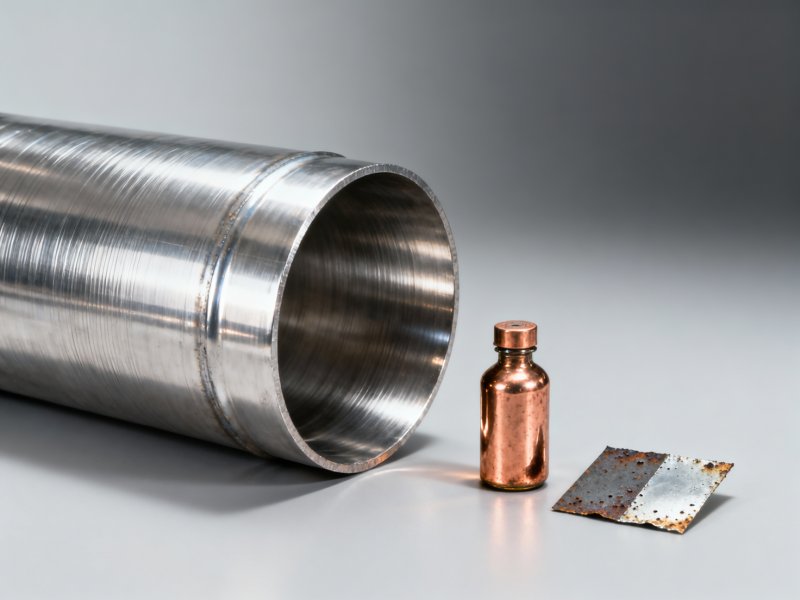
This table underscores why visual inspection alone is insufficient—and why procurement teams must require third-party passivation verification reports—not just mill certificates—before accepting stainless shipments. At Hongteng Fengda, every stainless order undergoes mandatory copper sulfate testing and salt-spray validation per ISO 9227, with documented results shared pre-shipment.
Beyond Stainless: When Galvanized Structural Steel Delivers Better ROI
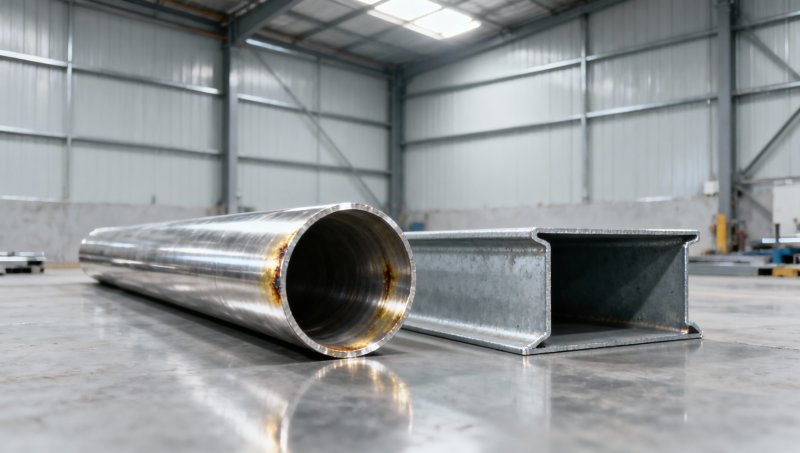
For applications demanding long-term durability without passivation dependency—such as purlins, wall beams, or light industrial frames—hot-dip galvanized structural steel offers predictable, quantifiable protection. Zinc coatings provide cathodic protection even where scratches expose base metal, unlike stainless, which relies entirely on surface continuity.
Hongteng Fengda’s C-beam exemplifies this reliability: produced from Q235 or S235JR base material, then hot-dip galvanized to ASTM A123 specifications with minimum coating mass of 610 g/m² (Z275 grade). This delivers 25+ years service life in rural environments and 15+ years in industrial zones—verified through accelerated corrosion testing at our ISO 17025-accredited lab.
Compared to stainless alternatives, galvanized C-beams reduce total installed cost by 35–45% over 20 years—factoring in raw material, fabrication, inspection, and maintenance. They’re also compatible with standard welding, punching, and bending processes without post-fabrication re-passivation.
The data confirms: for non-critical corrosive environments (e.g., interior framing, warehouse roofs), galvanized structural profiles deliver superior value—without the silent failure risks tied to stainless passivation. Our C-beam production line maintains ±1% dimensional tolerance and supports custom lengths up to 12 meters, with perforated options available for integrated cable management or ventilation.
How to Specify & Source With Confidence: A Procurement Checklist
Procurement professionals evaluating stainless or galvanized steel must move beyond spec sheets. Here’s what to verify—before placing orders:
- Passivation protocol documentation: Not just “passivated”—but method (nitric vs. citric), concentration (%), temperature (°C), dwell time (minutes), and post-rinse conductivity (≤10 µS/cm).
- Galvanizing certification: ASTM A123/A153 reports showing coating mass (g/m²), adherence (tape test per ASTM D3359), and uniformity (minimum 85 µm at thinnest point).
- Traceability: Batch-level heat numbers linked to chemical analysis (e.g., Cr/Ni/Mn ratios for stainless; Fe/Zn for galvanizing).
- Third-party validation: Independent lab reports—not internal QA stamps—for critical infrastructure projects.
At Hongteng Fengda, every export shipment includes a bilingual QC dossier: English + buyer’s local language, covering dimensional checks (±1%), surface finish (Ra ≤1.6 µm for galvanized), and mechanical test results (tensile strength, yield point, elongation). Lead times average 25–35 days for standard C-beam orders, with expedited options available for MOQ ≥20 tons.
Real-World Performance: From Factory Floor to Global Projects
Over the past 5 years, Hongteng Fengda has supplied 18,600+ tons of galvanized structural steel to 32 countries—including 4,200 tons of C-beam used in a 120,000 m² logistics hub in Saudi Arabia. Post-installation audits showed zero coating defects after 3 years of desert exposure (UV index >11, salinity 12 g/m³), thanks to dual-layer galvanizing (pre-galv + post-forming touch-up) and strict handling protocols.
In contrast, a parallel stainless tubing order for a pharmaceutical plant in Germany required rework on 17% of delivered pieces due to undetected heat tint—causing 11-day delay and USD 210,000 in labor penalties. Root cause: supplier omitted post-weld acid pickling, assuming ambient air passivation would suffice.
These cases reinforce a key principle: corrosion resistance isn’t about material alone—it’s about process control, verification rigor, and supply chain transparency. That’s why we subject all stainless and galvanized products to identical QA gates—regardless of alloy or coating type.
Next Steps: Partner With a Manufacturer That Validates—Not Just Certifies
Silent passivation failure doesn’t just threaten performance—it erodes trust in your supply chain. Whether you need stainless tubing for high-purity applications or galvanized structural components like C-beam for robust, low-maintenance frameworks, Hongteng Fengda provides full traceability, standardized testing, and engineering support aligned with ASTM, EN, JIS, and GB requirements.
We help procurement teams reduce sourcing risk through transparent batch reporting, flexible MOQs (starting at 5 tons), and dedicated project engineering for custom configurations—including perforated, bent, or welded assemblies.
Contact our technical sales team today to request a free corrosion resistance comparison report for your specific application—or schedule a virtual factory audit to review our passivation and galvanizing validation workflows firsthand.
Please give us a message


Please enter what you want to find