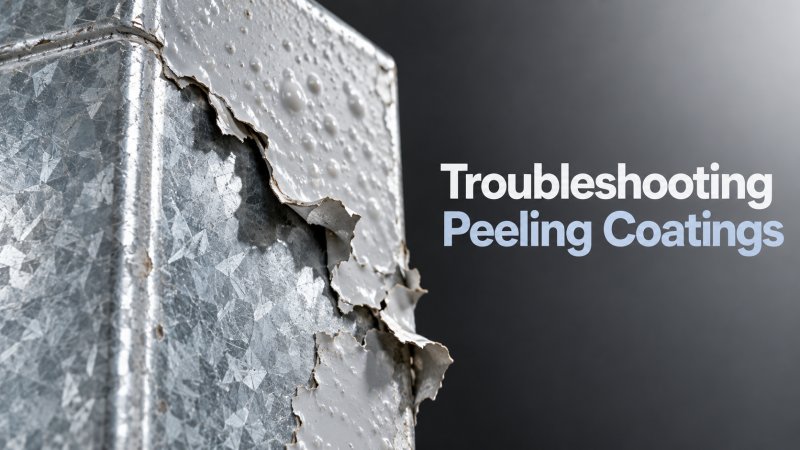
Walking onto a project site and spotting flaking, blistering, or entirely peeled coatings on galvanised sheet steel is a sinking feeling for any maintenance professional. You know exactly what that means: the sacrificial zinc layer is compromised, the underlying carbon steel is exposed, and the clock is ticking on accelerated corrosion. For after-sales maintenance teams, dealing with peeling coatings isn't just about touching up paint; it’s about diagnosing why the failure happened in the first place and implementing a repair strategy that actually lasts in the real world.
When the protective zinc layer on galvanised sheet steel starts to peel, it compromises structural integrity and creates a domino effect of maintenance headaches. If you are dealing with flaking or blistering zinc layers, identifying the root cause is essential for effective troubleshooting. This guide explores common factors behind coating failure, such as surface preparation flaws, environmental stress, and application errors. By understanding these issues, after-sales maintenance teams can implement targeted repair strategies, extend the lifespan of the steel, and ensure long-term durability in demanding industrial environments.
Reading the Signs: Why Do Coatings Actually Peel?
Before grabbing a wire brush or a spray can, you need to play detective. Peeling doesn't happen in a vacuum. It is usually the end result of a chain reaction that started long before the material even reached your site. Let’s break down the usual suspects and how to identify them in the field.
1. The Hidden Culprit: Surface Preparation Flaws
The most common reason for premature coating failure traces back to the galvanising bath itself. If the steel wasn't properly cleaned, descaled, or fluxed before dipping, the metallurgical bond between the iron and the zinc never fully forms. As a maintenance inspector, you might notice that the peeling isn't just on the surface—the zinc is flaking off in thick, brittle sheets, sometimes revealing a smooth, unreacted steel underneath. This indicates a fundamental adhesion failure. You can verify this by performing a simple cross-cut test or using a specialized adhesion tester. If the coating lifts easily without taking any base metal with it, the galvanising process was flawed. While you can't undo the galvanising process on-site, recognizing this pattern tells you that the entire batch might be at risk, requiring a more aggressive, comprehensive repair approach rather than simple spot fixes.
2. Mechanical Abuse During Handling and Installation
Galvanised coatings are tough, but they aren't invincible. Heavy machinery, improper rigging, or dragging components across rough terrain can cause micro-fractures in the zinc-iron alloy layers. When the steel is bent or formed after galvanising, the coating can stretch beyond its limit and peel away at the stress points. If you see peeling concentrated around edges, bends, or connection holes, mechanical damage during transit or installation is likely the culprit.
This is where the choice of initial materials plays a massive role in your future maintenance workload. Using components with robust interlocks and precise manufacturing tolerances can drastically reduce on-site friction and handling damage. For instance, when deploying heavy-duty retaining structures or water retaining walls, sourcing a high-quality Hot Rolled Steel Sheet Pile with properly engineered Larssen locks or hot rolled interlocks ensures a smoother driving process. When the piles interlock freely and tightly without excessive force, the risk of scraping off the galvanised layer during installation drops significantly, saving your team from endless touch-up work later.
3. Environmental Stress and the "White Rust" Trap
Sometimes the environment itself is the enemy. If newly galvanised sheet steel is stacked tightly together or stored in poorly ventilated, damp conditions without proper passivation, moisture gets trapped. This leads to the formation of white rust (zinc oxide), which can expand and lift the surrounding coating. In highly aggressive environments—like marine settings, coastal infrastructure, or industrial zones with high sulfur content—the zinc is consumed much faster. Once the zinc is depleted, red rust forms, and the underlying rust expansion physically pushes the remaining zinc coating off the surface. Using a dry film thickness (DFT) gauge can help you determine if the original coating was simply too thin for the specific environmental corrosivity category of your site.
Targeted Repair Strategies for Maintenance Teams
Once you’ve identified the root cause, it’s time to fix it. But remember, slapping a quick coat of zinc-rich paint over a peeling area is a recipe for disaster. The repair must be as rigorous as the original preparation.
Step 1: Meticulous Surface Preparation
You cannot repair over loose material. Use mechanical tools like needle guns, wire brushes, or abrasive blasting to remove all loose, peeling zinc and any underlying rust. The goal is to achieve a clean, sharp edge where the remaining good coating meets the exposed steel. Feather the edges smoothly. If you leave a hard ridge, your repair patch will eventually peel right at that boundary line. For areas affected by white rust, scrubbing with a stiff bristle brush and clean water is often necessary before moving to mechanical abrasion. The surface must be completely dry and free of salts, oils, and debris before any repair coating is applied.
Step 2: Choosing the Right Repair Material for the Environment
Not all touch-up paints are created equal, and the environment should dictate your choice. For general atmospheric exposure, high-quality zinc-rich paints (containing at least 90% zinc dust in the dry film) are the industry standard. They provide excellent cathodic protection. Apply them in thin, even coats. Avoid applying them too thickly, as thick zinc-rich paints are prone to mud-cracking, which creates pathways for moisture to reach the steel.
However, for structures in highly aggressive environments, such as chemical processing plants or offshore platforms, a simple zinc-rich paint might not be enough. In these cases, a multi-layer system is often required. You might need a zinc-rich epoxy primer followed by a high-build intermediate coat and a polyurethane topcoat for UV resistance. Always check the technical data sheets to ensure the repair coating is compatible with the existing galvanised layer. A mismatch in thermal expansion rates or chemical composition will just lead to another failure down the road.
Step 3: Evaluating When to Replace
As a seasoned maintenance professional, you know that not everything can be patched. If the peeling is widespread, if the underlying steel has suffered significant section loss due to red rust, or if the original coating failure was due to a systemic manufacturing defect, localized repairs are just a band-aid. In such cases, replacing the compromised sections is the only structurally sound decision.
When planning replacements, consider upgrading the material specifications to better suit the environmental demands. Opting for thicker coatings or higher-grade steel can prevent recurring issues. Working with a reliable structural steel manufacturer and exporter who understands international standards like ASTM, EN, and JIS ensures that your replacement parts will perform exactly as expected. Whether you need standard profiles or custom dimensions up to 80 meters, having a partner who provides consistent quality and dependable lead times keeps your project on schedule and within budget.
Proactive Measures: Stopping Peeling Before It Starts
The best troubleshooting is the troubleshooting you never have to do. While you can't control the environment, you can control how the material is specified, handled, and maintained from day one.
- Specify the Right Coating Thickness: Don't just ask for "galvanised." Specify the minimum coating mass or thickness based on the expected environmental corrosivity (e.g., C3, C4, C5 categories). A thicker coating gives you a longer buffer before maintenance is required.
- Design for Drainage: During the design phase, ensure that structures don't have pockets where water can pool. Stagnant water will rapidly consume the zinc layer. Sloped surfaces and adequate drainage holes are your best friends.
- Enforce Strict Handling Protocols: Use nylon slings instead of steel chains. Ensure forks and clamps are padded. Train installation crews to avoid dragging materials across the ground or each other.
- Ensure Proper Storage: Store galvanised sheet steel in a dry, well-ventilated area. If outdoor storage is unavoidable, elevate the materials off the ground, cover them with breathable tarps, and ensure they are angled to prevent water pooling and allow condensation to escape.
- Implement Routine Inspections: Don't wait for the peeling to become obvious. Include coating thickness checks and visual inspections for early signs of white rust or mechanical damage in your regular maintenance schedules.
Final Thoughts on Maintaining Galvanised Integrity
Peeling coatings on galvanised sheet steel are a clear signal that something in the lifecycle of the material has gone wrong. Whether it’s a flaw in the initial galvanising process, rough handling on-site, or relentless environmental attack, the solution requires a methodical approach. By accurately diagnosing the root cause, preparing the surface meticulously, and applying the correct repair materials, maintenance teams can restore the protective barrier and extend the service life of the structure.
Ultimately, maintaining galvanised steel is about respecting the material. It’s about understanding how it was made, how it behaves under stress, and how it interacts with its surroundings. When you combine proactive handling, smart material selection, and rigorous repair standards, you transform a reactive maintenance nightmare into a manageable, predictable routine. The steel will protect the structure, as long as you take care of the steel.
Please give us a message


Please enter what you want to find