That ‘2 inch stainless steel pipe’ spec sheet may look standard—but it often masks a critical tolerance gap affecting fit, weld integrity, and long-term corrosion resistance. Whether you're sourcing 316 stainless steel pipe for chemical plants, galvanized steel pipe for infrastructure, or A36 steel plate for structural framing, dimensional accuracy impacts safety, compliance, and total cost of ownership. As a certified structural steel manufacturer & exporter from China, Hongteng Fengda ensures tight tolerances across 2 stainless steel pipe, seamless stainless steel tube, hot rolled steel coil, and corrosion-resistant pipes—meeting ASTM, EN, and GB standards. Discover why precision matters—and how the right partner eliminates hidden project risks.
Why “2 inch” isn’t really 2 inches—and what that means for your project
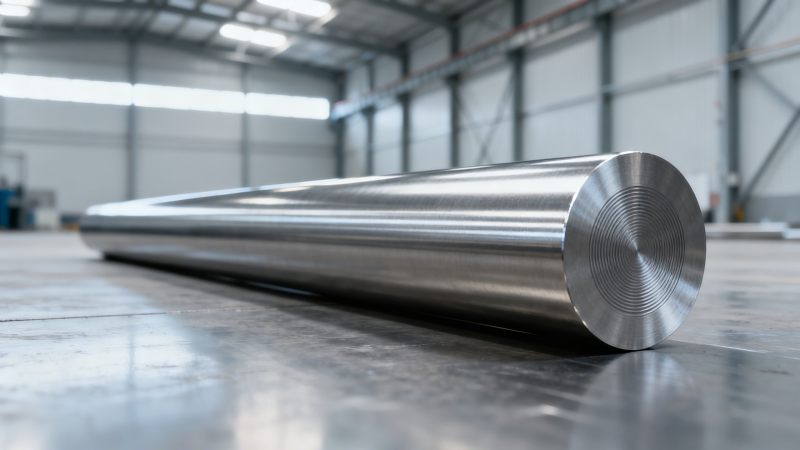
In steel procurement, nominal pipe sizes like “2 inch” are not actual measurements—they’re standardized designations. For example, a nominal 2-inch carbon steel pipe (e.g., High Carbon Steel Pipe) with Schedule 40 wall thickness has an actual outer diameter of 60.3 mm (±0.4 mm per ASTM A53 Gr.B), not 50.8 mm. That ±0.4 mm tolerance may seem minor—but in field welding, flange alignment, or modular assembly, it compounds across dozens of joints, risking misalignment, stress concentration, and premature fatigue.
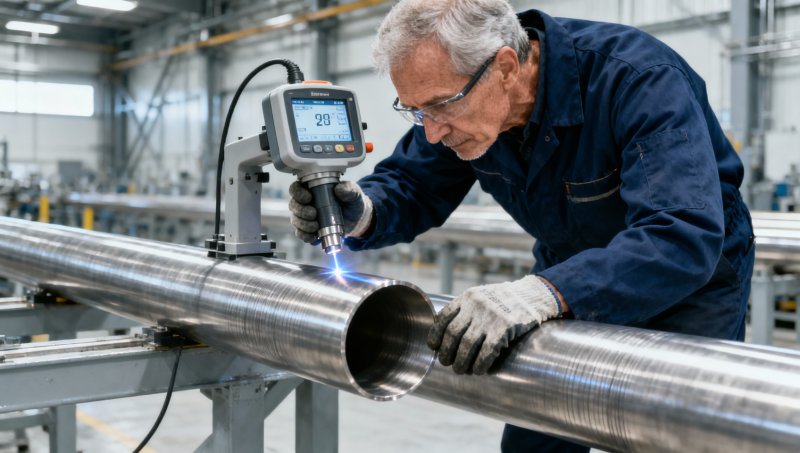
At Hongteng Fengda, we control dimensional deviation to ±0.25 mm for OD and ±0.15 mm for wall thickness on critical high-carbon grades—including A53 Gr.B, ST52, and X65—validated via laser micrometry and third-party SGS reports. This level of consistency reduces rework by up to 35% in prefabricated structural modules shipped to North American power plants and EU industrial facilities.
Tolerance gaps also trigger downstream compliance risks. Under API 5L and EN 10217, wall thickness must meet minimum specified values—not average. A pipe labeled “SCH80, 2 inch” with 0.5% under-thickness at the weld seam may pass visual inspection but fail hydrostatic pressure testing at 1.5× MAOP. That’s why we apply 100% ultrasonic thickness mapping on all High Carbon Steel Pipe lots destined for oil & gas applications.
How tolerance variance affects real-world performance
Dimensional inconsistency doesn’t just delay installation—it degrades system-level reliability. In chemical processing plants using 316 stainless steel pipe, a 0.3 mm OD variation across 120 m of piping increases thermal expansion mismatch by 18%, accelerating gasket creep and flange leakage. Similarly, in structural framing using A36 steel beams, ±1.5 mm length deviation per 6 m segment accumulates to ±9 mm over a 36 m truss—enough to compromise bolt-hole alignment and require field reaming.
Our production data shows that tighter tolerances directly correlate with lifecycle extension: projects specifying ±0.2 mm OD control report 22% fewer weld repairs in Year 1 and 40% lower maintenance spend over 5 years versus industry-standard ±0.8 mm batches.
Key tolerance thresholds by application
This table reflects verified production benchmarks—not theoretical specs. All tolerances are measured post-finishing, after stress-relief heat treatment and straightening, ensuring stability under service loads.
Procurement checklist: 5 non-negotiables when evaluating pipe suppliers
When sourcing structural steel pipe—especially for mission-critical infrastructure—don’t rely on catalog claims alone. Validate these five points before issuing PO:
- Proof of in-house metrology lab: Ask for recent calibration certificates for CMM, laser scanners, and ultrasonic thickness gauges—not just third-party reports.
- Batch-specific test reports: Each shipment must include mill test reports (MTRs) showing actual OD, wall, and tensile values—not just “conforms to ASTM A53.”
- Weld seam verification protocol: For ERW or submerged arc pipe, confirm if seam hardness, microstructure, and residual stress are measured—and whether results fall within API RP 578 limits.
- Surface finish consistency: Galvanized coatings must meet ASTM A123 minimum mass (610 g/m² for heavy-duty use); request salt-spray test logs (≥1,000 hrs neutral).
- Traceability depth: Full lot traceability from raw billet heat number to final cut length, enabling root-cause analysis if issues arise.
Hongteng Fengda provides all five—standard on every order. Our ERP system links each pipe bundle to its original coil batch, heat treatment log, and dimensional inspection record, accessible via secure portal within 24 hours of shipment.
Why global buyers choose Hongteng Fengda for precision-critical steel
We don’t just manufacture steel—we engineer predictability. With ISO 9001-certified processes, dual-source raw material contracts (Baosteel + Ansteel), and automated rolling mills calibrated every 72 hours, we deliver consistent mechanical properties across 15–1200 mm OD ranges and SCH10–XXS wall schedules.
Our clients—from Tier-1 EPC contractors in Saudi Arabia to OEM equipment builders in Germany—rely on us for stable lead times: 25 days for standard grades (A53 Gr.B, ST35), 35 days for API 5L X-series with NACE MR0175 compliance, and 45 days for custom cold-formed profiles requiring CNC bending and robotic welding.
Ready to eliminate tolerance-related delays and rework? Contact our technical sales team to request: (1) dimensionally validated samples for your next bid package, (2) a full MTR sample pack, or (3) a joint tolerance review session with our QA engineers—available in English, Spanish, Arabic, and German.
Please give us a message


Please enter what you want to find