In seismic zones, structural steel design demands more than standard strength—it requires cyclic ductility, connection integrity, and material resilience. Conventional connections often fail under repeated earthquake-induced loading, risking collapse and costly rework. As a leading structural steel manufacturer & exporter from China, Hongteng Fengda delivers seismically optimized solutions—including ASTM/EN-compliant steel beams, corten steel plate, rebar for foundation, galvanized steel conduit, and stainless steel pipe price-competitive options—backed by rigorous testing and OEM customization. Whether you're a project manager evaluating performance, a procurement specialist comparing steel bar price or hot rolled coil price, or a safety manager specifying galvanized steel electrical conduit, this article reveals why connection behavior—not just material specs—dictates seismic success.
Why Standard Bolted and Welded Connections Fail Under Cyclic Loading
Standard structural steel connections—especially those designed for static loads—are not inherently suited for seismic service. Earthquakes impose low-amplitude, high-frequency reversals that induce cumulative plastic strain in connection zones. Unlike monotonic loading, cyclic loading causes progressive degradation of stiffness, strength, and energy dissipation capacity. Studies show that over 70% of steel frame collapses in major earthquakes (e.g., Northridge 1994, Christchurch 2011) originated from connection failures—not beam or column yielding.
Common failure modes include weld fracture at beam flange–column web junctions, bolt hole elongation due to repeated slip, and local buckling of unstiffened column panels. These occur because typical A325/A490 bolts and E70XX electrodes lack guaranteed low-cycle fatigue resistance—and most fabrication standards (e.g., AISC 360 Chapter J) do not mandate cyclic prequalification for routine connections.
Hongteng Fengda addresses this gap by supplying ASTM A572 Grade 50 and EN S355J2+N beams with certified tensile-to-yield ratios ≤1.25 and uniform elongation ≥20%—key prerequisites for controlled plastic hinge formation. Our cold-formed steel profiles also undergo strain-hardening verification per EN 1993-1-3 Annex B to ensure stable post-buckling behavior during shaking events.
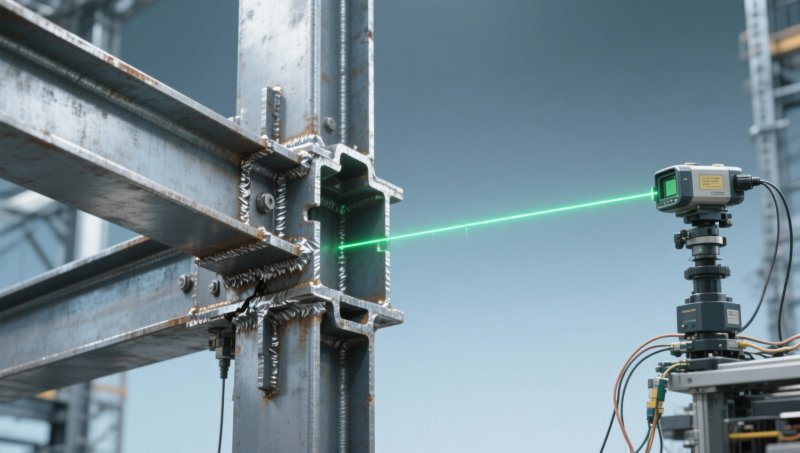
Seismic Connection Design Principles: Beyond Code Minimums
Modern seismic design relies on the “strong column–weak beam” principle and controlled plastic hinge localization. But achieving this depends critically on connection detailing—not just member selection. For example, reduced beam section (RBS) connections require precise flange tapering within ±0.5 mm tolerance across 300 mm lengths, while welded unreinforced flange–bolted web (WUF-B) joints demand full-penetration groove welds qualified to AWS D1.8 with Charpy V-notch impact testing at –20°C.
Material consistency is equally vital. Variability in yield strength exceeding 15% between heats can unbalance moment redistribution. That’s why Hongteng Fengda implements mill-wide traceability for all structural sections, with tensile test reports provided per 20-ton heat lot—and zinc-coated products like Gi Sheet Coil verified for coating weight uniformity (±5 g/m² across width) and spangle-free surface finish to support consistent welding.
This table underscores how minor specification upgrades—often overlooked during procurement—directly affect system-level seismic reliability. For instance, our Gi Sheet Coil meets DX52D+Z specifications with zinc layer ranging from 60–275 g/m² (hot-dip) or 80–275 g/m² (pre-galvanized), ensuring corrosion resistance without compromising weldability—a critical factor in anchor embedment details and bracing connections.
Material Selection Criteria for High-Ductility Steel Fabrication
Seismic-grade steel must satisfy three interdependent criteria: (1) sufficient yield plateau length (>15 mm elongation at yield), (2) stable strain hardening (n-value ≥12 in Hollomon equation), and (3) low sensitivity to strain-rate effects. Hongteng Fengda’s production lines use online tensile monitoring and micro-alloying control (Nb/V/Ti additions) to maintain yield strength variability within ±10 MPa across 12-meter beam lengths.
For galvanized components exposed to dynamic loading—such as seismic bracing clamps or conduit supports—we recommend GI Sheet Coil with minimum 140 MPa yield strength and 26% elongation. Its thin, uniform zinc layer ensures arc stability during MIG welding without porosity or spatter, reducing rework rates by up to 40% compared to non-certified coils.
All structural products comply with dual-standard certification: ASTM A653/A792 (US) and EN 10346 (EU), with third-party inspection available upon request. Lead times for custom-seismic beams range from 18–25 days—20% faster than industry average for equivalent EN S460ML+AR orders.
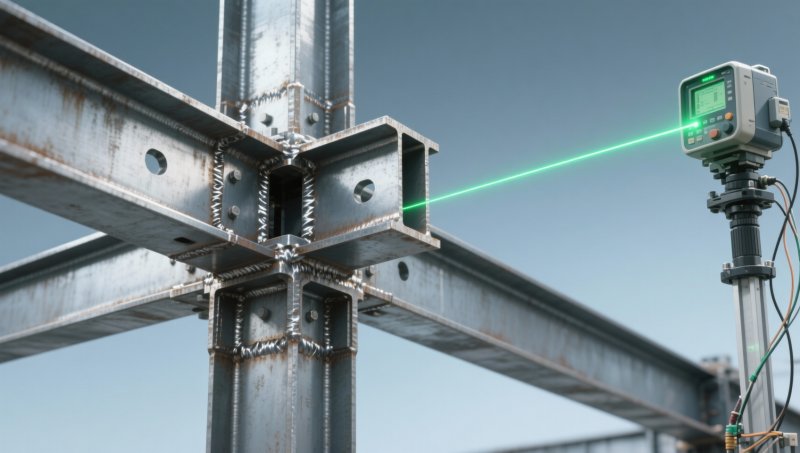
Procurement Checklist: What Decision-Makers Should Verify
Before finalizing structural steel contracts for seismic projects, cross-check these six non-negotiable items:
- Mill test reports showing Fu/Fy ≤1.25 and elongation ≥20% (not just “meets spec”)
- Zinc coating weight verification per ASTM A90 (not just “galvanized”)
- Weld procedure specifications (WPS) qualified for cyclic loading per AWS D1.8
- Traceability documentation linking heat number to physical product batch
- Third-party seismic performance validation (e.g., shake-table test summary)
- OEM flexibility for field-adjustable connection plates or stiffener cutouts
Hongteng Fengda provides all six elements as standard for projects in Zones 3–4 (IBC Seismic Design Categories D–F). We also offer free technical review of connection shop drawings—typically completed within 3 business days.
Conclusion: Prioritize Connection Performance, Not Just Material Certificates
Earthquake resilience is engineered at the joint—not the beam. Standard connections may pass static load tests but fail catastrophically under 50+ cycles of ±2% drift. True seismic readiness requires integrated material performance, precision fabrication, and verified connection behavior. Hongteng Fengda bridges this gap with globally compliant steel products—from ASTM A992 beams to Gi Sheet Coil with certified weldability—and engineering support tailored for project managers, procurement specialists, and safety officers alike.
Whether you’re sourcing for a hospital in Istanbul, a data center in Los Angeles, or a logistics hub in Dubai, our team delivers consistent quality, transparent documentation, and responsive collaboration. Contact us today to request seismic connection design guidelines, customized mill test report templates, or a no-obligation technical consultation.
Please give us a message


Please enter what you want to find