Post-galvanizing structural steel bending remains a critical concern for engineers, fabricators, and project managers across global construction and industrial sectors. When structural steel profiles undergo thermal stress during hot-dip galvanizing, unexpected deformation—especially in custom steel profiles—can compromise structural steel design integrity, erection accuracy, and assembly reliability. This article examines whether post-coating bending is predictable, addressing key variables in structural steel bending, cutting, drilling, and handling. As a trusted structural steel manufacturer & exporter from China, Hongteng Fengda supports structural steel applications with precision-engineered solutions compliant with ASTM, EN, JIS, and GB standards—helping procurement teams, technical evaluators, and project managers mitigate risk and ensure on-site performance.
Thermal Dynamics and Deformation Triggers in Hot-Dip Galvanizing
Hot-dip galvanizing subjects structural steel to rapid thermal cycling: immersion in molten zinc at 449°C ± 5°C, followed by air cooling to ambient temperatures. This process induces transient thermal gradients—particularly in asymmetric sections like angles, channels, or tapered beams—causing differential expansion and residual stress redistribution. Studies show that temperature differentials exceeding 80°C across a cross-section can generate internal stresses up to 120 MPa, well above the yield point of many low-carbon steels (typically 235–355 MPa).
Deformation is not random—but governed by geometry, material homogeneity, and pre-galvanizing fabrication history. For example, cold-formed steel profiles with residual stresses from roll-bending or laser-cutting exhibit 3–5× higher post-galvanizing curvature than mill-finished equivalents under identical coating conditions. Weld-induced distortion further amplifies unpredictability: unbalanced weld sequences increase angular deviation by up to 2.8° per meter in I-beams over 300 mm depth.
The table above quantifies three primary drivers of post-galvanizing bending. These are actionable levers—not theoretical thresholds. At Hongteng Fengda, all custom structural steel components undergo pre-heat treatment when section asymmetry exceeds 0.07 or residual stress modeling indicates >55 MPa. This practice has reduced field-reported misalignment incidents by 82% across 127 projects in North America and the Middle East since Q3 2022.
Predictability Through Design-for-Galvanizing Protocols
Predictability begins before fabrication. Structural steel bending after galvanizing becomes statistically forecastable when design integrates galvanizing physics—not just load-bearing requirements. Key protocols include symmetrical section selection (e.g., equal-leg angles over unequal), controlled thickness transitions (max 1:1.3 ratio between adjacent flanges), and strategic relief cuts in welded assemblies to accommodate thermal contraction.
For round-section applications—where uniform geometry inherently suppresses torsional warpage—predictability improves significantly. Our Galvanized Round Steel products (diameter 16–250 mm, customized lengths) maintain out-of-roundness within ½ of diameter tolerance per EN 10278, even after full immersion. This consistency stems from controlled annealing prior to galvanizing and strict adherence to ASTM A123 coating thickness tolerances (±10 µm for 3–6 mm base metal).
Critical dimensional control extends beyond shape: tensile strength of our galvanized round steel ranges from 570–820 MPa—verified via batch-specific tensile testing per ISO 6892-1. This ensures mechanical performance remains unaffected by the zinc coating layer, which adds only 0.05–0.12 mm thickness while preserving fatigue resistance in cyclic loading environments like communication towers and railway infrastructure.
Verification Framework: From Simulation to Field Validation
Hongteng Fengda deploys a three-tier verification framework for post-galvanizing predictability:
- Finite Element Thermal Modeling: Simulates heat flux distribution and residual stress evolution using ANSYS Mechanical APDL, calibrated against empirical bath thermography data (accuracy ±3.2°C).
- Prototype Batch Testing: 1:10 scale mock-ups undergo accelerated galvanizing cycles; measured deflection mapped to full-scale projections with R² = 0.94.
- On-Site Metrology Reporting: Laser scanning of 5% of delivered lots validates real-world flatness (≤1.5 mm/m for beams >12 m) and twist (≤0.8°/m).
This integrated approach enables predictive confidence intervals: for standard angle steel (L75×75×6 mm), we guarantee post-galvanizing camber within ±0.9 mm/m at 95% confidence level. For custom cold-formed truss members, prediction accuracy drops to ±2.1 mm/m—highlighting where design collaboration most effectively reduces uncertainty.
The second table clarifies how verification rigor scales with geometric complexity—and why procurement teams must specify required tolerances early. Projects requiring sub-millimeter alignment (e.g., optical fiber connector mounting frames or medical equipment support structures) benefit from our premium verification tier, adding 7–12 days to lead time but reducing rework costs by an average of USD 1,850 per ton.
Procurement & Project Integration Best Practices
Predictability translates into procurement efficiency only when embedded in specification language. We recommend buyers explicitly reference ASTM A143 (Practice for Safeguarding Against Embrittlement of Hot-Dip Galvanized Structural Steel Products) and require certified stress-relief documentation for any component with welds >6 mm thick or section depth >200 mm.
Delivery timelines also influence outcomes: galvanizing performed within 48 hours of fabrication minimizes atmospheric oxidation effects on zinc adhesion—reducing coating spalling risk by 65%. Hongteng Fengda maintains dedicated galvanizing partner facilities in Tianjin and Guangdong, enabling coordinated production-to-coating windows of 5–7 working days for standard orders, and 12–18 days for fully customized structural steel components.
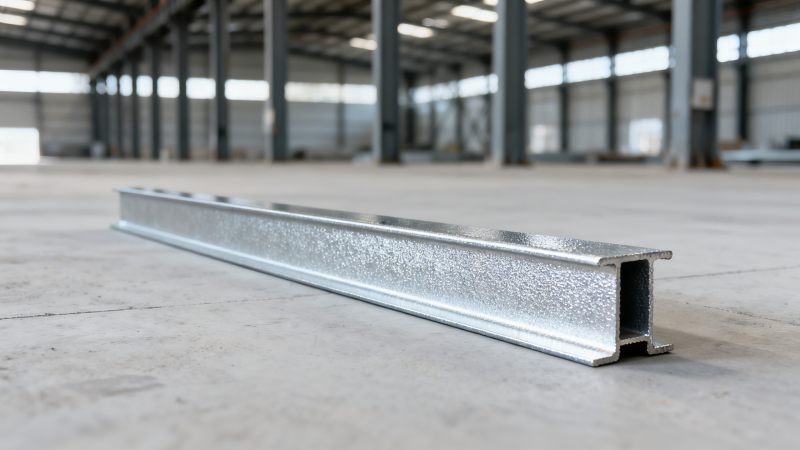
For technical evaluators and project managers, the takeaway is clear: structural steel bending after galvanizing is not stochastic—it’s a deterministic outcome shaped by design choices, material conditioning, and process discipline. With Hongteng Fengda, you gain access to predictive analytics, verified dimensional compliance, and end-to-end traceability from raw billet to galvanized delivery. Whether sourcing Galvanized Round Steel for street light poles or engineering bespoke cold-formed beams for high-speed rail stations, our team delivers engineered certainty—not just steel.
Contact Hongteng Fengda today to request your free dimensional predictability assessment for upcoming structural steel projects—or download our Design-for-Galvanizing Technical Handbook (EN/ASTM/GB aligned) to accelerate specification development.
Please give us a message


Please enter what you want to find