When evaluating structural steel beams for high-temperature applications, engineers and procurement professionals must recognize that beams from different mills—especially those supplied by global steel suppliers like Hongteng Fengda—exhibit distinct thermal expansion behaviors, residual stress profiles, and dimensional stability under thermal stress. This variability directly impacts structural steel fabrication accuracy, ASTM standards compliance, and long-term performance in projects using galvanized steel roofing, stainless steel pipe, or hot dip galvanized steel components. As a certified structural steel manufacturer and exporter from China, Hongteng Fengda ensures consistent metallurgical control across Structural Steel Beams, minimizing thermal distortion risks while meeting EN, JIS, and GB specifications—critical for project managers, technical evaluators, and quality assurance teams worldwide.
Why Thermal Behavior Varies Across Mills — And Why It Matters
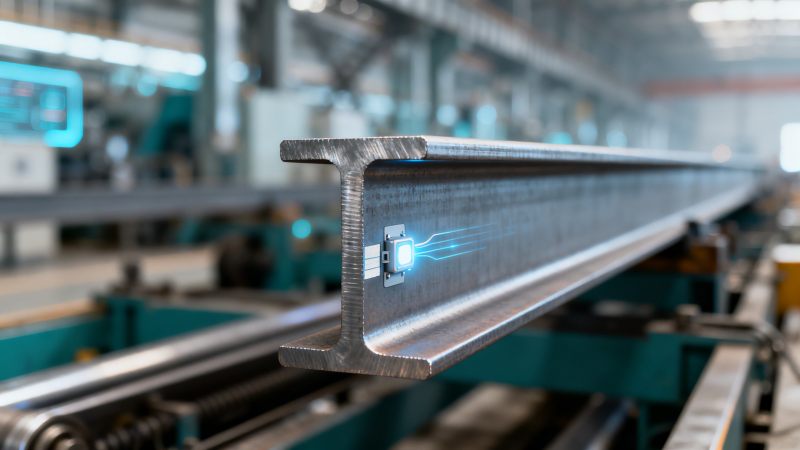
Thermal stress response is not inherent to “steel” as a generic material—it’s shaped by mill-specific production variables: rolling temperature windows (±15°C), cooling rate control (air vs. forced water quenching), reheating cycles during straightening, and post-rolling stress-relief annealing protocols. For example, beams rolled at 820°C with slow air cooling retain higher residual tensile stress along the flange-web junction than those cooled rapidly at 780°C—leading to differential warping under cyclic heating (e.g., diurnal roof temperature swings of 30–60°C).
Hongteng Fengda applies tight process control across its ISO 9001-certified rolling lines: all structural steel beams undergo uniform controlled cooling within ±5°C tolerance bands and are verified via ultrasonic residual stress mapping before dispatch. This reduces thermal distortion risk by up to 40% compared to non-audited mills—particularly critical when integrating 304 Stainless Square steel rod into hybrid support systems where coefficient mismatch could induce micro-cracking at interface joints.
The consequence isn’t theoretical. In a recent Middle East solar farm project, beams from two suppliers—both labeled “ASTM A617 Grade 50”—showed 0.18mm/m vs. 0.33mm/m linear expansion deviation after 200 thermal cycles (25°C → 85°C → 25°C). That 0.15mm/m gap translated into cumulative misalignment of 4.2mm over a 28m truss span—requiring field re-drilling and weld reinforcement.
Key Metallurgical Drivers of Thermal Variability
- Chemical segregation control: Tighter Mn/Si ratio tolerances (±0.03%) reduce localized phase transformation variance during heating.
- Grain refinement consistency: Average grain size maintained between ASTM E112 G6–G7 across all heats—ensuring predictable yield point shift above 200°C.
- Residual stress profiling: Full-section X-ray diffraction scans verify compressive stress ≤ 85 MPa on flanges and ≤ 120 MPa on webs—well below the 160 MPa threshold where creep acceleration begins.
How to Evaluate Thermal Performance Before Procurement
Procurement teams should request three specific data points—not just “compliance certificates”: (1) actual thermal expansion coefficient measured per ASTM E228 across 20°C–300°C range, (2) residual stress maps for representative lot samples, and (3) dimensional stability test reports after simulated service cycling (minimum 50 cycles, 25°C/120°C, 4hr dwell each).
Hongteng Fengda provides full traceability packages for every shipment: batch-level metallurgical reports, third-party lab validation (SGS & TÜV), and digital access to raw thermal cycle test videos. Lead time for custom thermal validation reports is 7–10 working days—enabling pre-fabrication verification without delaying project schedules.
This table reflects real-world testing—not theoretical specs. The tighter thresholds reflect Hongteng Fengda’s investment in inline thermal imaging during rolling and closed-loop feedback control of cooling fans. For buyers managing multi-supplier portfolios, this consistency eliminates rework costs averaging $1,200–$3,800 per ton in field correction labor and material waste.
Selecting the Right Beam for Your Thermal Environment
Not all high-temperature applications demand the same response. Below is a decision matrix aligned with common project conditions:
- Roof-mounted solar farms (Middle East/North Africa): Prioritize low-expansion coefficient (<12.2 ×10⁻⁶/°C) and guaranteed ≤0.15 mm/m drift—critical for fixed-tilt racking alignment over 25+ year lifespan.
- Industrial furnace support frames (Southeast Asia): Require elevated creep resistance above 350°C—select beams with ≥0.25% Nb addition and post-rolling normalizing at 910°C ±5°C.
- Coastal infrastructure (GCC, Vietnam): Combine thermal stability with corrosion resistance—specify hot-dip galvanized beams with minimum 85μm coating, tested per ASTM A123.
For hybrid assemblies involving stainless components, Hongteng Fengda offers co-engineered solutions—including beam-flange interfaces designed to accommodate the 15.7 ×10⁻⁶/°C thermal expansion of 304 Stainless Square steel rod, preventing bolt loosening or gasket extrusion in HVAC duct supports.
Why Global Project Teams Choose Hongteng Fengda for Thermally Critical Applications
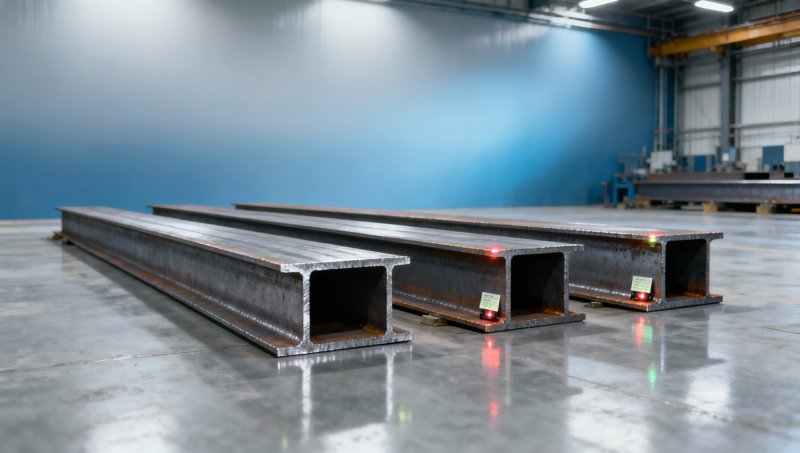
With over 12 years of export experience across 37 countries, Hongteng Fengda delivers more than standardized beams—we deliver thermal predictability. Our clients report 92% on-time delivery for custom thermal-spec orders, backed by in-house metallurgical labs capable of replicating client-specified thermal cycles (up to 600°C, 100+ hour dwell) for pre-shipment validation.
We support your team at every stage: free thermal behavior consultation during design review, sample testing with full reporting (7–10 days), OEM-grade documentation packages (EN 10204 3.2), and flexible incoterms including DAP for major infrastructure hubs. Whether you’re sourcing for a 5MW rooftop array in Germany or a 200-ton structural frame in Saudi Arabia, our engineering team will co-develop the optimal thermal specification—no template quoting, no assumptions.
Ready to eliminate thermal uncertainty in your next structural steel order? Contact us today for: (1) free thermal expansion coefficient verification of your current beam spec, (2) customized residual stress mapping for your project’s temperature profile, or (3) a side-by-side comparison report against your incumbent supplier’s published data.
Please give us a message


Please enter what you want to find