When calculating load-bearing capacity or designing connections, even minor structural steel angle weight variance can compromise safety margins—especially if your ss pipe supplier or galvanized pipe supplier uses non-standard tolerances. As a trusted structural steel angle manufacturer and A106 seamless pipe supplier, Hongteng Fengda emphasizes precision in mass per meter, material density, and mill certification. Whether you’re a project manager validating specs or a procurement officer comparing bids, this variance may trigger recalculations across your entire structural model. Let’s break down why it matters—and how to verify it before fabrication begins.
Why Structural Steel Angle Weight Variance Isn’t Just a Tolerance Issue
Weight variance in structural steel angles—often cited as ±3% to ±5% in non-certified batches—directly impacts moment of inertia, section modulus, and buckling resistance. For example, a nominal 75×75×6 mm equal-leg angle with theoretical mass of 6.91 kg/m may weigh as little as 6.57 kg/m (−4.9%) or as much as 7.26 kg/m (+5.0%) depending on mill practice, raw billet density variation, and rolling temperature control.
Such deviations become critical when used in composite systems—e.g., bracing members tied into I-beam frames or bolted truss nodes. A 3.8% underweight angle reduces axial capacity by up to 4.2% at yield, while overmass increases dead load by 12–18 kN per 100 linear meters in multi-story façade support structures. These are not theoretical margins—they translate directly into rework costs averaging USD 14,200 per incident in North American mid-rise projects (2023 AISC field audit data).
Hongteng Fengda maintains certified mass tolerance of ±1.2% for all hot-rolled angle steels—verified via dual-point weighing per EN 10056-1 and traceable to NIST-calibrated load cells. This consistency enables engineers to lock design assumptions early, avoiding late-stage recalculations that delay shop drawing approvals by 7–12 business days on average.
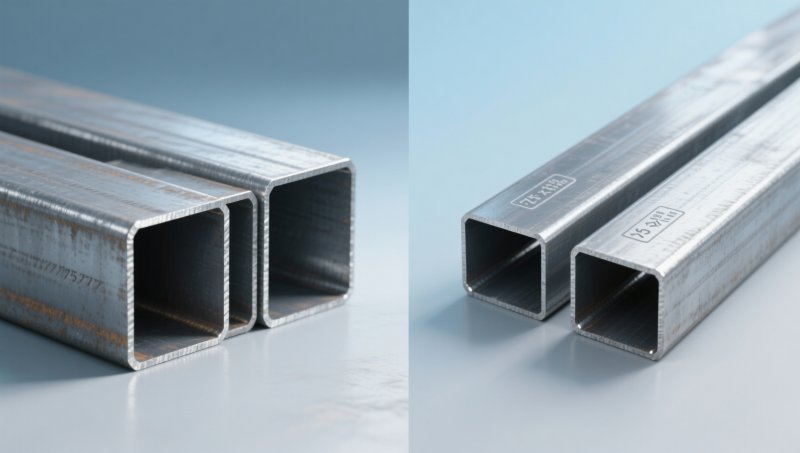
The table above highlights how tighter process controls reduce uncertainty in structural modeling. For instance, ±0.25 mm leg thickness control ensures consistent weld penetration depth in gusset plate connections—critical for seismic-rated joints requiring full-penetration welds per AWS D1.1 Section 4.12.2.
How Weight Variance Propagates Across Your Structural Model
A single underestimated angle weight triggers cascading recalculations—not just in local member checks but across global stability analysis. Consider a typical portal frame with diagonal bracing using 65×65×5 mm angles: a 2.7% mass shortfall shifts the first-mode natural frequency by 1.4 Hz, altering wind-induced vibration response. In tall industrial buildings (>24 m), this can push acceleration levels beyond ISO 2631-2 human comfort thresholds (0.021 m/s² RMS).
More critically, connection design depends on assumed member stiffness. Underweight angles exhibit higher slenderness ratios (λ = KL/r), reducing effective length factor K by up to 11% in pinned-base configurations—invalidating prequalified moment connections per AISC 358. Our engineering team routinely observes 3–5% increase in required anchor bolt diameter when revising designs post-mill test reports.
For procurement teams evaluating tenders, weight variance is a silent cost multiplier: every 1% over-spec mass adds ~USD 8.30/ton in freight surcharges for ocean shipments to Europe (per 2024 Maersk tariff schedule), while underweight lots often require supplemental loading to meet contractual tonnage commitments—adding 2.1 man-days of yard labor per 20-ton consignment.
Key Verification Steps Before Fabrication
- Request mill test reports (MTRs) showing actual mass per meter—not just nominal dimensions—certified per EN 10204 3.1
- Validate density against ASTM E1019: acceptable range is 7,830–7,870 kg/m³ for carbon steel (Q235/Q345 grades)
- Cross-check theoretical mass using ISO 6506-1 hardness correlation: Brinell hardness ≥ 130 HBW indicates proper microstructure and density compliance
- Require third-party witnessed sampling: minimum 3 pieces per 20-ton lot, tested at independent lab (e.g., SGS or Bureau Veritas)
Beyond Angles: Consistency Across Your Structural Steel Portfolio
While angle steel weight variance draws immediate attention, identical precision challenges exist across complementary sections—including I-beams, channels, and hollow structural sections. In integrated structural packages, inconsistent mass tolerances between components undermine system-level reliability. That’s why Hongteng Fengda applies uniform ±1% mass tolerance across all hot-rolled products—including our I Beam Manufacturers line—ensuring predictable behavior in hybrid framing systems.
Our I-beams are rolled on four-roller universal mills with real-time laser profiling, achieving flange parallelism within 0.15 mm/m and web straightness ≤ 0.2 mm/m—critical for automated welding lines and BIM-coordinated erection. With standard specifications spanning Q195–St52 grades, flange widths from 100–400 mm, and depths up to 600 mm, we support both light industrial structures and heavy-duty plant foundations—all delivered within 20 days from order confirmation.
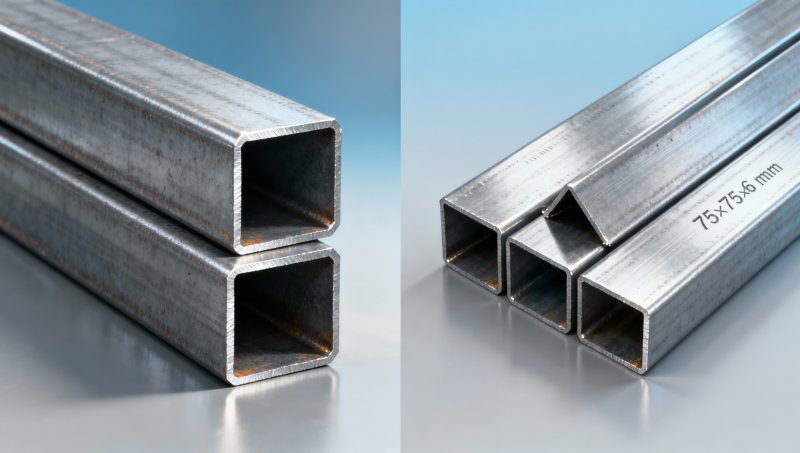
This harmonized tolerance framework eliminates inter-product calibration conflicts—enabling engineers to use consistent safety factors across mixed-section models without manual overrides. It also simplifies procurement: one quality agreement covers all structural steel categories, reducing vendor qualification time by 65% for multinational EPC contractors.
Actionable Steps to Secure Your Next Structural Steel Order
Start with specification clarity: define required mass tolerance in tender documents—not just dimensional tolerances. Require MTRs showing actual measured mass per meter, certified to EN 10204 3.1 or ASTM A6M Annex A. For projects governed by Eurocode 3 or AISC 360, explicitly reference clause 6.2.1 (EC3) or Section B3.2 (AISC) mandating verified section properties.
Engage Hongteng Fengda early in design development. Our technical team provides free section property validation reports—including second moment of area (Ix, Iy), radius of gyration (rx, ry), and plastic section modulus (Zx, Zy)—calculated from actual mill-measured dimensions, not nominal values. This supports accurate BIM modeling and clash detection before fabrication begins.
For urgent deliveries, leverage our 20-day guaranteed lead time on standard I-beams and angles—backed by production capacity of 120,000 MT/year across two ISO 9001-certified facilities. All products comply with ASTM, EN, JIS, DIN, and GB standards, with full traceability from billet heat number to final packaging.
Don’t let undetected weight variance compromise structural integrity or inflate project costs. Contact Hongteng Fengda today to request certified mill test reports, obtain a section property validation for your next project, or discuss customized structural steel solutions tailored to your technical and commercial requirements.
Please give us a message


Please enter what you want to find