Choosing the right structural steel angle sizes is essential for frame stability, material efficiency, and project cost control. For project managers handling industrial or construction jobs, understanding how structural steel angle options fit common frame applications can reduce sourcing mistakes and improve execution. This guide outlines practical size considerations to help you match specifications with real project needs.
In many industrial buildings, equipment platforms, supports, and secondary framing systems, the wrong angle size can create 3 direct problems: underperformance, unnecessary steel weight, and avoidable fabrication delays. A practical selection process should balance load demand, connection method, standard compliance, and lead time.
For global buyers sourcing from China, the decision is not only about dimensions. It also involves tolerances, grade availability, surface condition, and whether the supplier can deliver standard or OEM structural steel angle products under ASTM, EN, JIS, or GB requirements within a realistic 2–6 week production window.
How structural steel angle sizes match common frame applications
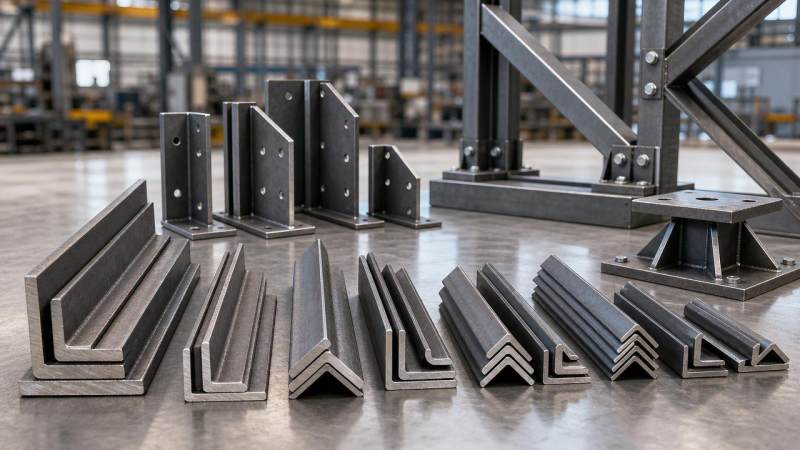
A structural steel angle is commonly used in L-shaped form for bracing, framing edges, base structures, machine supports, and connection reinforcement. In frame jobs, the most common variables are leg size, thickness, equal or unequal legs, and steel grade. These 4 factors affect both capacity and fabrication efficiency.
Project managers often deal with angle sizes ranging from 25 x 25 x 3 mm up to 200 x 200 x 20 mm for standard frame work. Lighter sections are suitable for ladders, guards, and small brackets. Mid-range sizes are widely used for purlin supports, cross bracing, and equipment frames. Heavier sections are more common in industrial skids and load-bearing frame nodes.
Typical uses by size range
The table below gives a practical view of how structural steel angle sizes are commonly selected in frame-related jobs. Exact engineering calculations should still be based on project loads, span, connection design, and local code requirements.
A key takeaway is that many frame jobs do not need the largest available section. Overspecifying by even 2–4 mm in thickness across a medium project can add unnecessary steel tonnage, higher welding hours, and more expensive transport. Good sourcing begins with function-based sizing rather than habit-based ordering.
Equal angle vs unequal angle in frame design
Equal angles are often preferred for symmetrical loads and simple detailing. They are easier to standardize across multiple frame assemblies. Unequal angles are more useful when one leg must connect to a narrow flange, wall plate, or secondary member while the other leg carries a wider weld or bolt pattern.
For procurement teams, this distinction matters because equal angle sections are usually easier to source in larger quantities, while unequal sizes may involve more limited stock availability. If a project requires 5 to 8 repeated angle specifications, standardizing 2 or 3 of them can simplify purchasing and reduce fabrication errors.
Quick selection checks for project managers
- Confirm whether the member is load-bearing, stiffening, or only a connection accessory.
- Check if the angle works in compression, tension, or combined loading.
- Review bolt edge distance and weld access before finalizing leg dimensions.
- Verify whether galvanizing, primer coating, or bare mill finish is required.
- Align the section with the governing standard such as ASTM, EN, JIS, or GB.
These checks may take only 15–30 minutes during pre-order review, but they can prevent rework that delays site schedules by several days or more. For frame jobs with repeated supports, early section validation is often more valuable than late-stage field correction.
Key sizing factors that affect performance, cost, and fabrication
Choosing the right structural steel angle means understanding how geometry interacts with fabrication. In many projects, a section that is strong enough on paper may still be inefficient if it complicates bolting, creates weld congestion, or exceeds handling limits for shop assembly.
Four core sizing variables
- Leg size: affects contact area, stiffness, and connection space.
- Thickness: influences load capacity, weldability, and total weight.
- Member length: impacts buckling behavior and transport efficiency.
- Steel grade: determines yield and tensile performance under design conditions.
For example, a 75 x 75 x 6 mm angle may work well for a short bracing element, but the same section may be inadequate for a longer unsupported member. In practical terms, unsupported lengths above 1.5 m to 3 m often require closer review for deflection and buckling, especially in lightly braced frames.
How sizing decisions affect downstream execution
Section choice directly influences fabrication cost in at least 3 ways: cutting and drilling time, welding time, and coating consumption. A thicker angle can increase deposited weld metal, while a wider leg may demand larger gusset plates. When multiplied across 100 to 500 repeated pieces, small size changes become budget items.
At this stage, project managers sometimes review adjacent material needs as well. For plates used in frame connections, cover parts, formed components, or stamped accessories, High Carbon Steel Plate may be considered for applications that require high tensile strength, resistance to deformation, and reliable shaping performance.
Available in models such as SPCC, SPCCT, SPCD, SPCE, SPCF, and SPCG, this plate option can support manufacturing uses including switchboards, iron baskets, automobile chassis parts, roof components, and formed surface panels. Typical dimensions cover Width100mm-3000mm, Length1m-12m, and Thickness0.1mm-400mm, with standards including AISI, ASTM, ASME, DIN, BS, EN, ISO, JIS, GOST, and SAE.
Although plates and angles serve different structural functions, combining the right structural steel angle with the correct plate material in one sourcing plan can improve coordination across fabrication packages, especially where brackets, base details, or bent steel accessories are involved.
Procurement-focused comparison points
The next table highlights common selection factors that project teams should compare before placing an order. It helps connect engineering needs with supply chain realities.
The practical message is clear: the best structural steel angle is not only the one with adequate strength. It is also the one that fits the project schedule, fabrication route, coating process, and connection design without creating hidden costs.
Common frame jobs and practical angle selection guidance
Different frame applications call for different priorities. Some need better stiffness, some need easier drilling, and some need economical repeatability over hundreds of identical members. A project manager should classify the job first, then select the structural steel angle accordingly.
Light secondary frames and accessories
For handrail posts, access platforms, small support frames, and maintenance brackets, angle sizes from 30 x 30 x 3 mm to 50 x 50 x 5 mm are commonly used. The focus here is usually easy fabrication and reasonable weight rather than maximum strength. Ordering oversized sections in these jobs often increases cost with limited functional gain.
Industrial support frames and equipment bases
Machinery bases, utility skids, and plant support frames often use 63 x 63 x 6 mm to 100 x 100 x 10 mm angles. These sections give a better balance between stiffness and manageable fabrication. If vibration or repeated loading is present, connection detailing should receive the same attention as the member size itself.
Bracing and reinforcement points
Where the structural steel angle works as a brace or reinforcement leg, thickness and length become more critical. A longer member may need a heavier section or a revised support layout. In practical purchasing terms, changing one 6 mm section to 8 mm can be less disruptive than redesigning multiple connection plates later.
Common mistakes to avoid
- Selecting by leg size only and ignoring thickness.
- Using stock availability as the only design driver.
- Overlooking galvanizing allowance or coating requirements.
- Failing to match bolt spacing with actual leg width.
- Ordering multiple near-duplicate sizes that complicate site sorting.
Avoiding these 5 issues can save both warehouse handling time and site installation time. On larger projects, reducing even 10% of section variety can improve identification, bundling, and fabrication control.
Supplier coordination, standards, and risk control for international projects
When sourcing structural steel angle for overseas construction or industrial jobs, technical suitability is only one part of the decision. The other part is supplier execution. A reliable manufacturer should support specification review, quality control, and delivery coordination before material reaches the project site.
What project managers should confirm before ordering
- Section size list, quantity, and standard format are finalized.
- Steel grade and applicable standard are clearly stated.
- Surface treatment requirements are defined for indoor or outdoor exposure.
- Inspection points are agreed, such as dimensions, straightness, and marking.
- Packing, shipment batch, and required delivery window are confirmed.
This 5-step confirmation process is especially useful when a project includes mixed items such as angle steel, channel steel, beams, cold formed profiles, and custom structural parts. It reduces confusion between drawing requirements and purchasing descriptions.
Why manufacturing capability matters
A supplier with modern production facilities and strict quality control can better manage both standard specifications and OEM requests. For international buyers, this is important when project packages include multiple section types and acceptance criteria under ASTM, EN, JIS, or GB frameworks.
Hongteng Fengda serves global construction, industrial, and manufacturing projects with angle steel, channel steel, steel beams, cold formed steel profiles, and custom structural steel components. For project managers, the value lies in stable production capacity, consistent quality, and dependable lead times that help reduce sourcing risk across North America, Europe, the Middle East, and Southeast Asia.
Lead time and communication expectations
For many standard structural steel angle orders, production planning may fall within 2–4 weeks, while custom processing or mixed-section orders may extend to 4–6 weeks depending on quantity and finishing requirements. Early technical clarification usually shortens the process more effectively than last-minute schedule pressure.
Project teams should also ask for a document checklist covering mill test information, section marking, packing list, and shipment status updates. Even simple reporting at 3 stages—order confirmation, pre-shipment inspection, and dispatch—can improve visibility and reduce coordination risk.
Final selection approach for better project outcomes
The right structural steel angle size depends on more than a catalog dimension. It should fit the frame function, connection detail, fabrication route, standard requirement, and project timeline. In most cases, a disciplined review of 4 areas—load role, leg size, thickness, and supply feasibility—will lead to a more efficient choice.
For project managers and engineering decision-makers, the best results come from aligning technical design with procurement planning early. That means reducing unnecessary section variety, checking practical fit-up conditions, and confirming delivery capability before issuing the final order.
If you are evaluating structural steel angle options for industrial frames, construction supports, or custom steel assemblies, Hongteng Fengda can provide standard specifications and tailored structural steel solutions to match your project needs. Contact us now to discuss sizes, standards, delivery schedules, or to get a customized quotation for your next job.
Please give us a message


Please enter what you want to find