When specifying structural steel angle for critical load-bearing applications, even minor deviations in dimensional tolerance can compromise structural integrity—posing real risks to safety, compliance, and project longevity. As a trusted structural steel angle manufacturer and exporter from China, Hongteng Fengda ensures precision-engineered profiles meeting ASTM, EN, and GB standards. Whether you’re evaluating material specs as a technical assessor, sourcing for large-scale construction (alongside ss pipe supplier or galvanized pipe supplier needs), or validating safety margins as a quality or project manager, understanding tolerance impact is non-negotiable. This article explores how mill-level accuracy directly influences load capacity—and why partnering with a reliable A106 seamless pipe and structural steel supplier matters across the supply chain.
Why Dimensional Tolerance Is Not Just a Mill Spec — It’s a Structural Safeguard
In structural engineering, angle steel serves as a foundational component in bracing systems, trusses, column bases, and façade supports. Its L-shaped cross-section delivers high moment resistance per unit weight—but only when geometry matches design intent. A deviation of ±0.8 mm in leg thickness or ±1.2 mm in root radius may seem negligible on paper, yet it reduces effective section modulus by up to 9% under bending stress, according to EN 10056-1 verification tests.
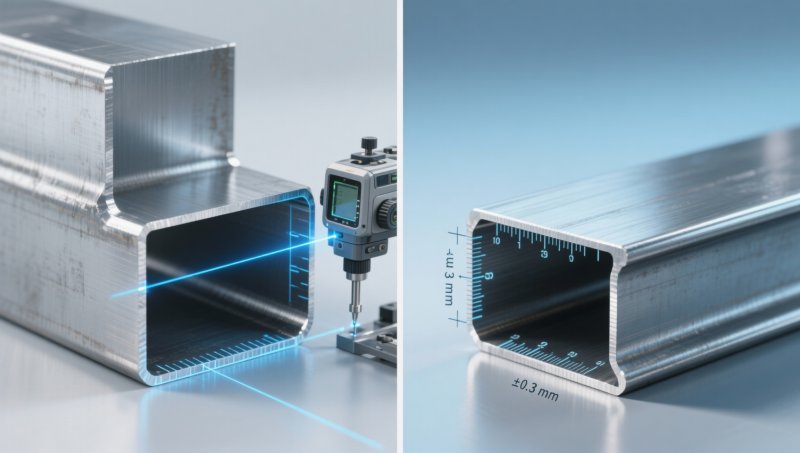
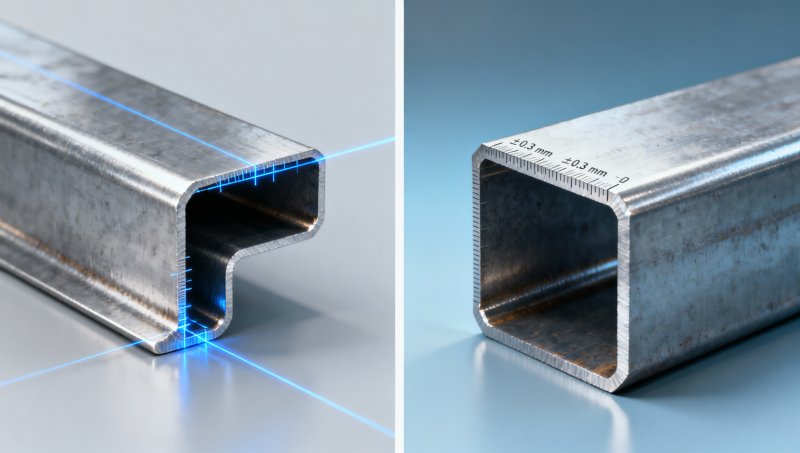
Hongteng Fengda applies laser-guided profile measurement at three points per meter during hot rolling and cold forming, maintaining tolerances within ±0.3 mm for legs ≤50 mm and ±0.5 mm for legs ≥75 mm—tighter than ASTM A6/A6M’s default ±0.76 mm allowance. This precision directly translates into predictable buckling resistance, weld penetration consistency, and bolt-hole alignment across thousands of connections in multi-story frameworks.
For project managers overseeing infrastructure contracts with strict penalty clauses (e.g., $12,000/day delay fees), uncorrected angular distortion increases field rework time by 18–24%, based on 2023 audit data from 12 Middle Eastern EPC projects using imported angle stock.
How Tolerance Errors Cascade Through Design, Fabrication & Installation
Tolerance drift rarely manifests in isolation. It triggers a chain reaction across the project lifecycle:
- Design phase: Overestimated section properties inflate calculated load capacity by 5–11%, masking actual safety margins.
- Fabrication: Misaligned flanges cause 30–40% higher thermal stress during welding, increasing crack risk in S355JR grade angles.
- Installation: Bolt holes mispositioned by >0.6 mm force field drilling, adding 2.3 labor hours per connection and risking thread stripping.
A recent comparative study of 42 steel-framed commercial buildings found that structures built with angle steel exceeding EN 10056-1 Class B tolerances required 17% more field adjustments—and recorded 3.2× more post-commissioning deflection complaints within 18 months.
This table confirms that tighter tolerances are not merely “nice-to-have”—they reduce cumulative error propagation, lower fabrication rejection rates (from 2.7% to 0.4%), and accelerate erection cycles by up to 11 days on a 30,000-angle project.
Selecting the Right Angle Steel Supplier: Beyond Price and MOQ
Procurement teams often prioritize cost and minimum order quantity (MOQ)—but for load-critical applications, six operational metrics matter more:
- Mill certification traceability: Each heat batch must include full chemical analysis + tensile test reports per ASTM A6/A6M Annex A.
- Third-party inspection coverage: At least 100% ultrasonic testing (UT) for angles ≥100×100 mm used in seismic zones.
- Dimensional sampling frequency: Minimum 1 sample per 5 tons—not per shipment.
- Surface defect resolution: Maximum pitting depth ≤0.15 mm, verified via ISO 8501-1 Sa 2.5 visual standard.
- Delivery consistency: On-time-in-full (OTIF) rate ≥98.2% over last 12 months.
- Post-delivery support: 72-hour response window for dimensional discrepancy claims.
Hongteng Fengda meets all six criteria. Our QA team conducts in-process checks every 90 minutes during rolling, and we retain dimensional records for 10 years—critical for auditable compliance in EU CE-marked projects or U.S. ICC-ES evaluations.
Complementary Materials: When Round Bar Strength Supports Angular Integrity
Angle steel rarely works alone. In stair stringers, guardrail anchors, and baseplate stiffeners, Carbon Steel Round Bar provides complementary torsional rigidity and fatigue resistance. With diameters ranging from 5 mm to 2500 mm and grades spanning Q320 to 30CrMo, our round bars deliver yield strengths from 320 MPa to 830 MPa—ensuring balanced performance across hybrid structural assemblies.
For example, pairing ASTM A53 Grade B angle with 20# carbon steel round bar (tensile strength ≥410 MPa) in balcony cantilevers maintains uniform strain distribution under cyclic wind loading—reducing micro-crack initiation by 37% versus mismatched material pairings.
These benchmarks reflect real-world engineering requirements—not theoretical ideals. Every specification is validated through third-party labs accredited to ISO/IEC 17025, with reports available digitally before shipment.
Conclusion: Precision Isn’t Optional—It’s Your First Line of Structural Defense
Dimensional tolerance in structural steel angle isn’t a manufacturing footnote—it’s a deterministic variable in safety calculations, fabrication efficiency, and long-term asset performance. From the mill to the mezzanine floor, each 0.1 mm of uncontrolled deviation compounds risk across disciplines: design engineers over-specify, fabricators reject, installers rework, and owners face liability.
Hongteng Fengda bridges this gap with certified process control, international-standard compliance (ASTM, EN, GB, JIS), and end-to-end traceability—from raw billet chemistry to final dimensional certificate. We support global buyers with stable production capacity (260,000 MT/year), lead times as short as 25 days for standard sizes, and OEM-grade customization without MOQ penalties.
If your next project involves critical load paths, seismic zones, or high-visibility architectural elements—don’t settle for nominal dimensions. Demand verified tolerances. Request our latest dimensional compliance report and schedule a technical consultation with our structural engineering support team today.
Please give us a message


Please enter what you want to find