Structural steel is renowned for its strength and longevity — but 'durable' doesn’t mean 'maintenance-free.' From ASTM A36 angle steel price per ton in Philippines to MOQ requirements for structural steel orders, procurement managers must look beyond initial cost. Understanding structural steel lifespan and maintenance, common defects in steel beams and solutions, and international standards for structural steel products ensures long-term project integrity. Whether you buy angle steel online or source Z-beam for warehouse construction from a trusted H-beam manufacturer China, proactive inspection — like how to test structural steel quality — prevents costly failures. Hongteng Fengda supports global buyers with certified, galvanized, and custom-profile steel that meets ASTM, EN, JIS, and GB standards.
Why Structural Steel Lifespan Depends on More Than Material Grade
A common misconception is that structural steel—especially carbon grades like ASTM A36 or GB Q235—automatically delivers 50+ years of service with zero intervention. In reality, design life expectancy (typically 50–100 years) assumes controlled environmental exposure, proper detailing, and scheduled maintenance. Corrosion, fatigue, mechanical damage, and weld degradation can reduce effective service life by 30–60% in aggressive conditions—such as coastal installations, industrial plants with chloride-laden air, or unventilated indoor warehouses.
Environmental exposure is the top lifespan variable. Unprotected carbon steel in high-humidity, salt-spray, or acidic-rain zones may show red rust within 2–5 years. Conversely, hot-dip galvanized Carbon Steel Angle extends corrosion resistance to 20–30 years in urban environments and 15–25 years in marine settings—per ISO 1461 and ASTM A123 testing protocols.
Thermal cycling also impacts longevity. Repeated expansion/contraction in structures exposed to daily temperature swings exceeding 40°C (e.g., solar-heated roof trusses) accelerates micro-crack propagation at weld joints and bolted connections. This demands stricter inspection intervals—every 12–24 months versus the standard 36-month cycle for stable-climate applications.
How Maintenance Frequency Varies Across Application Scenarios
Maintenance isn’t one-size-fits-all. It’s dictated by load type, accessibility, environmental severity, and criticality of function. For example, structural components supporting live loads (e.g., crane rails, mezzanine floors) require biannual visual + ultrasonic thickness checks. Static bracing members in low-risk indoor fabrication facilities may only need annual inspection.
Below is a comparative overview of maintenance cadence and key focus areas across major use cases:
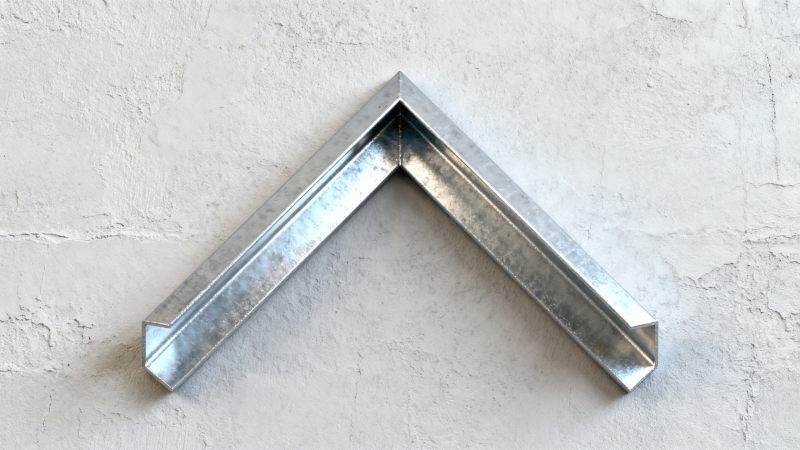
Notably, Carbon Steel Angle used in corner reinforcement or framework applications benefits from pre-galvanizing and edge-radius optimization—both reducing localized corrosion initiation points by up to 70% compared to standard mill-finish profiles.
Key Dimensions That Influence Long-Term Serviceability
Thickness, shape geometry, and surface finish directly affect durability. For instance, equal-leg angles under 6mm thickness are prone to buckling in compression bracing unless stiffened—while unequal angles with thicker vertical legs (e.g., 125×80×12 mm) offer superior torsional rigidity for cantilevered signage supports. Hongteng Fengda supplies Carbon Steel Angle in thicknesses from 0.8mm to 25mm, enabling precise matching of section modulus to expected cyclic loading profiles.
Procurement Checklist: What to Verify Before Finalizing Your Structural Steel Order
Procurement decisions often hinge on short-term cost—but overlooking five technical and compliance checkpoints can increase lifecycle TCO by 20–40%. These apply whether sourcing ASTM A36 angle steel price per ton in Philippines or evaluating MOQ requirements for structural steel orders:
- Mill Test Reports (MTRs): Confirm tensile strength ≥400 MPa, yield strength ≥250 MPa, and elongation ≥20%—verified against ASTM A6/A6M or EN 10025-2.
- Dimensional Tolerance Compliance: Hot-rolled angles must meet ±0.5mm leg width tolerance and ±0.3mm thickness tolerance per EN 10056-1.
- Surface Quality Certification: No scale pockets >2mm depth, no cracks or laminations visible under 10x magnification.
- Traceability Documentation: Batch-specific heat numbers, rolling dates, and galvanizing dip records (if applicable).
- Third-Party Inspection Option: SGS, BV, or TÜV witness testing available pre-shipment for projects requiring ISO 9001/EN 1090-2 compliance.
Hongteng Fengda provides full MTRs and EN 10204 3.1 certification with every export order. Lead times average 15–25 days for standard sizes and 30–45 days for custom cold-formed or bent profiles—ensuring alignment with project-critical path schedules.
Why Global Buyers Choose Hongteng Fengda for Structural Steel Integrity
Reliability isn’t just about meeting specs—it’s about predictability across time, geography, and complexity. Hongteng Fengda serves over 42 countries with consistent delivery performance: 98.6% on-time shipment rate over the past 36 months, backed by ISO 9001-certified production and real-time order tracking.
We support your decision-making with actionable resources—not just product data. This includes free engineering consultation for section selection (e.g., “Is 100×75×10 mm unequal angle sufficient for your 8m-span roof purlin?”), ASTM-to-GB equivalency tables, and sample kits with certified material test reports.
Whether you’re validating structural steel quality for a new manufacturing plant in Mexico, specifying corrosion-resistant angle steel for a logistics hub in Dubai, or comparing Z-beam vs. H-beam options for a Southeast Asian cold storage facility—we help you eliminate sourcing risk, avoid specification gaps, and accelerate project handover.
Contact us today for: customized dimension quotes, galvanizing process validation reports, ASTM A36 angle steel price per ton in Philippines or other regional benchmarks, OEM profile drawings review, or urgent sample dispatch (lead time: 3–5 working days).
Please give us a message


Please enter what you want to find