When comparing a structural steel channel with an I-beam for framing strength, buyers and engineers must consider load capacity, connection design, and project cost. As a Structural Steel Manufacturer & Exporter from China, Hongteng Fengda helps global customers evaluate structural steel channel options, weight of i beam per meter, structural steel grades, and structural steel connection requirements for safer, more efficient construction decisions.
How do structural steel channel and I-beam differ in framing strength?
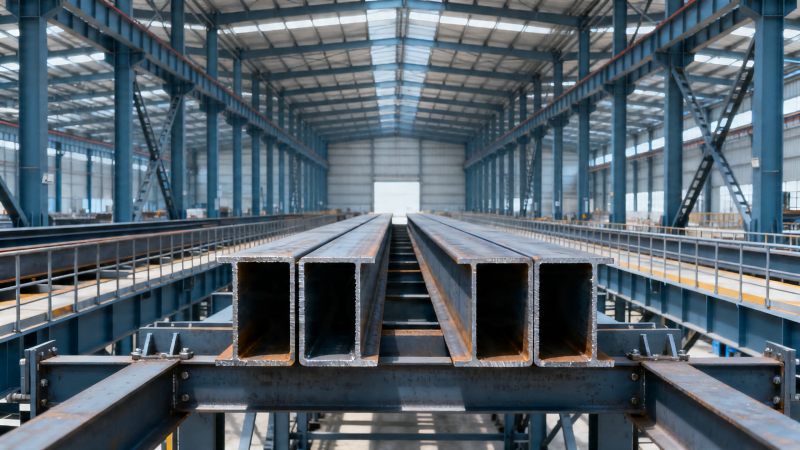
For framing applications, the choice between a structural steel channel and an I-beam is not simply a matter of shape. It affects bending resistance, torsional stability, fabrication complexity, and total installed cost. In most projects, engineers compare these two sections across 3 core indicators: load path, span requirement, and connection condition. This is especially important for industrial frames, platforms, equipment supports, and secondary steel structures.
A structural steel channel has one web and two flanges extending in the same direction. This open section makes it practical for edge framing, bracing, rails, support members, and wall girts. An I-beam, by contrast, is designed with a central web and opposing flanges, creating better symmetry for bending under vertical loads. When the framing member must carry higher bending moments over longer spans, the I-beam often becomes the preferred option.
However, framing strength is not only about section shape. Structural steel grades such as ASTM A36, S235, S275, S355, or equivalent grades under EN, JIS, and GB standards also matter. In addition, the weight of i beam per meter, channel section dimensions, flange thickness, and web depth all influence final performance. In practical procurement, comparing only price per ton can lead to under-design or unnecessary steel consumption.
For buyers, project managers, and technical reviewers, the most effective method is to compare the member within the actual service scenario. A 4 m to 6 m equipment platform beam, a warehouse wall support, and a machine base frame may all require different section logic. Hongteng Fengda supports this evaluation by supplying standard structural steel products and customized profiles based on drawing, loading requirement, and target market standard.
The table below summarizes the most relevant framing differences for quick technical and purchasing review.
This comparison helps explain why many projects use both sections together rather than treating them as direct substitutes. Channels often reduce fabrication difficulty in localized framing zones, while I-beams carry the main structural demand where higher stiffness and span performance are required.
What kind of load condition changes the answer?
If the member is carrying mainly vertical distributed load and span length increases from 3 m toward 8 m or more, an I-beam usually becomes more favorable because of stronger bending performance. If the member works as a side rail, edge stiffener, stair stringer, or short transfer support, a structural steel channel can be more practical. The answer depends on whether the project requires major-axis bending capacity, lateral restraint, or simplified site welding and bolting.
Connection position also matters. Because channels are open sections, they can be easier to attach to plates, concrete embeds, wall brackets, and machinery frames. In contrast, I-beams are excellent for pure load carrying, but they may require more thoughtful detailing at clip angles, end plates, or web stiffeners. For many procurement teams, connection cost can add 8% to 15% to the fabricated steel package if overlooked early.
This is why experienced suppliers do not recommend section type based only on section name. Hongteng Fengda reviews drawings, intended use, grade preference, and destination standard before proposing suitable channel steel or steel beam options for export projects.
Which framing scenarios favor channel steel, and which require I-beams?
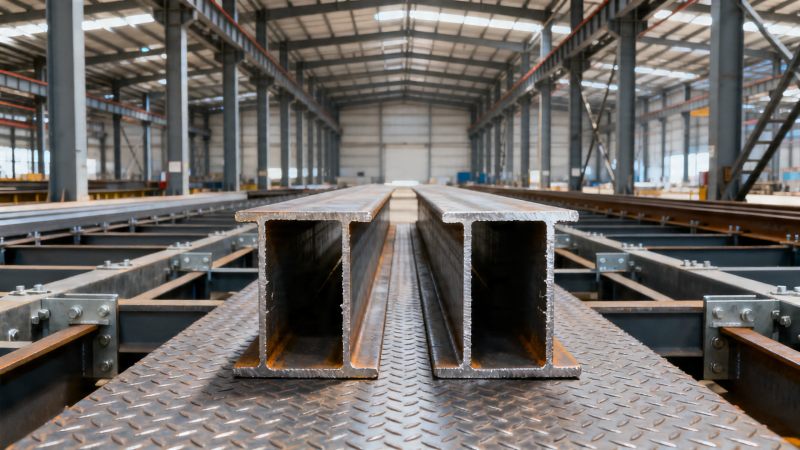
In steel framing, application context often matters more than abstract section comparison. A structural steel channel is widely used in wall frames, equipment skids, conveyor supports, truck bodies, light industrial buildings, and edge-bearing structures. An I-beam is more often selected for mezzanine beams, portal frames, workshop columns, transfer beams, and roof systems where higher moment resistance is needed over medium to long spans.
For operators and project teams, the practical question is not “Which is stronger in general?” but “Which is stronger in this exact installation?” A 2-member back-to-back channel assembly can sometimes be engineered to replace a beam in certain applications. At the same time, a single channel may be insufficient where torsion, point load concentration, or deflection control is critical. Typical design review should examine at least 5 items: span, support spacing, load type, connection eccentricity, and service environment.
In export-oriented supply, material standard alignment is another key factor. North American projects may request ASTM sections, European buyers may compare EN grades, and some Southeast Asian or Middle East projects may request mixed equivalency review between JIS and GB. Hongteng Fengda supports cross-standard product supply for angle steel, channel steel, steel beams, cold formed profiles, and customized structural steel components, helping buyers reduce sourcing gaps during bidding and execution.
In many industrial projects, anti-slip and patterned floor materials are also used together with framing members. For example, around equipment platforms, maintenance walkways, and machinery areas, buyers often combine channels or beams with floor plates. A practical option is A36 Patterned steel plate, which is suitable for transportation, construction, decoration, floor around equipment, machinery, and shipbuilding applications. Typical thickness ranges from 2 mm to 8 mm, width from 600 mm to 1800 mm, and length from 2 m to 12 m.
Application-based selection guide
The following table gives a practical selection view for users balancing framing strength, fabrication efficiency, and procurement control.
A scenario-based decision usually avoids two common mistakes: overspending on an oversized beam, or underestimating the instability risk of an open channel section. This is particularly important when the steel package includes mixed items such as channels, beams, plates, and cold formed profiles in one shipment.
Where can patterned plate fit into the framing package?
Although the main topic is channel versus I-beam, many buyers source floor and structural components together for schedule efficiency. In maintenance platforms or shipbuilding zones, the anti-skid function of patterned plate supports safer walking surfaces, while the frame below may use channels or beams depending on span and load. For procurement teams, combining section steel and deck plate under one supply plan can simplify documentation, container planning, and delivery sequencing across 2 to 4 project stages.
When selecting this plate type, useful checkpoints include thickness tolerance of +/-0.02 mm, width tolerance of +/-2 mm, patterned surface condition, and certification scope such as ASTM, DIN, JIS, BS, GB/TC, ISO, SGS, or BV depending on project documentation needs. The plate should be evaluated as part of the whole structural and access system, not as an isolated material item.
What technical factors should buyers and engineers verify before choosing?
Before selecting a structural steel channel or an I-beam, technical teams should review at least 6 verification points. These are section size, steel grade, load condition, support spacing, connection detail, and corrosion environment. If even one of these is unclear, the procurement decision may lead to redesign, delayed fabrication, or site modification. For international sourcing, dimension conversion between metric and imperial units should also be checked carefully.
One major issue is the weight of i beam per meter. This value affects not only structural capacity but also freight cost, lifting arrangement, and installation labor. A heavier beam may reduce deflection, but it may also increase transport costs and require larger handling equipment. For channels, web depth and flange thickness should be reviewed together because an apparently economical section can lose value if additional stiffeners or bracing are later required.
Structural steel connection design is another frequent source of hidden cost. A beam with strong theoretical capacity may become inefficient if the end connection requires complex coping, welding, or reinforcement plates. Channels can be easier to bolt against flat plates or support faces, but they may need extra restraint when subjected to eccentric load. In practical B2B evaluation, connection detailing can influence fabrication hours significantly across medium and large orders.
Hongteng Fengda works with global buyers by confirming the target standard, size range, processing requirement, and delivery condition before production. This helps reduce errors in mixed-standard projects and supports stable lead times for export shipments to North America, Europe, the Middle East, and Southeast Asia.
Key technical checklist for structural section selection
- Confirm the design load type: uniform load, point load, moving equipment load, or impact-related load. Different load types affect deflection and local web stress differently.
- Check span length and bracing intervals. A member used over 3 m, 6 m, or 9 m behaves very differently depending on restraint conditions.
- Verify grade equivalency carefully when converting between ASTM, EN, JIS, and GB systems. Similar yield levels do not always mean identical supply condition or application suitability.
- Review fabrication method: cut-to-length, drilling, punching, welding, galvanizing, or painted finish. Processing requirements affect both cost and lead time.
- Assess site assembly constraints, including lifting capacity, access width, and installation sequence. These factors can shift the decision between one heavier beam and multiple lighter sections.
This checklist is useful not only for technical evaluation personnel but also for purchasing teams and financial approvers. It turns section selection from a basic material question into a controlled project decision with measurable impact on fabrication, logistics, and site execution.
Standards and compliance in export projects
For structural steel exports, compliance usually involves 3 levels: material grade standard, dimensional tolerance, and inspection documentation. Depending on the project, buyers may request mill test certificates, third-party inspection, chemical composition review, or mechanical property confirmation. A supplier familiar with ASTM, EN, JIS, and GB can help shorten approval cycles and improve communication between engineering, QC, and procurement departments.
This is especially valuable in distributor and contractor purchases, where multiple end users may have different technical expectations. Stable documentation and consistent section supply reduce rejection risk and support smoother customs and project acceptance processes.
How should procurement teams compare cost, delivery, and project risk?
From a purchasing perspective, the best framing section is not always the lowest priced item per ton. Buyers should compare total installed cost across 4 categories: raw material cost, fabrication complexity, freight efficiency, and installation impact. A lower-cost channel may require extra stiffening, while a heavier I-beam may increase transport and crane cost. The right comparison method is total project value, not unit price alone.
Lead time is another critical point. Standard sections may be available faster, while custom cut, drilled, welded, or coated orders can extend schedules from about 7 to 15 days for simple stock-based supply to 2 to 4 weeks or longer for customized export processing, depending on quantity and specification complexity. For project managers, early technical confirmation is often the easiest way to avoid schedule pressure later.
For distributors and overseas contractors, sourcing from a manufacturer with stable production capacity helps reduce variability in mixed steel packages. Hongteng Fengda supplies angle steel, channel steel, steel beams, cold formed profiles, and custom structural steel components, allowing buyers to consolidate more items under one supplier and reduce coordination effort. This is valuable when projects require repeated procurement batches or phased delivery plans.
Risk control should also include inspection planning. Common checkpoints include material grade verification, dimensional tolerance review, surface condition, quantity check, marking accuracy, and packaging method. These 6 inspection items are especially relevant for overseas shipment because correction after arrival is much more expensive than pre-shipment confirmation.
The following table is useful for commercial and technical decision makers who need a practical purchasing comparison.
This cost-focused view helps finance teams and business evaluators understand why engineering preference and procurement preference must be aligned early. The best result usually comes from joint review of load requirement, processing scope, and delivery schedule before quotation is finalized.
Common procurement mistakes to avoid
- Comparing channel steel and I-beam only by ton price without checking section efficiency in the actual span and loading case.
- Ignoring the weight of i beam per meter when planning freight, lifting, and on-site installation cost.
- Assuming grade equivalency across standards without reviewing certification documents and project specification language.
- Finalizing material orders before structural steel connection details are confirmed by the design or fabrication team.
Avoiding these mistakes can save both direct cost and hidden coordination time, especially in phased projects where multiple departments must approve the steel package.
FAQ and next-step guidance for global steel buyers
Many search users, engineers, and purchasing teams ask similar questions when comparing structural steel channel and I-beam sections. The answers below focus on practical framing decisions, export supply considerations, and risk reduction steps relevant to real projects.
These questions are particularly useful during early-stage inquiry, pre-bid review, technical clarification, or supplier comparison. They can also help distributors and project owners communicate more clearly with fabrication partners before order release.
If your project includes mixed products such as channel steel, steel beams, floor plates, and cold formed profiles, combining the technical review into one sourcing discussion often improves speed and reduces mismatch risk.
Is a structural steel channel ever stronger than an I-beam?
In some localized or short-span framing cases, a channel can be the more efficient choice because it connects more easily and fits the assembly better. But for major vertical bending over longer spans, an I-beam generally provides better structural efficiency. The correct answer depends on section size, orientation, load location, and restraint condition rather than section name alone.
What should I send when requesting a quotation?
A useful inquiry should include 5 key items: section type, size or drawing, steel grade, quantity, and destination country. If available, add surface treatment, required standard, processing scope, and target delivery time. For custom structural components, drawings and connection details can shorten quotation review and reduce back-and-forth clarification.
How long does structural steel supply usually take?
For standard steel sections with straightforward quantity requirements, supply may move within about 7 to 15 days depending on stock and processing needs. For customized orders involving cutting, drilling, welding, coating, or mixed export documentation, lead time often extends to 2 to 4 weeks or more. Early confirmation of grade, tolerances, and inspection scope helps protect the schedule.
How can buyers reduce risk when sourcing from overseas?
The most practical approach is a 4-step control method: confirm standards and drawings, lock the quotation scope, verify inspection and marking requirements, and review packing and shipment details before dispatch. This is especially important when the order includes channels, I-beams, plates, and customized profiles in one batch.
Why work with Hongteng Fengda for structural steel projects?
Hongteng Fengda is a professional structural steel manufacturer and exporter based in China, supplying angle steel, channel steel, steel beams, cold formed steel profiles, and customized structural steel components for global construction, industrial, and manufacturing projects. With modern manufacturing facilities and strict quality control, the company supports ASTM, EN, JIS, and GB oriented supply needs for buyers across North America, Europe, the Middle East, and Southeast Asia.
For customers comparing structural steel channel versus I-beam solutions, the practical value lies in coordinated support. You can consult on section selection, structural steel grades, weight of i beam per meter, structural steel connection requirements, anti-slip floor plate matching, OEM processing, delivery timing, and documentation expectations. If you need a quotation, sample support, drawing review, or a customized export solution, sharing your specifications early will help build a more accurate and cost-controlled proposal.
Please give us a message


Please enter what you want to find