Choosing the right structural steel channel is essential for safe, efficient framing in construction and industrial projects. From load support and stability to fabrication and installation, understanding channel sizes and uses helps operators and project teams reduce errors, control costs, and improve performance. This guide explains key channel dimensions, common applications, and practical selection tips for framing work.
Understanding structural steel channel in framing systems
A structural steel channel is a long steel section with a web and two flanges. Its profile usually forms a C or U shape.
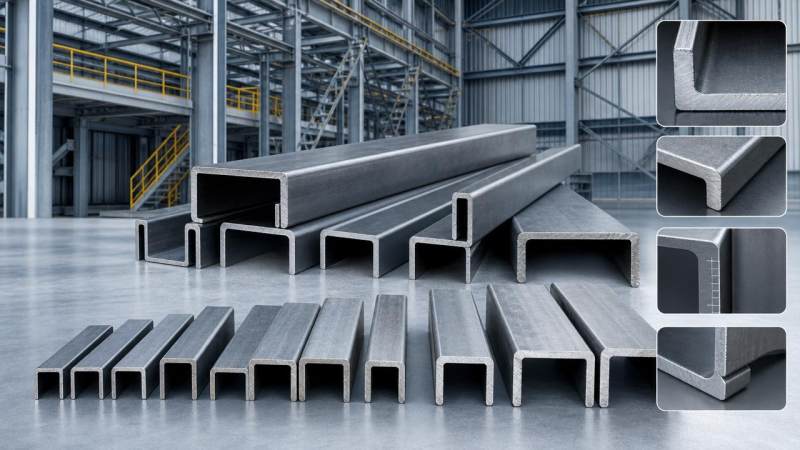
This shape delivers good strength, practical connection surfaces, and efficient weight distribution. It is widely used in secondary framing, edge reinforcement, and support assemblies.
Compared with flat bars or simple plates, structural steel channel offers better bending resistance. It also remains easier to cut, drill, weld, and install on site.
Common standards include ASTM, EN, JIS, and GB. Section selection usually depends on load direction, span, support conditions, and fabrication method.
Main dimensions that affect performance
Several size factors influence how a structural steel channel performs in framing work. These dimensions should be reviewed together, not separately.
- Depth: affects bending strength and stiffness.
- Flange width: influences connection area and local stability.
- Web thickness: supports shear resistance.
- Flange thickness: improves load transfer and weld strength.
- Section weight: affects handling, transport, and overall material cost.
A deeper channel often carries higher loads. However, oversized sections may increase project weight and complicate fitting details.
Current industry focus on channel size selection
Steel framing projects now face stronger pressure on budget, speed, and quality control. This makes structural steel channel selection more important than before.
Many projects prefer sections that balance structural capacity with easy fabrication. Reliable availability and standard compliance also influence final choices.
In many steel projects, channels are selected alongside angle steel, beams, and cold formed profiles. Coordination between these sections improves fit and structural continuity.
Why structural steel channel adds value in framing
A structural steel channel provides strength with practical geometry. This combination supports both engineering performance and production efficiency.
- It supports wall, roof, platform, and equipment framing.
- It simplifies bolted and welded connections.
- It can serve as a single member or paired assembly.
- It helps control steel usage in secondary structures.
In industrial buildings, channels are often used for purlin supports, bracing frames, stair supports, rack structures, and machine bases.
In civil construction, they appear in door frames, façade supports, trench covers, edge restraints, and strengthening members around openings.
Material preparation also affects framing performance. Steel feedstock with stable chemistry improves consistency in rolling and fabrication.
For related processing needs, Rolled Coil can support downstream structural applications where weldability and cold working matter.
Available carbon steel grades include Q235, Q235B, Q345, Q345B, Q195, St37, St42, St37-2, St35.4, St52.4, and St35.
Its carbon content ranges from 0.12% to 0.20%, with manganese at 0.30% to 0.70%. It follows standards such as GB/T 700-2006, ASTM, DIN, JIS, and AiSi.
These properties support welding, bending, stamping, forging, and hot rolling. Such compatibility helps create dependable structural components for broader steel systems.
Typical channel sizes and common framing uses
Structural steel channel sizes vary by region and standard. The right section should always match structural calculations and actual service conditions.
Small channel sections are common where spans remain short. They suit access frames, support rails, and localized reinforcement details.
Medium sizes often appear in commercial and industrial framing. They deliver reliable stiffness without excessive dead load.
Large channel sections may work in paired configurations. Back-to-back channels can create stronger built-up members for demanding loads.
Common configurations in practice
- Single channel for edge and support framing.
- Back-to-back channels for higher bending resistance.
- Toe-to-toe channels for box-like built-up sections.
- Channel with plate stiffeners for local reinforcement.
Practical selection factors for framing projects
Selecting structural steel channel should begin with loading requirements. Dead load, live load, dynamic load, and lateral effects all matter.
Span length is equally important. Longer spans usually require greater depth, thicker webs, or a different section type.
Connection design must be reviewed early. Bolt access, weld size, hole location, and end detailing can affect the best channel choice.
Corrosion conditions should not be ignored. Indoor dry environments differ greatly from marine, chemical, or exposed outdoor settings.
- Check compliance with ASTM, EN, JIS, or GB requirements.
- Confirm section tolerances and actual weight.
- Review weldability and cutting behavior.
- Match coating or surface treatment to exposure conditions.
- Evaluate transport length and on-site lifting limits.
A structural steel channel that looks suitable on paper may still cause installation delays if drilling access or alignment tolerances are poor.
Installation and quality control considerations
Good framing results depend on more than section size. Fabrication quality and erection accuracy directly affect safety and service life.
Channels should be checked for straightness, twist, edge condition, and dimensional tolerance before assembly. This reduces fit-up issues later.
Welding procedures should match the steel grade and thickness. Excess heat input may distort slender members and reduce alignment quality.
For bolted framing, hole spacing and edge distance should follow design rules. Poor detailing can weaken the member or complicate erection.
Protective coatings should be applied after proper surface preparation. Galvanizing, primer systems, or coated finishes extend service durability.
Next steps for better channel specification
A well-specified structural steel channel improves framing reliability, material efficiency, and construction speed. Better decisions start with clear technical requirements.
Define loads, spans, connection methods, standards, and exposure conditions early. Then compare available channel sizes against fabrication and installation needs.
Where projects involve international sourcing, choose suppliers with stable production, quality control, and standard compliance across multiple steel categories.
Hongteng Fengda supports global structural steel requirements with channel steel, angle steel, beams, cold formed profiles, and customized components for construction and industry.
By combining accurate section selection with dependable steel supply, framing projects can reduce risk, control cost, and achieve more consistent structural performance.
Please give us a message


Please enter what you want to find