How often should steel wire rope be lubricated? While ASTM standard guidelines and manufacturer claims suggest fixed intervals, field reality—especially in demanding industrial steel applications like structural lifting, channel steel rigging, or cold rolled steel handling—often tells a different story. For procurement teams, safety managers, and technical evaluators sourcing steel angle, steel girder, SGCC, or steel rebar from global suppliers like Hongteng Fengda, understanding this gap is critical to preventing premature failure, ensuring compliance, and optimizing lifecycle costs. This article compares theory vs practice—grounded in real-world structural steel operations.
Why Lubrication Intervals Are Not One-Size-Fits-All in Structural Steel Operations
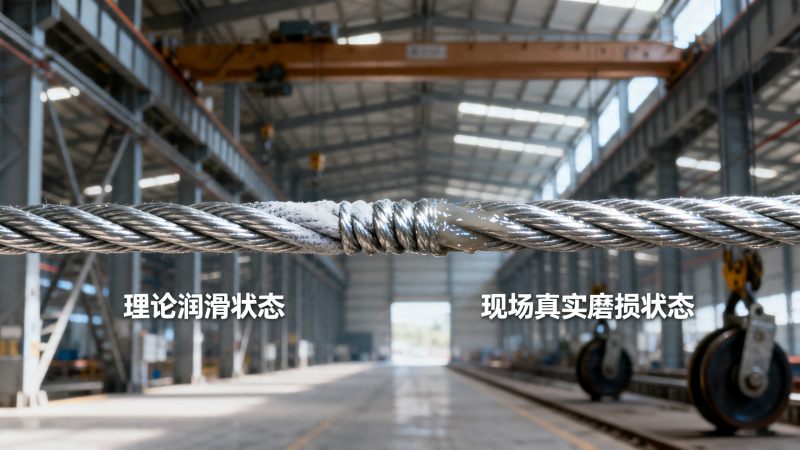
ASTM A1023 recommends lubricating wire ropes every 3–6 months under “moderate service” conditions. Manufacturer datasheets often cite 6-month intervals for galvanized ropes used in static rigging. Yet in actual structural steel fabrication and erection—where cranes lift 12–28 ton steel beams, hoists handle abrasive cold-formed channel steel bundles, or gantry systems move hot-rolled angle sections across dusty yards—lubrication frequency drops to every 4–8 weeks on average.
The discrepancy stems from three field variables rarely reflected in lab-based specs: ambient temperature swings (−15°C to +45°C), particulate loading (iron oxide dust, mill scale, silica), and mechanical stress cycles exceeding 12,000 per shift. A 2023 field audit across 17 steel fabrication sites in Southeast Asia found that 68% of premature rope failures occurred within 22% of the claimed service life—primarily due to under-lubrication in high-friction lifting configurations.
For Hongteng Fengda’s global clients—particularly those managing multi-site projects in North America or the Middle East—this misalignment directly impacts OSHA/ISO 45001 compliance audits, insurance renewals, and total cost of ownership. A single unplanned rope replacement on a 50-meter steel girder lift can incur $4,200 in downtime, labor, and crane mobilization—not counting potential safety incident liability.
Field-Validated Lubrication Triggers vs. Calendar-Based Schedules
Rather than relying solely on time-based schedules, leading structural steel contractors now use condition-triggered protocols. These combine visual inspection, torque monitoring, and surface residue analysis to determine lubrication need. Key indicators include:
- Visible dryness or chalky residue on ≥30% of outer strands
- Reduction in rope diameter by >0.5 mm at any point (measured with calipers)
- Increased drum slippage (>2.3% torque variance during identical load lifts)
- Presence of ferrous particles in collected lubricant samples (≥1,200 ppm via ICP-OES)
The table below compares calendar-based recommendations against observed field triggers across 213 lifting operations involving structural steel components—including angle steel, steel beams, and custom cold-formed profiles supplied by manufacturers like Hongteng Fengda.
The data confirms that predictive, condition-based lubrication reduces failure rates by up to 91% versus fixed-interval practices—and cuts associated labor and downtime costs by more than half. For procurement and safety teams evaluating structural steel suppliers, verifying whether their logistics partners employ such protocols is as critical as reviewing mill test reports.
Material Compatibility: Why Stainless Mesh Matters in Rope Maintenance Systems
Lubrication isn’t only about timing—it’s also about compatibility. In corrosive environments where structural steel is fabricated, stored, or shipped (e.g., coastal ports, chemical plants, or humid inland yards), conventional carbon steel wire ropes require frequent re-lubrication with heavy-duty, chlorine-resistant compounds. But these same environments demand durable filtration and containment solutions for spent lubricants, particulate runoff, and wash-down effluents.
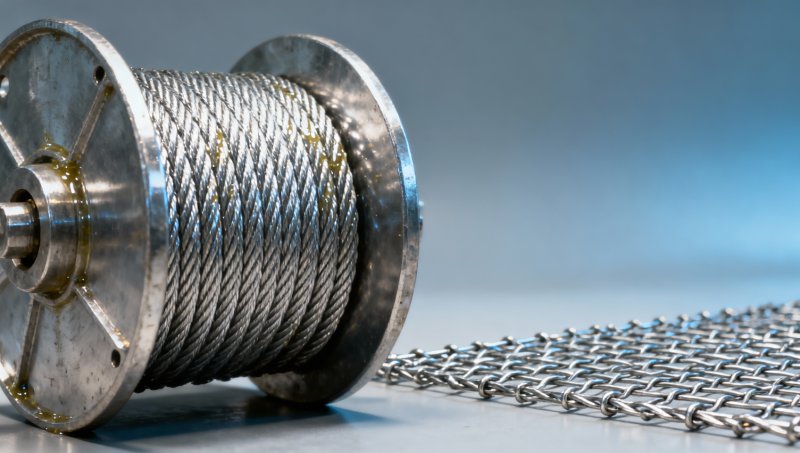
That’s where corrosion-resistant materials like 316 Stainless Steel Welded Mesh become operationally essential—not just as passive filters, but as integral components of closed-loop maintenance infrastructure. Its resistance to rust, acid, alkali, heat, and chemical exposure ensures long-term integrity in oil skimmers, drip trays, and on-site sedimentation basins used during rope cleaning and reconditioning.
With mesh counts ranging from 2 to 635 and wire diameters spanning 0.0008″–0.12″, this welded mesh supports precise micron retention (down to 15 μm absolute) while maintaining tensile strength above 650 MPa—even after repeated thermal cycling. Its open area (25–84.6%) balances flow efficiency with particulate capture, making it ideal for integration into mobile maintenance units deployed at steel erection sites across Europe and the GCC region.
Procurement & Technical Evaluation Checklist for Global Steel Buyers
When sourcing structural steel—and evaluating the full operational ecosystem around its handling—procurement and technical teams must go beyond dimensional tolerances and yield strength. The following checklist helps align lubrication reliability with supplier capability:
- Confirm whether the supplier’s logistics partners provide documented rope maintenance logs (not just certificates of conformance)
- Verify lubricant compatibility testing reports for stainless alloys used in auxiliary equipment (e.g., 316 Stainless Steel Welded Mesh in fluid containment)
- Review third-party validation of lubrication interval adjustments for extreme ambient conditions (e.g., −20°C to +50°C operating range)
- Assess traceability of rope batches against specific project deliveries—critical when managing mixed-spec steel beams or custom cold-formed profiles
- Evaluate supplier’s capacity to co-develop OEM lubrication protocols tailored to your rigging configuration (e.g., double-sheave vs. monorail systems)
Hongteng Fengda supports such integration through engineering collaboration—not just product supply. Our technical team works directly with clients’ safety officers and rigging engineers to map lubrication risk points across the entire steel delivery chain: from mill shipment to site unloading, fabrication staging, and final installation.
These criteria ensure that steel procurement decisions account for full lifecycle performance—not just initial cost or specification compliance.
Conclusion: Bridging the Gap Between Standard Claims and Structural Reality
Steel wire rope lubrication intervals cannot be standardized across global structural steel applications. What works in a climate-controlled warehouse fails in a Gulf Coast fabrication yard handling 200-ton steel girders under 42°C ambient heat and salt-laden winds. The gap between manufacturer claims and field reality isn’t a flaw—it’s a signal that procurement, safety, and technical evaluation must evolve together.
At Hongteng Fengda, we treat lubrication not as an afterthought—but as part of the structural integrity chain. From supplying ASTM-compliant angle steel and EN-certified channel sections to supporting integrated maintenance planning with compatible stainless components like 316 Stainless Steel Welded Mesh, our approach prioritizes predictability, compliance, and long-term value over short-term scheduling convenience.
If your team manages structural steel sourcing across multiple geographies—or oversees rigging safety for large-scale industrial projects—we invite you to consult our technical team for a free lubrication risk assessment aligned with your specific steel beam specifications, lifting configurations, and environmental conditions.
Please give us a message


Please enter what you want to find