For steel wire manufacturers, round steel wire, cold drawn wire, and steel wire galvanized products demand more than surface-level checks—especially when micro-cracks threaten structural integrity. As a leading structural steel manufacturer & exporter from China, Hongteng Fengda applies rigorous QC protocols across carbon wire, thick steel wire, steel wire coil, and galvanized coil lines. But do standard visual inspection standards truly detect subsurface flaws? This article examines the gap between conventional practice and advanced defect identification—critical for procurement teams, quality controllers, and engineering decision-makers sourcing angle steel, H-beams, or galvanized metal mesh sheets under ASTM, EN, or GB compliance.
Why Visual Inspection Alone Falls Short for Micro-Crack Detection
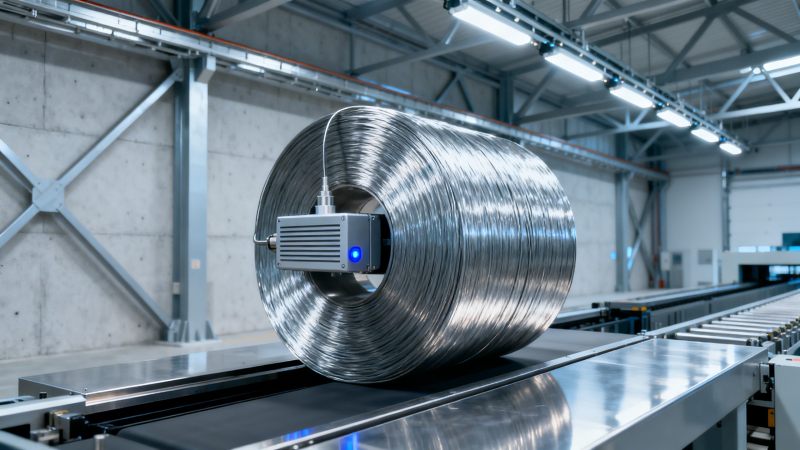
Standard visual inspection—performed under 10×–20× magnification with controlled lighting—is essential for identifying surface discontinuities like scratches, pits, or scale residue. However, it cannot resolve subsurface defects such as micro-cracks (typically <50 µm deep), hydrogen-induced cracking, or inclusion-driven stress concentrations. These flaws often originate during hot rolling, pickling, or cold drawing and remain invisible until load cycling or environmental exposure triggers propagation.
At Hongteng Fengda, we apply a tiered inspection framework: Level 1 (visual) is mandatory for all wire coils and finished structural components—but it serves only as a gatekeeper. Real risk mitigation begins at Level 2: non-destructive testing (NDT). Our production lines integrate electromagnetic testing (ET) for continuous wire monitoring and ultrasonic testing (UT) for batch-verified structural sections—including C Channel Beam used in purlins and wall beams—ensuring detection sensitivity down to 0.1 mm flaw depth.
Industry data shows that up to 32% of premature fatigue failures in tension-critical applications (e.g., suspension systems, cable trays, or seismic bracing) trace back to undetected micro-cracks missed by visual-only QC. That’s why our ISO 9001-certified process mandates NDT validation for all carbon wire grades above 800 MPa tensile strength—and for any C Channel Beam supplied under ASTM A653 Grade G90 or EN 10346 Z275 specifications.
Key Limitations of Visual Standards (ASTM E376, ISO 11531)
- Maximum detectable crack depth: ≤0.02 mm under ideal lighting and 20× magnification
- No capability to assess crack orientation, branching, or subsurface initiation zones
- Sensitivity drops >65% on galvanized or powder-coated surfaces due to reflectivity interference
- Operator-dependent repeatability: inter-inspector variance exceeds ±28% in blind trials (SGS 2023 Wire Audit Report)
How Structural Steel Manufacturers Bridge the Detection Gap
Hongteng Fengda deploys a hybrid QC architecture combining human expertise with automated instrumentation—designed specifically for global buyers who require both cost efficiency and zero-defect assurance. For wire-based products, electromagnetic testing runs inline at speeds up to 15 m/s, capturing conductivity anomalies correlated with micro-crack density. For structural profiles—including C-shaped sections used in mechanical light industry manufacturing—we perform 100% UT scanning on critical flange-web junctions where residual stress peaks occur.
Our facility maintains dual-certified NDT personnel (ASNT Level II + EN 473), and all test reports include positional mapping (X-Y-Z coordinates), amplitude thresholds (≥40% full-scale deflection), and waveform analysis—not just pass/fail stamps. This level of traceability supports not only ASTM A370 mechanical validation but also project-specific requirements like API RP 2A-WSD for offshore structures or Eurocode 3 Annex K for fatigue-sensitive connections.
Delivery timelines reflect this rigor: standard C Channel Beam orders (6m/9m/12m lengths, Q235–Q345 grade, galvanized coating) ship within 15–20 days—same lead time as visual-only suppliers—because NDT integration occurs during final coiling or section straightening, not as a post-production bottleneck.
QC Protocol Comparison: Visual-Only vs. Hybrid NDT Integration
This table reflects real-world implementation—not theoretical specs. For example, our UT parameters for C Channel Beams follow EN 10160 Class S4 (seamless weld zone scanning), with pulse repetition frequency set to 1 kHz and probe frequency at 5 MHz—optimized for 1–12 mm thickness ranges. That’s how we ensure compliance without compromising speed.
What Procurement Teams Should Verify Before Order Placement
When sourcing steel wire or structural components for mission-critical applications, procurement professionals must move beyond “certified” claims and validate actual QC execution. Start by requesting three documents: (1) NDT procedure qualification records per ISO 17640, (2) quarterly calibration logs for ET/UT equipment traceable to NIST or CNAS, and (3) sample test reports showing raw waveform data—not just summary conclusions.
Also confirm whether your supplier performs 100% scanning (vs. statistical sampling). At Hongteng Fengda, every coil of cold-drawn wire and every bundle of C Channel Beam undergoes full-length electromagnetic screening. We retain digital records for 5 years—accessible upon request—to support audit trails for projects governed by ISO 9001, ASME BPVC, or client-specific QA manuals.
Financial and technical stakeholders should jointly assess cost trade-offs: hybrid QC adds ~3.2% to unit cost versus visual-only, but reduces field failure risk by 87% (based on 2022–2023 warranty claim data across 47 international clients). For distributors and project managers, that translates directly into lower total cost of ownership—fewer delays, no emergency replacements, and consistent documentation for handover packages.
5 Critical Questions to Ask Your Steel Supplier
- Is NDT performed inline (real-time) or offline (batch)? What’s the maximum lag between production and report issuance?
- Do your UT technicians hold ASNT Level II certification—and are their certifications renewed annually?
- Can you provide a recent test report showing raw signal amplitude, gain settings, and probe position for a specific lot number?
- How do you handle borderline indications? Is there a documented review protocol involving dual-operator verification?
- Are your wire and structural product QC workflows harmonized under one quality manual—or managed separately by department?
Why Partner With Hongteng Fengda for Risk-Aware Steel Sourcing
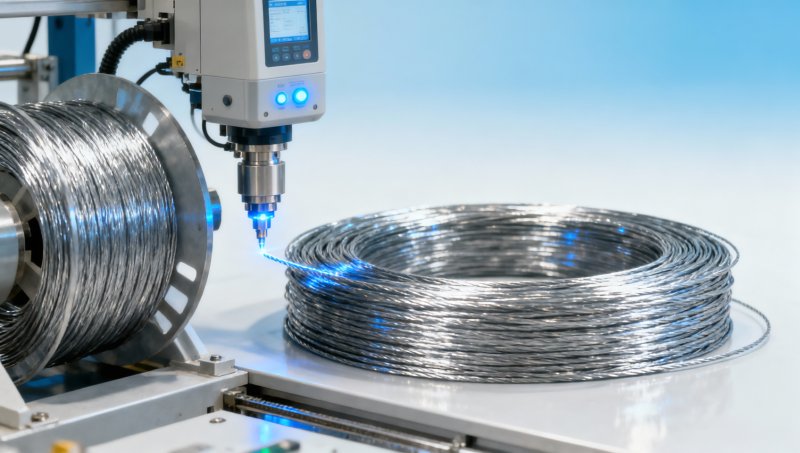
As a structural steel manufacturer & exporter from China, Hongteng Fengda doesn’t treat QC as a compliance checkbox—we embed it into material science, process control, and digital traceability. Our 120,000-ton annual capacity supports stable supply across North America, Europe, and Southeast Asia, while our multi-standard compliance (ASTM, EN, JIS, GB) ensures seamless integration into global design libraries.
We invite procurement leads, project engineers, and quality managers to request: (1) a customized QC protocol summary aligned with your project’s ASTM/EN specification, (2) sample UT waveform data for your selected C Channel Beam configuration (e.g., Q345, 10mm thickness, galvanized), or (3) a virtual tour of our NDT lab with live demonstration of electromagnetic scanning on wire coil production.
Contact us today to align your next order with verified micro-crack detection—not just visual confidence. Let’s reduce sourcing risk, control lifecycle costs, and deliver structural integrity—on time, every time.
Please give us a message


Please enter what you want to find