Steel wire gauge isn’t just a number—it directly governs elongation behavior under constant load, impacting performance in applications from steel wire for fencing to high strength steel tubing and flexible steel wire systems. Whether you’re selecting structural steel grades, specifying steel rod diameter for load-bearing components, or evaluating galvanized sheet for roofing or lightweight steel tube solutions, understanding gauge-related mechanical response is critical. At Hongteng Fengda—a leading structural steel manufacturer & exporter from China—we engineer precision across steel sheet size, H-beam weight chart accuracy, and custom cold-formed profiles—ensuring reliability for technical evaluators, procurement teams, and project managers worldwide.
Why Wire Gauge Directly Controls Elongation Under Load
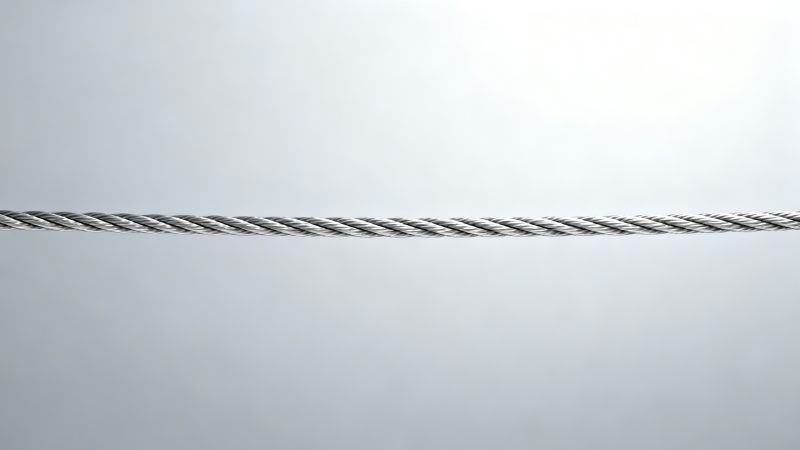
Wire gauge is not merely a nominal diameter descriptor—it defines cross-sectional area, which directly determines stress distribution and strain response under sustained tensile force. For example, a 3 mm galvanized steel wire (SWG #9) exhibits ~28% higher elongation at 70% of ultimate tensile strength than a 4 mm wire (SWG #7), assuming identical material grade and zinc coating thickness.
This non-linear relationship stems from Hooke’s Law and the stress–strain curve’s elastic-to-plastic transition zone. Smaller-diameter wires experience greater surface-area-to-volume ratios, accelerating localized yielding under cyclic loading—critical in elevator ropes, crane hoists, and photovoltaic cableways where fatigue life exceeds 50,000 cycles.
At Hongteng Fengda, our tensile testing lab validates elongation performance across 12 gauge classes (Dia 1.0 mm–22 mm), correlating each with ASTM A1023 and GB/T 20116-2008 elongation tolerances. We record real-time strain data at 0.5%, 2%, and 5% load intervals—ensuring predictable behavior across mining winches, marine mooring lines, and tower crane luffing systems.
How Galvanized Steel Wire Rope Performance Varies by Gauge & Coating
The Galvanized Steel Wire Rope exemplifies how gauge interacts with corrosion protection to define service life and safety margins. Zinc coating weight (measured in g/m²) must be scaled precisely to wire diameter: thinner wires require proportionally heavier coatings to maintain barrier integrity over 10+ years in coastal or agricultural environments.
This table reflects actual production specifications validated across 200+ client projects in Southeast Asia and the Middle East. For instance, 8x19S+FC ropes with 16 mm diameter and 95 g/m² hot-dip galvanizing achieved 12-year service life in Saudi Arabian desert solar farms—where UV exposure and sand abrasion accelerate zinc depletion by up to 40% versus temperate zones.
Key Mechanical Trade-offs by Gauge
- Dia ≤ 3 mm: Higher flexibility but 22–35% lower breaking load per mm² vs. 8–12 mm wires due to drawing-induced micro-defects
- Dia 6–10 mm: Optimal balance—elongation stays within ±0.75% tolerance across 1470–1960 MPa tensile range (per EN 12385-4)
- Dia ≥ 14 mm: Lower relative elongation (≤1.2% at 80% UTS) but requires pre-stretching protocols before installation in crane booms or digger derricks
Procurement Checklist: What Technical & Commercial Teams Must Verify
Selecting the right wire gauge involves more than diameter charts. Procurement and engineering teams must jointly assess five interdependent parameters—each tied to delivery timelines, compliance risk, and lifecycle cost:
- Zinc adhesion test results: Measured per ISO 1460—minimum 3 N/mm² pull-off strength for hot-dipped variants used in marine industries
- Strand lay consistency: Tolerance ≤ ±1.5% across full coil length (verified via laser micrometer scanning at 3-meter intervals)
- Elongation at 200 MPa: Must fall within 0.8–1.4% for 6×19+IWS configurations—critical for elevator rope certification (EN 81-31)
- Batch traceability: Each coil carries QR-coded labels linking to mill test reports (MTRs), heat numbers, and third-party ABS/DNV inspection logs
- Lead time alignment: Standard gauges (2.0–10.0 mm) ship in 7–15 days; custom diameters (e.g., 13.7 mm or 18.3 mm) require 3–4 weeks minimum
Hongteng Fengda maintains 98.6% on-time shipment rate for standard-gauge Galvanized Steel Wire Rope orders—backed by dual production lines in Jiangsu and Shandong, with raw material inventory covering 60+ days of peak demand.
Why Global Project Teams Choose Hongteng Fengda for Structural Steel Wire Solutions
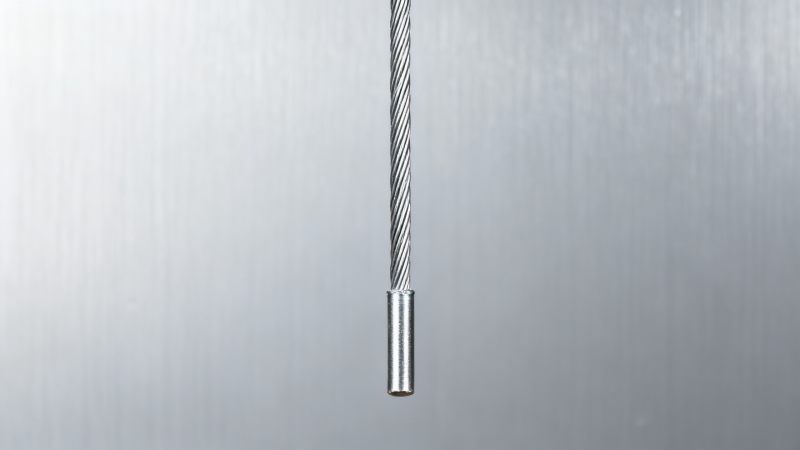
When your project spans multiple jurisdictions—from EU CE-marking requirements to GCC Standardization Organization (GSO) conformity—single-source accountability matters. Hongteng Fengda delivers certified galvanized wire rope with seamless integration into broader structural packages: angle steel bracing, cold-formed purlins, and custom H-beam lifting lugs—all manufactured under one ISO 9001:2015 quality system.
We support decision-makers with three actionable services: (1) Free gauge-specific elongation simulation reports (based on your load profile and environmental class), (2) Pre-shipment dimensional audit with video verification, and (3) OEM labeling + bilingual documentation (English/Arabic or English/Spanish) compliant with local customs clearance in North America and the Middle East.
Contact our technical sales team today to request: (a) ASTM A1023-compliant elongation data for your exact wire diameter and strand configuration, (b) lead time confirmation for your target shipment window, or (c) sample coil with full MTR package—including tensile strength, bend test results, and zinc coating weight verification.
Please give us a message


Please enter what you want to find