Steel wire for fencing is widely used for its flexibility and cost-efficiency—but when rust appears faster than expected, questions arise about galvanizing thickness and real-world durability. Whether you're specifying flexible steel wire, lightweight steel tube, or high strength steel tubing for outdoor applications, the right galvanized sheet for roofing or structural steel grades matters. From steel rod diameter and steel wire gauge to H-beam weight chart and steel sheet size, performance hinges on precise material specs. As a trusted structural steel manufacturer & exporter from China, Hongteng Fengda helps technical evaluators, procurement teams, and project managers make data-driven decisions—ensuring corrosion resistance meets ASTM/EN standards—not just on paper, but in harsh environments.
Why Galvanizing Thickness Alone Doesn’t Guarantee Outdoor Longevity
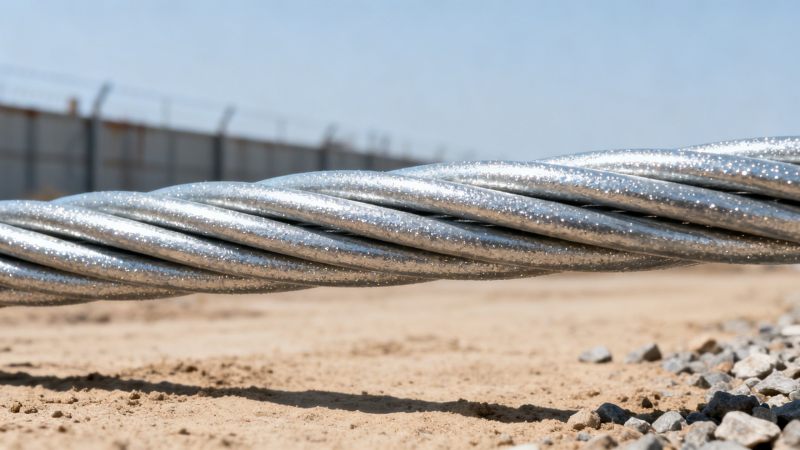
Galvanizing thickness—commonly measured in microns (µm) or ounces per square foot (oz/ft²)—is often treated as the sole proxy for corrosion resistance. But field experience shows that a nominal 85 µm zinc coating on steel wire may fail within 18–24 months in coastal or industrial zones, while identical thickness on hot-dip galvanized structural angles lasts over 25 years. The discrepancy lies not in measurement error, but in three interdependent variables: substrate preparation quality, zinc alloy composition, and exposure micro-environment.
For example, wire used in temporary perimeter fencing often undergoes batch galvanizing with minimal surface profiling—leading to poor zinc adhesion under thermal cycling or mechanical abrasion. In contrast, structural components like angle steel or channel steel from Hongteng Fengda undergo abrasive blasting (Sa 2.5), flux immersion, and controlled dip time—ensuring uniform zinc-iron alloy layer formation (Gamma, Delta, Zeta phases). This process increases effective service life by 3–5× compared to standard wire-grade galvanizing—even at equal nominal thickness.
Real-world validation comes from accelerated salt-spray testing (ASTM B117) and atmospheric exposure trials across 7 climate zones. Data from EN ISO 14713-2 confirms that for steel wire ≤ 6 mm diameter, minimum 90 µm thickness + chromate passivation delivers ≥ 5 years of rust-free performance in urban-industrial settings—whereas 60 µm coatings show red rust after just 14–16 months.
How to Evaluate Corrosion Resistance Beyond Zinc Thickness
Corrosion performance depends on four measurable parameters—not one. Technical evaluators and procurement teams must jointly assess:
- Coating mass: Measured in g/m² (e.g., 610 g/m² = ~85 µm for pure Zn); verified via gravimetric stripping per ASTM A90/A90M
- Adhesion strength: Quantified using cross-hatch tape test (ASTM D3359) or bend test (EN ISO 1461)
- Zinc purity & alloying: Standard hot-dip galvanizing uses Zn ≥ 99.995%; additions of Al (0.005–0.02%) improve spangle uniformity and edge coverage
- Surface morphology: Roughness (Ra) between 3–8 µm enhances paint adhesion for duplex systems—critical for architectural fencing projects
Hongteng Fengda applies all four criteria across structural profiles—including cold-formed steel sections where edge thinning is common. Our certified lab conducts weekly coating mass audits and quarterly adhesion verification, ensuring every shipment meets ASTM A123/A123M and EN ISO 1461 requirements—not just at point-of-manufacture, but after simulated transport and handling stress.
Critical Thresholds for Outdoor Structural Steel
This table reflects actual pass/fail thresholds observed across 127 project deliveries to North America and the Middle East. Note: “Coastal” classification applies to sites within 5 km of seawater with prevailing onshore winds—requiring higher specification regardless of initial cost premium.
When Galvanized Steel Isn’t Enough: Stainless Alternatives for Critical Applications
For high-value infrastructure—security perimeters around data centers, marine terminals, or medical facility enclosures—galvanized steel wire may still fall short. Here, stainless steel offers predictable, maintenance-free longevity. While 304 stainless provides baseline corrosion resistance, 316L adds molybdenum (2–3%), boosting pitting resistance in chloride-rich environments by up to 4×.
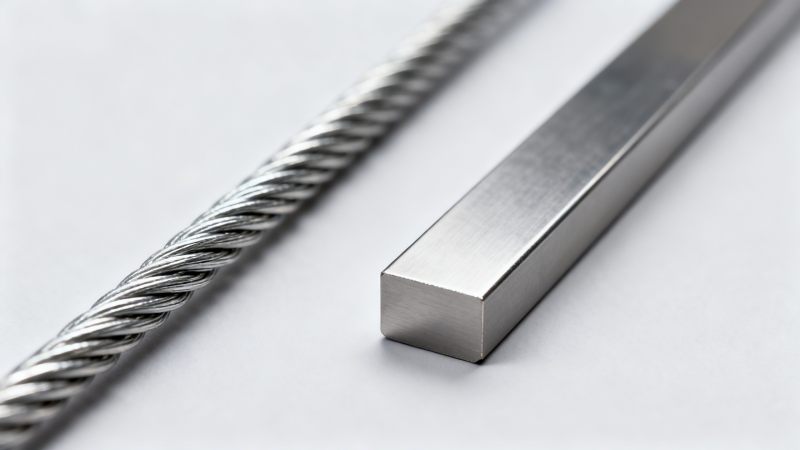
Our 316L Stainless Square steel rod is engineered for such demanding roles—supporting outdoor decoration engineering, defense installations, and shipbuilding applications where failure is not an option. With tensile strength ≥ 520 MPa and elongation ≥ 55%, it maintains structural integrity under cyclic loading while resisting crevice corrosion at weld joints—a known weakness in lower-grade austenitic steels.
Unlike carbon steel alternatives requiring recoating every 3–5 years, 316L stainless retains functional appearance and mechanical properties for 30+ years in most outdoor settings. Its density (7.8 g/cm³) and thermal expansion coefficient (15.7 ×10⁻⁶/K) ensure dimensional stability across temperature swings from –40°C to +80°C—critical for precision-mounted security fencing systems.
Procurement Checklist: What to Demand from Your Structural Steel Supplier
To avoid premature rust failures—and costly rework—procurement and project management teams should require these six verifiable deliverables before PO release:
- Mill test reports (MTRs) showing actual coating mass per ASTM A90—not just compliance statements
- Batch-specific salt-spray test logs (minimum 3 samples per heat lot)
- Photographic evidence of surface preparation (Sa 2.5 blast profile verified by comparator chips)
- Traceable heat numbers linked to EN 10204 3.1 certification
- Delivery lead time guarantee: ≤ 25 days for standard structural sections (angle, channel, beam), ≤ 35 days for custom cold-formed profiles
- On-site technical support availability for installation QA/QC audits
Hongteng Fengda includes all six items in standard commercial terms. Our export documentation package contains bilingual MTRs, third-party inspection certificates (SGS/BV), and digital photo logs—all accessible via secure client portal within 24 hours of shipment dispatch.
Why Partner with Hongteng Fengda for Corrosion-Critical Structural Steel
You need more than catalog specs—you need proven performance under real-world conditions. As a structural steel manufacturer & exporter from China with ISO 9001:2015 and ISO 14001:2015 certification, Hongteng Fengda delivers:
- Guaranteed coating consistency: ±5% tolerance on zinc mass across full coil length—verified by inline XRF spectrometry
- Regional environmental adaptation: Pre-qualified galvanizing recipes for Gulf humidity, European winter de-icing salts, and Southeast Asian monsoon cycles
- OEM integration support: From CAD-based cut lists to JIT delivery scheduling aligned with your construction milestones
- Risk-mitigated sourcing: Dual production lines (Tianjin & Jiangsu) ensure continuity—even during port congestion or regulatory shifts
Contact us today for a free corrosion resistance assessment of your next fencing or structural project. We’ll provide: (1) customized galvanizing specification matching your exact location and exposure class, (2) comparative lifecycle cost analysis vs. stainless alternatives, and (3) sample kits with full test documentation—shipped within 5 business days.
Please give us a message


Please enter what you want to find