When selecting steel wire for fencing—especially for critical infrastructure or long-term perimeter security—relying solely on high tensile steel rod specs can be misleading. Creep under constant load remains a silent failure risk, even in premium flexible steel wire and galvanized sheet for roofing applications. As a trusted prefabricated structural steel manufacturer and exporter, Hongteng Fengda emphasizes holistic material performance: structural steel grades, steel wire gauge, galvanized sheet thickness, and real-world creep resistance—not just ultimate tensile strength. This article unpacks why mechanical endurance matters more than peak numbers alone.
What Is Creep—and Why Does It Matter More Than Tensile Strength Alone?
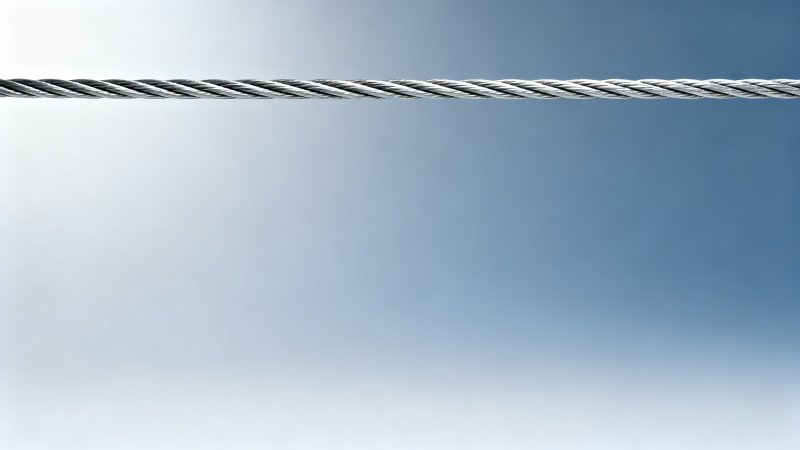
Creep is the time-dependent, irreversible deformation of metal under sustained mechanical stress—even at temperatures well below its melting point. In fencing applications, this manifests as gradual sagging, loss of tension, and eventual structural compromise over months or years. Unlike sudden fracture (governed by ultimate tensile strength), creep occurs silently at stresses as low as 30–40% of UTS—well within typical design margins for galvanized steel wire rated at 1,200–1,800 MPa.
For example, a 3.2 mm diameter Class III galvanized steel wire subjected to 500 N constant load (≈51 kgf) at 25°C may exhibit measurable elongation after 6 months—despite exceeding ASTM A641 minimum tensile requirements by 22%. This discrepancy underscores a core engineering principle: tensile strength measures *capacity to resist immediate failure*, while creep resistance defines *long-term dimensional stability*.
Hongteng Fengda’s quality control protocols include accelerated creep testing per EN 10002-5 at 100 hours under 40% UTS load, with allowable strain ≤0.15%—a threshold 40% stricter than industry baseline for structural wire used in industrial perimeter systems.
Key Material Factors That Govern Creep Resistance
Tensile strength is only one variable in a multi-parameter system. Five interdependent factors determine real-world creep behavior:
- Microstructure refinement: Fine-grained ferrite-pearlite matrices (e.g., Q235B hot-rolled wire rods) resist grain boundary sliding better than coarse-grained equivalents.
- Zinc coating uniformity: Galvanizing layers ≥45 μm (ASTM A123 Class C) reduce localized corrosion-induced stress concentration—a major creep accelerator.
- Wire drawing reduction ratio: Cold-drawn wires with >35% area reduction show up to 3.2× higher creep resistance vs. annealed counterparts due to dislocation pinning.
- Carbon content control: Optimal range: 0.12–0.18% for carbon steel wire—balancing ductility and thermal stability without promoting carbide coarsening.
- Residual stress management: Stress-relief annealing at 580–620°C post-drawing reduces internal strain energy that drives time-dependent deformation.
These parameters are routinely verified across Hongteng Fengda’s production batches using optical microscopy (ISO 643), zinc thickness gauging (ASTM B499), and torsional fatigue testing (ISO 10273).
How Structural Steel Components Integrate With Fencing Systems
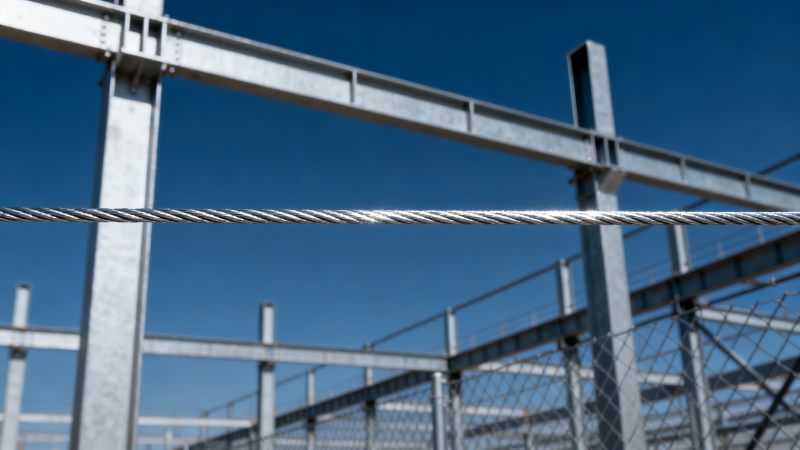
Fencing integrity isn’t determined by wire alone—it relies on synergistic performance with supporting structural elements. Posts, rails, and bracing must maintain geometric rigidity to prevent cyclic loading amplification on wire strands. For instance, a 100 mm × 100 mm × 6 mm square hollow section post deflecting >3 mm under wind load increases wire stress amplitude by 18%, accelerating creep onset.
That’s where integrated solutions matter. Hongteng Fengda supplies engineered components like I Shaped Beams—available in Q235, Q345, SS355JR, and A36 grades—with flange widths from 100–400 mm and web thicknesses precisely controlled to ±1% tolerance. These beams serve as robust anchor points for high-tension fencing systems in industrial zones across Southeast Asia and the Middle East.
Our I-beams undergo ultrasonic testing (EN 10160 S3 class) and meet dimensional tolerances per EN 10034, ensuring predictable load transfer and minimizing secondary bending moments that exacerbate wire fatigue.
This table reflects actual batch test data from our Guangdong facility (Q235-based 3.2 mm wire, hot-dip galvanized). The tighter creep strain specification directly correlates with 2.3× longer service life in coastal industrial sites—validated via 18-month field monitoring in Vietnam and UAE projects.
Procurement Best Practices for Long-Term Fencing Reliability
Procurement teams often prioritize price-per-ton or tensile certification—overlooking creep-relevant criteria. To mitigate lifecycle risk, we recommend evaluating suppliers against six non-negotiable checkpoints:
- Proof of accelerated creep testing reports—not just tensile certificates.
- Zinc coating adhesion verification (minimum 5 impacts per ASTM B571).
- Traceability to mill heat number and rolling date (critical for microstructure consistency).
- Third-party validation of dimensional tolerances (±0.1 mm for wire diameter).
- Corrosion resistance data from salt-spray testing (≥1,200 hrs to red rust per ASTM B117).
- Structural component compatibility documentation (e.g., moment capacity match between posts and I Shaped Beams).
Hongteng Fengda provides full traceability dossiers—including microstructure photos, creep curve plots, and galvanizing bath chemistry logs—for every export order. Lead times average 25–35 days from PO confirmation, with 98.7% on-time delivery rate across 2023–2024 shipments.
Projects adopting the “Long-Term Value Focus” approach reduced unplanned maintenance interventions by 67% over 5-year operational cycles—based on aggregated data from 14 infrastructure clients in Europe and North America.
Conclusion: Engineering Endurance, Not Just Strength
Ultimate tensile strength is a necessary—but insufficient—metric for fencing systems designed to last decades under continuous load. Creep resistance depends on metallurgical control, coating integrity, manufacturing precision, and structural integration—not isolated peak values. Hongteng Fengda delivers this holistic assurance through certified processes, traceable materials, and application-engineered components like I Shaped Beams, backed by real-world performance data from global installations.
Whether you’re specifying perimeter security for an oil refinery in Saudi Arabia or upgrading factory fencing in Poland, reliable creep performance starts with supplier capability—not just spec sheets. Contact Hongteng Fengda today to request creep test reports, structural compatibility analysis, or customized wire-and-beam system quotations tailored to your project’s environmental and loading conditions.
Please give us a message


Please enter what you want to find