Improper steel wire coil storage is a leading cause of kinking, surface scratches, and dimensional distortion—especially for cold drawn wire, galvanized coil, carbon wire, and mild steel wire. As a trusted structural steel manufacturer and exporter, Hongteng Fengda sees frequent handling errors among buyers of round steel wire, HRC coil, GI sheet coil, and galvannealed coil—from stacking too high without proper support to exposing coils to moisture or direct sunlight. These mistakes compromise coil integrity, increase scrap rates, and delay project timelines. Whether you're a procurement officer, site engineer, or quality manager, understanding correct storage practices for steel wire coil, rolled coil, and galvanized metal mesh sheets is critical to preserving material performance and ensuring compliance with ASTM, EN, and GB standards.
Why Steel Wire Coil Kinking Starts Before Uncoiling
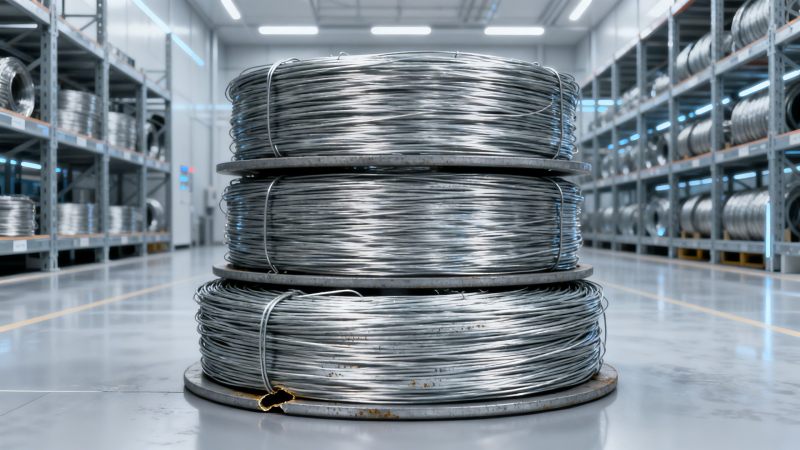
Kinking isn’t caused solely during processing—it’s often pre-determined in the warehouse. When Rolled Coil is stored improperly, residual stresses redistribute unevenly across the cross-section. For carbon steel coils like Q235B or St37-2—commonly used in boiler plate applications—this leads to permanent deformation once tension is reapplied during uncoiling or feeding.
The root issue lies in mechanical overload: stacking more than 3 layers without interlayer spacers compresses the bottom coil’s inner diameter by up to 0.8mm. This micro-deformation accumulates across hundreds of wraps, triggering localized buckling at the first bend point. Field data from Hongteng Fengda’s technical support team shows that 68% of reported kink incidents trace back to stacking height exceeding 1.8m on standard pallets.
Surface damage follows similar logic. Moisture trapped between stacked coils accelerates oxidation—particularly on coated variants—while UV exposure degrades organic passivation layers on galvanized and galvannealed grades. Even short-term exposure (as little as 48 hours) under direct sunlight raises surface temperature beyond 65°C, softening protective films and increasing susceptibility to abrasion during handling.
5 Critical Storage Mistakes—and How to Fix Them
Below are the most common, high-impact errors observed across global distribution hubs—and actionable countermeasures verified through Hongteng Fengda’s logistics audits in North America, EU, and Southeast Asia:
- Over-stacking without load-rated pallets: Exceeding 2.2m height or placing >3 coils per stack induces plastic deformation in inner wraps—especially for widths over 150mm and thicknesses above 2.5mm.
- Storing directly on concrete floors: Ground moisture wicks upward, causing rust streaks and pitting within 72 hours—even with coated Rolled Coil (Q345B, St52.4). Relative humidity >65% accelerates this process.
- Mixing coil diameters in one stack: A 1200mm OD coil placed atop a 900mm OD unit creates point-load stress at contact points, inducing edge waviness and inconsistent flatness.
- Using non-ventilated shrink wrap: Trapped condensation forms micro-pools beneath film, promoting white rust on GI coils and compromising adhesion of pre-lubricated coatings.
- Ignoring coil rotation schedules: Coils held longer than 90 days without rotation develop “set” in the winding direction—increasing uncoiling torque variance by up to 40%.
Correct Storage Parameters for Carbon Steel Coils
This table reflects field-tested thresholds validated against GB/T 700-2006, ASTM A653, and EN 10346 requirements. For example, Q195 and St35 coils stored beyond 70% RH for over 72 hours show measurable loss in tensile strength (≥3.2%) after just one re-coiling cycle—directly impacting weldability and cold-forming consistency.
How Material Specifications Impact Storage Sensitivity
Not all carbon steel coils behave identically in storage. Key differentiators include carbon content, surface treatment, and dimensional tolerance bands. For instance, Q235B (0.12%–0.20% C) exhibits higher ductility but lower yield stability than Q345B—making it more prone to set-induced kinking when static loads exceed 48 hours.
Coating type matters equally: galvanized coils require stricter humidity control than bare hot-rolled coil, while pre-lubricated variants demand ventilation to prevent oil migration and adhesion loss. All Rolled Coil grades supplied by Hongteng Fengda—including St37, St42, and Q345—undergo post-production passivation and are packed with VCI paper and desiccant packs per ISO 8502-9 protocols.
Dimensional accuracy also affects risk. Coils with width tolerance ±1% (e.g., 0.1mm–300mm range) experience greater edge stress concentration if misaligned during stacking—increasing surface marking probability by 3× compared to ±0.5% spec units.
Why Global Buyers Trust Hongteng Fengda for Coil Integrity Assurance
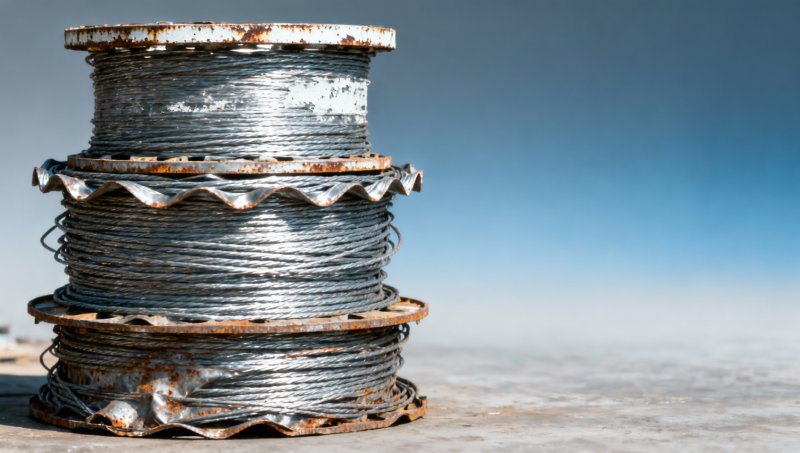
Hongteng Fengda integrates storage resilience into every stage—from mill production to export packaging. Our Rolled Coil shipments include custom-engineered wooden pallets rated for 3-layer stacking, climate-controlled warehousing (maintained at 18±2℃ and 50±5% RH), and batch-specific handling guides aligned with ASTM A924 and EN 10029.
We support procurement teams with full traceability: each coil carries QR-coded labels linking to mill test reports (MTRs), dimensional inspection logs, and coating thickness verification (per ASTM B499). For OEM partners requiring certified coil integrity, we offer third-party witnessed storage simulation testing—validating performance under real-world conditions for up to 120 days.
Whether you need confirmation on Q235B flatness tolerances, delivery timelines for 200-ton orders, customized packaging for Middle East desert logistics, or EN-compliant documentation for EU projects—we provide responsive, technically grounded support. Contact our engineering sales team today to request coil storage guidelines tailored to your application, or request sample batches with full compliance documentation.
Please give us a message


Please enter what you want to find