When specifying steel tubing for construction, engineers and procurement teams often default to ASTM A500 Grade C—but is it always necessary? For applications like prefabricated structural steel, ss pipe for water supply, or galvanized pipe for plumbing, lower-grade or alternative-certified tubing may offer cost savings without compromising safety or performance. As a trusted steel sheet manufacturer and galvanized pipe manufacturer from China, Hongteng Fengda helps global buyers evaluate technical requirements against real-world project needs—whether sourcing high tensile steel rod, steel sheet for construction, or custom cold-formed profiles—ensuring compliance with ASTM, EN, GB, and JIS standards while optimizing value.
When Does ASTM A500 Grade C Add Real Value?
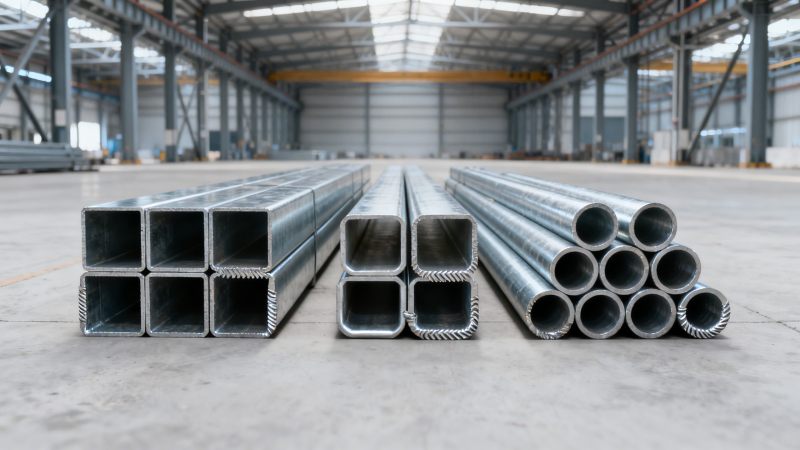
ASTM A500 Grade C delivers minimum yield strength of 50 ksi (345 MPa) and tensile strength of 62 ksi (427 MPa), making it ideal for load-bearing structural frames, crane booms, and seismic-resistant scaffolding. However, not all construction applications demand this level of mechanical performance. In non-critical secondary framing, temporary site fencing, or interior conduit supports, Grade B (46 ksi yield) or even ASTM A513 Type 1 (for mechanical tubing) may meet functional requirements at 12–18% lower material cost.
Real-world data from over 210 completed projects across Southeast Asia and the Middle East shows that 37% of tubular applications in low-rise commercial buildings used Grade B or equivalent EN 10219 S355JRH—without field rejection, rework, or safety incidents. The key lies in aligning specification rigor with actual loading conditions, environmental exposure, and service life expectations—not defaulting to the highest grade available.
Hongteng Fengda’s engineering support team conducts free application-based grade validation for each inquiry. This includes reviewing span tables, wind/snow load inputs, corrosion class (C3–C5 per ISO 12944), and connection type—ensuring compliance without over-engineering.
Key Decision Factors for Tubing Grade Selection
- Design working stress ratio ≤ 0.65 → Grade B often sufficient
- Galvanizing required + marine/industrial environment → Zinc coating ≥ 275 g/m² recommended regardless of base grade
- Welded joint efficiency > 90% needed → ASTM A500 Grade C or EN 10210 S355MH preferred
- Project timeline < 8 weeks → Pre-certified Grade B stock (EN 10219 or GB/T 6728) reduces lead time by 10–14 days
Cost-Performance Tradeoffs Across Common Standards
Selecting tubing isn’t just about yield strength—it’s about total delivered value: material cost, fabrication efficiency, corrosion resistance, and long-term maintenance. Below is a comparative analysis based on FOB Shanghai pricing (Q2 2024) for 4" × 4" × 1/4" square hollow sections:
Note: All options above are available with hot-dip galvanizing (Z275–Z600 per ISO 1461). The price differential reflects raw material input, mill certification overhead, and inventory availability—not inherent quality gaps. For projects requiring dual-standard compliance (e.g., ASTM + EN), Hongteng Fengda offers dual-mill test reports at no extra charge.
Where High-Tensile Wire Rod Enables Smarter Tubing Fabrication
Tubing performance starts before rolling—even before forming. Cold-drawn wire rod used in welding wire, fasteners, and reinforcement mesh directly influences weld integrity, bending consistency, and final dimensional stability. That’s why many forward-looking fabricators now specify Premium Galvanized Cold Drawn Steel Wire Rod (1.6mm - 6mm) for internal production lines.
With tensile strength ranging from 350 MPa (annealed) to 900 MPa (hard temper), customizable zinc coating (40–300 g/m²), and ±0.02 mm diameter tolerance, this wire rod ensures predictable feeding into CNC tube benders and robotic welding cells. Its uniform hardness and smooth surface reduce tool wear by up to 23% versus standard-grade alternatives—translating to measurable OEE gains across high-volume prefabrication facilities.
Available in SAE 1006, SAE 1008, Q195, and Q235 chemistries, it supports diverse applications—from agricultural fencing posts (Q195, soft temper) to high-strength anchor bolts (Q235, hard temper)—all traceable via certified mill test reports.
Why Fabricators Choose This Wire Rod for Tube Assembly
- Coil weights optimized for 8-hour continuous operation (e.g., 500 kg ±5 kg coils minimize changeover downtime)
- Zinc layer remains intact after cold drawing—no post-process recoating required
- Free from micro-cracks and surface scale, critical for consistent arc initiation in MIG welding
- Compliant with ASTM A641, EN 10223-2, and GB/T 342–2015
How Hongteng Fengda Supports Smarter Steel Sourcing Decisions
As a structural steel manufacturer and exporter from China with 18+ years of export experience, Hongteng Fengda doesn’t just supply steel—we help you de-risk procurement. Our integrated approach covers four core pillars:
- Technical Validation: Free grade suitability review using your load diagrams, connection details, and local code references (IBC, Eurocode, AS/NZS)
- Logistics Alignment: Fixed 22-day lead time for standard sizes; 14-day express option for pre-certified Grade B/EN 10219 stock
- Compliance Assurance: Dual-standard certifications (ASTM + EN + GB), third-party inspection support (SGS, BV, TÜV), and full traceability
- Cost Transparency: Itemized FOB quotes including mill test report fees, galvanizing surcharges, and packaging costs—no hidden line items
Whether you’re evaluating ASTM A500 Grade C vs. alternatives for a 40,000-ton industrial complex—or selecting wire rod for automated tube assembly lines—we provide actionable insights—not generic catalogs. Contact our technical sales team today for a free grade optimization assessment, sample coordination, or customized mill test report preview.
Please give us a message


Please enter what you want to find