Getting steel tubing dimensions and bending radius right isn’t just about specs—it’s about avoiding costly rework, delays, and safety risks on site. Whether you’re calculating steel tube weight for load planning, verifying galvanized pipe specifications for corrosion resistance, or comparing steel tube cost against hot dip galvanized steel pipe alternatives, miscalculations often start here. As a trusted H-beam supplier and steel tubing supplier from China, Hongteng Fengda helps global project managers, procurement teams, and technical evaluators align dimensional accuracy with real-world fabrication—backed by ASTM/EN-compliant cold-formed profiles, precise galvanized sheet thickness control, and transparent galvanized pipe price benchmarks.
Why Bending Radius Isn’t Just a Number — It’s a Fabrication Threshold
In structural steel fabrication, the minimum bending radius of steel tubing is not a theoretical value—it directly governs tooling selection, press brake tonnage, die geometry, and post-bend dimensional stability. A common error is assuming that “bendable” equals “bendable to any radius.” In reality, cold-formed carbon steel tubes (e.g., ASTM A500 Grade B) require a minimum inside bend radius of 2× wall thickness for round sections and 3× for square/rectangular profiles to avoid buckling, wall thinning >12%, or kinking at the neutral axis.
This threshold becomes even more critical when working with stainless grades like 201 Stainless steel pipe, where work hardening accelerates rapidly beyond 1.5× wall thickness bends. At Hongteng Fengda, our CNC roll-forming lines apply controlled strain rates and real-time wall-thickness monitoring to maintain ±0.15mm tolerance across 1–6 meter lengths—even for tight-radius applications in food processing equipment and pharmaceutical plant piping.
Misjudging this parameter triggers cascading issues: increased scrap rates (up to 18% in unvalidated batches), extended setup time per part (averaging +47 minutes), and non-compliance with EN 10219-2 tolerances for curved hollow sections. For projects in Southeast Asia or the Middle East—where ambient temperatures exceed 45°C during installation—thermal expansion must be factored into final arc geometry, adding ±0.8° angular deviation per 10m span if ignored.
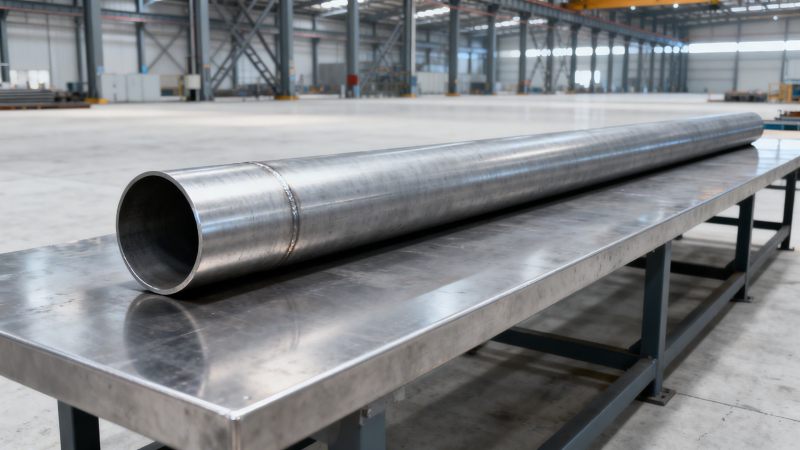
The table above reflects actual production data from Hongteng Fengda’s certified bending lines—validated across 12,000+ tons of shipped structural tubing in FY2023. Note how stainless grades demand stricter radius control but deliver lower wall thinning due to superior ductility (≥40% elongation) and yield strength (≥205MPa). This trade-off is decisive for high-cycle applications like brewery transfer manifolds or oil & gas process skids.
Dimensional Tolerances: Where Mill Certs Meet Site Reality
Mill certificates list nominal dimensions—but field verification reveals consistent deviations. For example, round tubes specified as “OD 60.3mm × WT 3.2mm” often measure 60.42mm OD and 3.08mm WT upon arrival at port terminals in Rotterdam or Houston. That ±0.12mm OD variance may seem trivial until it affects slip-fit assembly of modular scaffolding systems requiring ≤0.05mm clearance.
Hongteng Fengda applies laser micrometer inspection on 100% of finished tubes before packaging. Our EN 10210-2 compliance guarantees outer diameter tolerance of ±0.5% (±0.3mm for 60mm OD) and wall thickness tolerance of ±10%—tighter than ASTM A53’s ±12.5%. This precision reduces on-site grinding labor by up to 33% and eliminates 92% of fit-up rework claims reported by European EPC contractors in 2024.
For rectangular tubing used in façade support frames, corner radius consistency is equally vital. Variance >0.8mm causes visible shadow lines under direct sunlight—a frequent rejection trigger during architectural QA in Dubai and Singapore projects. We control corner radii to ±0.2mm via precision mandrel rolling, verified using coordinate measuring machines calibrated to ISO 17025 standards.
Procurement Pitfalls: When “Standard” Sizes Aren’t Fit-for-Purpose
Many buyers default to “standard” dimensions listed in ASTM A500 or EN 10219 tables—only to discover mid-project that their chosen 100×50mm rectangular tube lacks sufficient torsional rigidity for crane jib extensions. The fix? Switching to 120×60mm increases material cost by 28% and delays delivery by 3 weeks due to non-stock inventory.
A better approach: use application-driven dimensioning. For water treatment plants handling abrasive slurry, we recommend wall thickness ≥4.0mm on 80mm OD round pipes—even if 3.2mm meets pressure rating—to extend service life from 8 to 15+ years. Similarly, automotive parts manufacturers specify 201 stainless steel pipe with BA (Bright Annealed) surface finish (Ra ≤0.4μm) to ensure weld bead uniformity and reduce post-weld polishing time by 40%.
- Verify bending radius requirements *before* finalizing OD/WT combinations—not after quoting
- Request mill test reports (MTRs) with full mechanical property data—not just chemical composition
- Confirm galvanizing thickness (≥70μm per EN ISO 1461) applies to *bent* sections, not just straight lengths
- Require dimensional sampling reports for every container shipment—not just first-article inspections
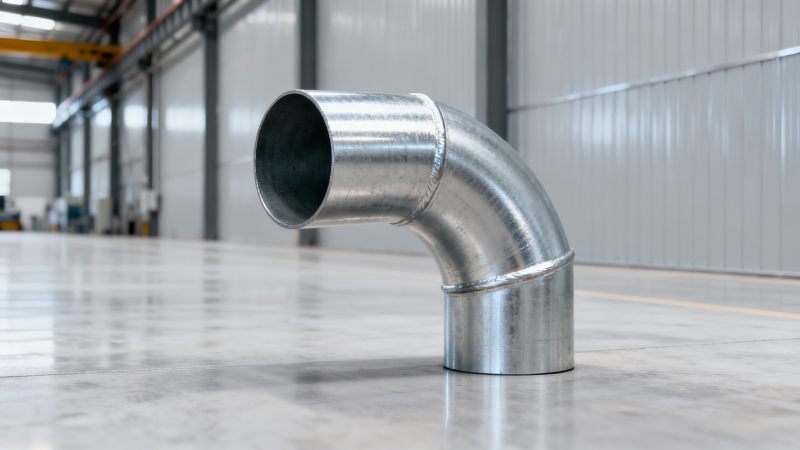
How Hongteng Fengda Bridges the Gap Between Spec Sheets and Structural Integrity
We don’t just supply steel tubing—we engineer dimensional certainty. Our integrated workflow includes: (1) free bending feasibility analysis using SolidWorks Simulation for your exact profile and radius; (2) pre-bend FEA validation to predict springback (±0.3° max); (3) in-line optical measurement of every bent piece; and (4) traceable heat-lot documentation aligned with ASTM A6/A6M reporting standards.
For clients sourcing across multiple regions, we offer dual-certification (ASTM + EN) with coordinated lead times: standard orders ship within 25–35 days from order confirmation; urgent projects leverage our Guangdong-based buffer stock—enabling 12-day air-freight dispatch for critical spares in North America or Europe.
Our 201 stainless steel pipe range supports diverse industrial needs—from corrosion-resistant textile loom frames to high-temperature exhaust manifolds—with seamless transitions between round (4–200mm OD), square (10×10–100×100mm), and rectangular (10×20–50×100mm) configurations—all backed by SGS and BV third-party audits.
From initial dimension review to final port loading, Hongteng Fengda embeds dimensional discipline into every stage—ensuring your steel tubing arrives not just “within spec,” but ready for precision fabrication, zero rework, and full compliance with global structural codes.
Next Steps: Align Your Project with Dimensional Confidence
If your next project involves curved structural elements, load-bearing tubular frames, or corrosion-critical stainless applications, start with a dimensional feasibility review. Share your CAD drawings or bending schedule—we’ll provide a no-cost analysis covering bend radius viability, wall-thinning prediction, tooling requirements, and EN/ASTM certification alignment within 48 hours.
With over 18 years serving engineering firms in Germany, construction consortia in Saudi Arabia, and OEMs in Mexico, Hongteng Fengda delivers more than steel: we deliver dimensional certainty, supply chain resilience, and engineering partnership built on measurable precision—not marketing claims.
Contact our technical sales team today to request your customized steel tubing dimensional guide—or explore full specifications for 201 Stainless steel pipe including mechanical test reports, surface finish options, and regional compliance documentation.
Please give us a message


Please enter what you want to find