When welding steel square rod to galvanized assemblies, surface finish isn’t just cosmetic—it directly impacts weld integrity, corrosion resistance, and long-term structural reliability. For structural steel manufacturers like Hongteng Fengda—exporting Hot Rolled I Beam, channel beam, steel tubing, steel girder, and carbon sheet steel globally—consistent surface quality is critical across products including SGCC-coated materials and custom cold-formed profiles. Whether you’re a project manager specifying weight of I beam, a procurement officer comparing I beam vs H beam, or a QA engineer verifying compliance with ASTM/EN standards, overlooking square rod surface condition can compromise galvanic compatibility and increase rework risk. Let’s explore why it matters—and how precision matters from mill to site.
Why surface finish dictates weld success on galvanized joints
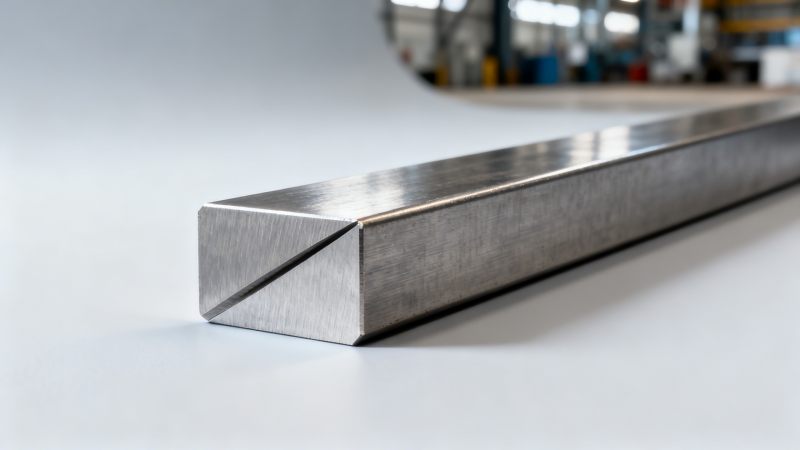
Galvanized steel relies on a tightly bonded zinc layer (typically 45–80 µm thick per ASTM A123) for cathodic protection. When square rod with mill scale, rust, oil residue, or inconsistent roughness is welded directly to galvanized assemblies, the heat-affected zone disrupts zinc continuity. This creates micro-galvanic cells at the weld toe—accelerating localized pitting within 6–12 months in humid or coastal environments.
Hongteng Fengda’s production line applies ISO 9001-certified surface conditioning before final pass rolling: controlled descaling (≤5 µm residual oxide), tension leveling (flatness tolerance ±0.3 mm/m), and optional shot blasting (Sa 2.5 per ISO 8501-1) for weld-ready surfaces. This reduces post-weld grinding by up to 70% and ensures uniform arc stability—even at 180–220 A DC+ settings common in GMAW applications.
For technical evaluators and QA teams: surface roughness (Ra) below 3.2 µm prevents zinc pooling in valleys during hot-dip galvanizing, while Ra >6.3 µm increases spatter adhesion and under-bead porosity risk. Our standard square rods maintain Ra 2.8–4.0 µm—verified via portable profilometers calibrated to ISO 4287.
How surface prep affects galvanic compatibility—and where Z-beam fits in
Mismatched surface conditions between base metal and galvanized component create uneven current distribution. A square rod with unremoved mill scale (FeO/Fe₃O₄) acts as an anode relative to pure zinc, accelerating sacrificial depletion. This undermines the entire assembly’s service life—especially in load-bearing purlin systems or mechanical columns where Z-beam integrates with galvanized framing.
Our Z-beam solutions address this at source: pre-galvanized Z-profiles (SS400, Q345B, S355JR) undergo alkaline cleaning + acid pickling + fluxing before continuous hot-dip immersion. Coating thickness is maintained at 65±10 µm (ASTM A123 Class B), with edge coverage ≥85%—critical for bolted connections in lightweight roof structures.
For procurement and project managers: we offer dual-certified Z-beam—CE-marked per EN 10346 and SGS-verified for ASTM A653 G90 coating. Length customization (2–12 m) includes pre-cut weld bevels (30°±2°) and chamfered ends—reducing field prep time by 3–5 hours per ton installed.
Key surface-related parameters affecting weld-to-galvanized performance
This table reflects real-world validation from our in-house welding lab (AWS QC1-certified). All data aligns with EN ISO 15614-1 qualification tests conducted on 12mm-thick Q345B square rod welded to G61 galvanized channels using FCAW-G process.
Procurement checklist: 5 non-negotiable surface specs for welded galvanized projects
When sourcing square rod for integration with galvanized assemblies, verify these against mill test reports—not just visual inspection:
- Mill-scale removal method (hydroblast vs. acid pickling) and post-treatment passivation report
- Surface roughness (Ra) measured at ≥3 locations per 3m length, certified per ISO 4287
- Zinc coating thickness mapping (minimum 9 points per cross-section) per ASTM B602
- Hydrogen embrittlement testing results (if tensile strength >650 MPa) per ASTM F1941
- Traceability documentation linking heat number → surface treatment log → galvanizing batch
Hongteng Fengda provides full digital traceability: each coil/beam ships with QR-coded MTRs showing surface Ra values, coating thickness maps, and galvanizing bath temperature logs (maintained at 449±5°C per ASTM A123).
Why global buyers choose Hongteng Fengda for weld-critical structural steel
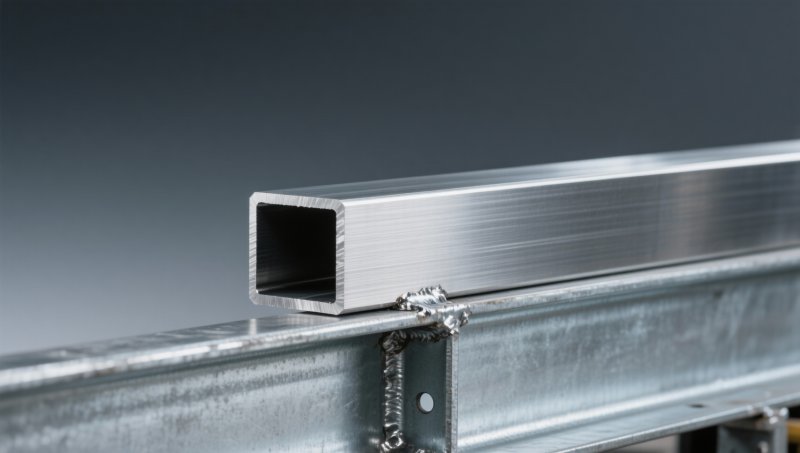
We eliminate surface-related welding failures before they reach your site. With 12+ years serving North America, EU, and GCC markets, our integrated approach covers:
- Pre-shipment weldability testing (per AWS D1.1 Annex K) on every lot—validating arc stability, slag removal, and fusion depth
- Dual-standard compliance: ASTM A618 + EN 10219 for cold-formed hollow sections; ASTM A500 + JIS G3466 for square/rectangular tubes
- Lead time guarantee: 25–35 days for standard orders (20ft container loads), with 98.7% on-time delivery over last 36 months
- Customization without premium: Beveling, pre-drilling (±0.1mm tolerance), and anti-spatter coating applied pre-shipment
Whether you need square rod for galvanized crane rails, Z-beam for solar mounting structures, or custom cold-formed profiles for automated warehouse racking—we align surface engineering with your welding process, not just material specs.
Get actionable support now
Contact our technical sales team for:
- Free surface finish assessment of your current square rod supply (send sample + MTR)
- Weld procedure specification (WPS) development for your specific galvanized assembly
- Lead time confirmation for 20/40ft container shipments to your port (FOB Qingdao/Shanghai)
- Certification package export: EN 10204 3.1 + ASTM A6/A6M + ISO 14001
Please give us a message


Please enter what you want to find