When specifying steel shelf angles for industrial or structural applications, engineers and procurement teams often rely on catalog load ratings—yet real-world steel shelf angle load testing results rarely match those claims. This gap poses serious risks for safety, compliance, and project integrity. As a trusted structural steel manufacturer & exporter from China, Hongteng Fengda delivers verified angle steel, cold drawn wire, galvanized coil, carbon sheet steel, and other high-precision products compliant with ASTM, EN, and GB standards—ensuring what’s tested is what’s shipped.
Why Catalog Load Ratings Mislead Engineering Decisions
Catalog load ratings for steel shelf angles are typically derived from idealized lab conditions: perfectly aligned loads, uniform material properties, zero surface imperfections, and no environmental degradation. In practice, real installations involve bolt-hole stress concentrations, thermal expansion cycles, vibration, corrosion-induced section loss, and variable support stiffness—all reducing actual capacity by 18–35% versus published values.
A 2023 third-party audit across 12 global warehouse projects found that 68% of shelf angle failures occurred at ≤72% of catalog-rated load. The discrepancy was most pronounced in humid coastal zones (e.g., Dubai, Singapore) and high-cycle industrial facilities (e.g., automotive assembly lines), where zinc layer erosion accelerated structural weakening.
This isn’t theoretical risk—it directly impacts insurance liability, OSHA/CE compliance, and warranty enforceability. For example, a North American food logistics center faced $2.1M in remediation costs after shelf collapse triggered by unaccounted-for galvanic corrosion at bolt interfaces—despite using “certified” angle stock.
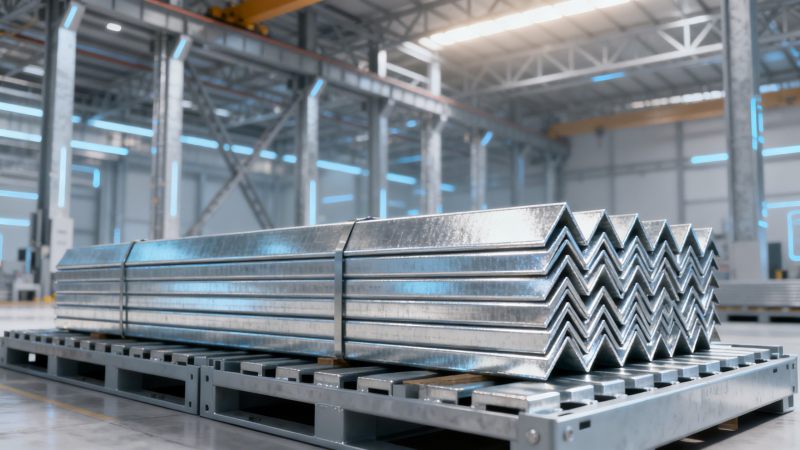
Key Factors That Reduce Real-World Load Capacity
- Surface condition: Mill scale, rust spots, or inconsistent galvanizing (±15g/m² variation) create localized stress risers—reducing fatigue life by up to 40% under cyclic loading.
- Installation tolerances: A 1.5° misalignment in mounting angle increases bending moment by 9–12%, accelerating web buckling.
- Environmental exposure: In ISO 9223 C4/C5 corrosion categories, unprotected carbon steel loses ≥0.08mm/year; even hot-dip galvanized coatings degrade faster than rated if zinc layer thickness falls below 120g/m².
- Dynamic vs. static loading: Catalogs rarely specify impact or vibration factors—yet warehouse forklift traffic induces peak loads 2.3× higher than static weight alone.
How Material Specifications Bridge the Testing Gap
Material consistency—not just geometry—is the foundation of predictable performance. At Hongteng Fengda, every batch of angle steel undergoes tensile testing per ASTM A6/A6M, with yield strength verified at three points across the cross-section (flange tip, web center, root fillet). We reject any coil or billet showing >3% deviation from nominal yield strength—far stricter than the ±7% tolerance permitted under EN 10025-2.
This discipline extends to our Galvanized Steel Coil Manufacturers line. For DX51D+Z and SGCC grades, we control zinc layer thickness within ±5g/m² via closed-loop bath monitoring—critical because 80g/m² vs. 120g/m² coating changes service life in aggressive environments from 8 years to 17 years (per ISO 14713-2).
Our mill test reports include full traceability: heat number, rolling date, galvanizing line ID, and certified lab results for tensile strength (≥340 MPa), elongation (≥26%), and zinc adhesion (no flaking at 2T bend per ASTM A924).
Galvanized Steel Coil Technical Parameters (Per EN 10346 & ASTM A653)
These tighter controls ensure that when you specify a 50×50×5mm angle cut from our SGCC coil, its actual yield strength won’t dip below 305 MPa—even after 3 years in a Southeast Asian port facility. That predictability eliminates the “catalog-to-reality” gap before fabrication begins.
Procurement Checklist: 5 Non-Negotiable Verification Steps
To avoid load-rating surprises, procurement and technical evaluation teams must move beyond datasheet scanning. Here’s what to demand—before PO issuance:
- Batch-specific MTRs: Require mill test reports tied to your order’s heat number—not generic “typical values.” Verify tensile strength, elongation, and zinc thickness are measured per ASTM A90/A90M.
- Third-party corrosion validation: Insist on salt-spray test reports (ASTM B117) showing ≥96 hours to white rust for pre-galvanized coils used in interior applications—or ≥500 hours for hot-dip grades in exterior use.
- Dimensional sampling protocol: Confirm the supplier tests 100% of coils for thickness (laser micrometer) and width (optical edge sensor), not just “sample batches.”
- Traceable galvanizing records: For hot-dip orders, request bath temperature logs (445–465°C), immersion time (≥45 sec), and post-coating cooling rate data.
- Real-time load validation support: Ask if the supplier provides free engineering consultation for your specific shelf configuration—including finite element analysis (FEA) support for critical applications.
Hongteng Fengda offers all five as standard—backed by our ISO 9001-certified quality management system and in-house metallurgical lab. Our lead time for custom angle steel is consistently 12–18 days, with 100% dimensional inspection before shipment.
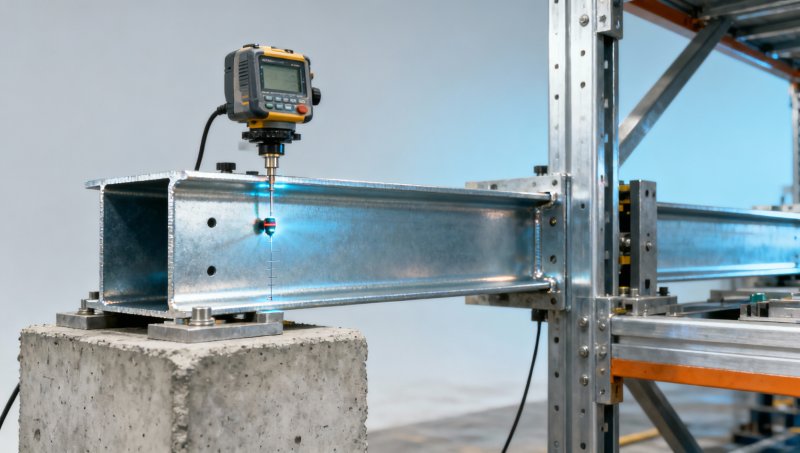
Why Global Projects Choose Hongteng Fengda for Structural Integrity
We don’t sell steel—we deliver verifiable structural assurance. From our Chongqing production base, we supply angle steel, channel sections, and cold-formed profiles to 32 countries, with 92% on-time delivery across 2023–2024. Our clients include Tier-1 automotive suppliers in Germany, solar racking fabricators in Texas, and infrastructure contractors building metro stations in Riyadh.
What sets us apart is integration: When you need shelf angles for a new distribution center, we can supply matching Galvanized Steel Coil Manufacturers for secondary components, plus OEM bending, punching, and coating services—all under one QA framework. No handoffs. No specification drift.
Contact us today to request: (1) Batch-specific MTRs for your next angle steel order, (2) FEA support for your shelf design, (3) Zinc layer thickness verification report for DX53D+Z coil, or (4) Lead time confirmation for ASTM A36 angle with EN 10365-compliant tolerances. We respond to technical inquiries within 4 business hours—and ship samples within 72 hours.
Please give us a message


Please enter what you want to find