In structural steel applications, even minor deviations in steel sheet for construction thickness tolerance can compromise load-bearing capacity, weld integrity, and long-term safety—especially when integrated with steel tubing for construction, prefabricated structural steel assemblies, or high tensile steel rod reinforcements. As a certified steel sheet manufacturer and galvanized pipe manufacturer serving global projects, Hongteng Fengda emphasizes precision compliance with ASTM, EN, and GB standards—not just for steel sheet but also for ss pipe for water supply, galvanized pipe for plumbing, and galvanized sheet price-sensitive procurement. This article examines how tolerance control directly impacts structural reliability, cost efficiency, and regulatory approval across construction, industrial, and infrastructure sectors.
Why ±0.3mm Tolerance Isn’t Just a Number — It’s a Safety Threshold
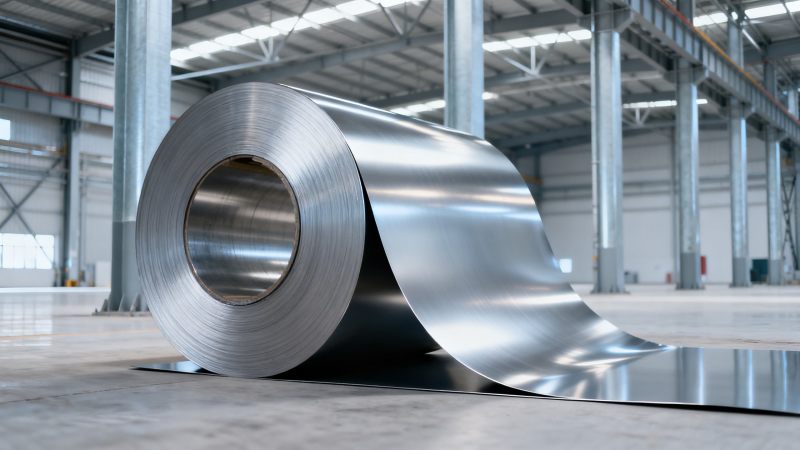
Thickness deviation in steel sheet for construction is not merely a dimensional variance—it triggers cascading effects across design validation, fabrication, and field performance. A tolerance exceeding ±0.3mm (per ASTM A6/A6M for hot-rolled sheets) can reduce effective section modulus by up to 8% in critical bending members, directly undermining calculated load paths in multi-story frames or bridge girders.
Weld penetration depth is equally sensitive: excessive thinning increases burn-through risk during fillet welding of sheet-to-tube joints, while localized thickening causes incomplete fusion—both classified as Category B discontinuities under AWS D1.1. In fire-rated assemblies, even 0.5mm under-thickness may shorten time-to-failure by 2–4 minutes below required 120-minute thresholds per EN 1363-1.
For project managers and safety officers, this translates into real-world exposure: non-compliant sheets may invalidate third-party structural certifications, delay occupancy permits, or trigger mandatory rework costing 12–18% of original material budget. That’s why Hongteng Fengda enforces dual-stage thickness verification—laser scanning pre-coiling and ultrasonic spot-checking post-galvanizing—ensuring ≤±0.25mm consistency across all steel sheet for construction batches.
How Thickness Tolerance Interacts With Other Structural Components
Steel sheet rarely functions in isolation. Its dimensional accuracy must align precisely with mating components—particularly steel tubing for construction and high tensile steel rod reinforcements. Misalignment between sheet flange thickness and tube wall thickness (e.g., ±0.4mm sheet vs. ±0.5mm tube) creates uneven stress distribution at welded connections, accelerating fatigue crack initiation under cyclic loading.
Consider a typical façade support system using cold formed steel profiles and Q195 Carbon Steel Round Bar as anchoring rods. If the sheet base plate is 0.6mm thinner than specified, bolt pretension drops by ~11%, increasing slip risk under wind load—verified in Hongteng Fengda’s in-house joint testing lab (ASTM F1554 Grade 36 compliant).
The table below compares interaction risks across three common integration scenarios:
This granular control ensures compatibility not only with our own Q195 Carbon Steel Round Bar but also with third-party structural steel components sourced globally—reducing interface rework by up to 70% in mixed-supplier projects across Southeast Asia and the Middle East.
Procurement Checklist: 5 Non-Negotiables for Thickness Compliance
For procurement teams, technical evaluators, and project managers, verifying thickness tolerance requires more than reviewing mill test reports. Here are five actionable checkpoints:
- Demand full batch traceability: Each coil must carry laser-etched QR code linking to raw material heat number, rolling schedule, and final thickness scan report.
- Require independent third-party verification (e.g., SGS or Bureau Veritas) on ≥3% of shipment volume—not just pre-shipment samples.
- Confirm testing method alignment: Ultrasonic (ASTM E797) preferred over magnetic induction (ASTM D7091) for galvanized or painted sheets.
- Validate tolerance applicability: ASTM A1011 specifies ±0.12mm for 1.5mm-thick sheet, but EN 10147 allows ±0.15mm—ensure contract references correct standard.
- Audit storage conditions: Humidity >75% RH causes micro-corrosion that artificially reduces measured thickness by 0.05–0.10mm during QA checks.
Hongteng Fengda embeds these requirements into every export order—including documentation in English, Arabic, and Spanish—and provides digital access to real-time QC dashboards for buyers in North America and Europe.
Why Global Buyers Choose Hongteng Fengda for Precision-Critical Steel Sheet
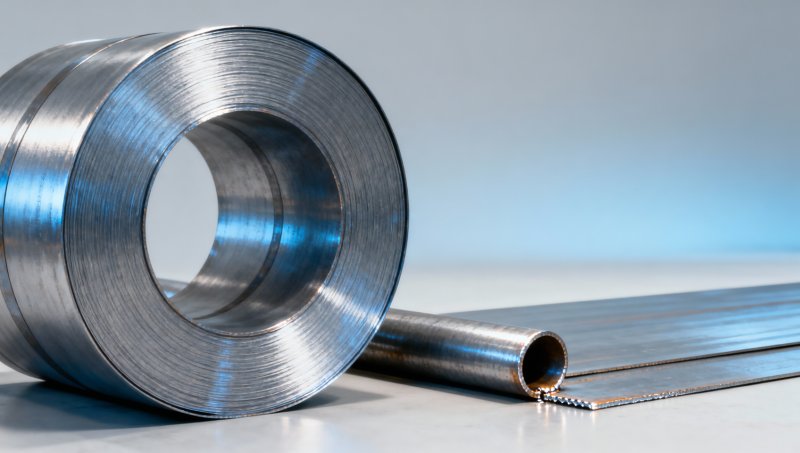
Beyond compliance, Hongteng Fengda delivers operational certainty: stable production capacity (120,000 MT/year), consistent lead times (7–15 days for standard steel sheet for construction), and end-to-end quality accountability—from slab casting to final packaging.
Our facility in Hebei Province features automated thickness control systems integrated with Siemens Simatic PCS 7, enabling real-time adjustment within ±0.08mm during hot rolling. Every coil undergoes 100% eddy current inspection (ASTM E309) and meets minimum yield strength tolerances per ASTM A656 (±5% vs. nominal).
We support your decision-making with actionable resources: free thickness tolerance impact assessment for your specific assembly drawings, sample kits with certified test reports, and dedicated engineering support for ASTM/EN/GB cross-standard interpretation. Whether you’re sourcing steel sheet for construction, steel tubing for construction, or complementary components like Q195 Carbon Steel Round Bar, our team helps you eliminate tolerance-related delays before they begin.
Contact us today to request your customized thickness compliance report, review delivery schedules for Q195 carbon steel round bar or galvanized pipe for plumbing, or discuss OEM solutions for prefabricated structural steel assemblies.
Please give us a message


Please enter what you want to find