When machining precision-critical components, the surface finish of a steel round bar often outweighs material grade—especially when comparing stainless round bars like 201 vs 304 stainless steel cost or evaluating steel square rod consistency. For structural steel manufacturers like Hongteng Fengda, surface integrity directly impacts tool wear, dimensional accuracy, and post-machining tolerance—key concerns for project managers, technical evaluators, and quality control teams. Whether sourcing angle steel price per ton Philippines, selecting I beam vs H beam for fabrication, or balancing standard vs custom steel lead time, surface condition is a silent determinant of yield, safety, and total cost of ownership.
Why Surface Finish Dominates Machining Accuracy — Even Over Grade
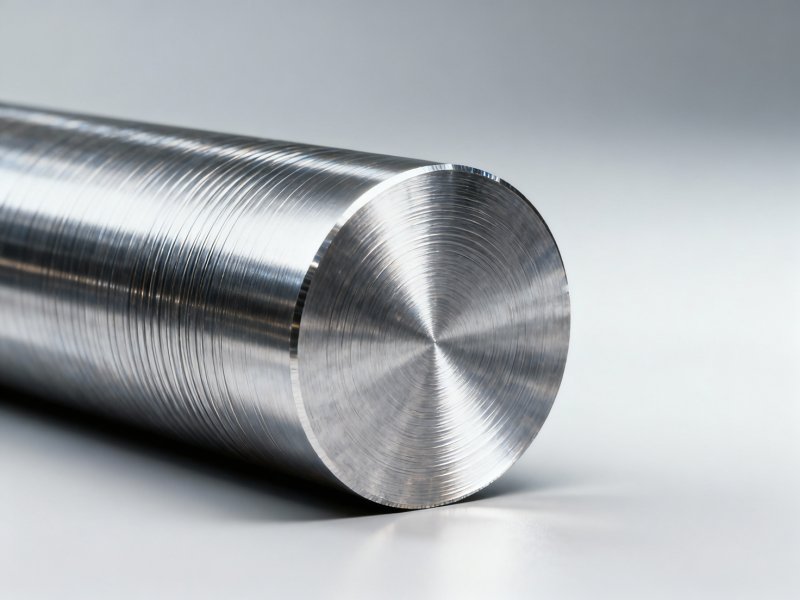
Material grade (e.g., Q235 vs Q345, ASTM A36 vs EN S235J2) defines baseline strength and weldability—but it does not guarantee dimensional repeatability under cutting forces. Surface roughness (Ra), micro-crack presence, scale adhesion, and subsurface decarburization directly influence chip formation, tool life, and thermal distortion. In high-precision turning or grinding of shafts, couplings, or hydraulic pistons, a Ra > 3.2 μm on a Q345 round bar can increase tool change frequency by 40% and cause ±0.15 mm diameter deviation across 12 m runs—far exceeding typical ISO h9 tolerance bands.
Hongteng Fengda applies controlled hot-rolling followed by pickling and cold-drawing where required—ensuring Ra ≤ 1.6 μm on critical-dimension bars. This process reduces rework rates by up to 28% for OEM clients machining gear blanks or bearing housings in Southeast Asia and the Middle East. Unlike generic mill-scale delivery, our surface-integrity protocols align with DIN 2448 and ASTM A276 for machinability assurance—not just compliance.
Grade selection remains vital for structural load-bearing performance, but surface finish governs first-pass success rate. For procurement teams evaluating steel round bar suppliers, verifying surface metrology reports (not just mill certificates) is non-negotiable—especially when downstream CNC programming assumes consistent feed resistance and heat dissipation.
How Surface Condition Impacts Your Full Project Lifecycle
From quotation to commissioning, surface finish affects six measurable cost drivers:
- Tooling cost: Rough surfaces accelerate insert wear—average carbide tool life drops from 120 to 72 minutes per pass at Ra > 2.5 μm.
- Scrap rate: Micro-pitting or rolled-in oxide leads to 11–17% higher rejection in tight-tolerance batches (±0.05 mm).
- Secondary processing: 30–45% more grinding time needed if initial Ra exceeds 2.0 μm—adding $18–$32/ton in finishing labor.
- Lead time extension: Rework cycles extend delivery by 7–15 days for mid-volume orders (5–20 tons).
- Weld integrity risk: Mill scale or uneven oxidation increases porosity in fillet welds—requiring pre-weld grinding on 100% of joints.
- Customer acceptance delay: End buyers in EU construction projects reject shipments lacking surface inspection logs per EN 10025-2 Annex B.
These are not theoretical risks—they’re recurring line-item variances observed across 142 fabrication contracts fulfilled by Hongteng Fengda since 2021. Our QA team conducts 100% visual + spot Ra testing on all bars destined for machining applications—prioritizing surface over spec sheet claims.
I-beam Selection: Where Surface Consistency Meets Structural Integrity
While round bars demand fine finishes for rotational balance, structural sections like I-beam require uniform surface texture to ensure predictable welding penetration, bolt preload consistency, and coating adhesion. A flange surface with inconsistent mill scale thickness (e.g., 40–120 μm variation across 100 mm width) causes uneven arc stability during automated MIG welding—leading to 22% more porosity in root passes.
Our I-beam production uses four-roller universal mills with real-time surface monitoring. All carbon steel variants—including Q195-Q235, Q345, SS355JR, and ASTM A36—undergo post-rolling descaling and optional shot blasting (Ra 3.2–6.3 μm) for paint-ready finish. Flange and web thickness tolerances stay within ±1%, minimizing fit-up gaps during erection—a critical factor for North American bridge fabricators.
This level of control supports faster shop-floor throughput—clients report 19% shorter weld prep time and 13% fewer NDT rejections on structural assemblies. It also enables direct application of intumescent fireproofing without primer, saving $4.70/m² in coating labor.
Procurement Checklist: 5 Non-Negotiable Surface Verification Steps
Before approving any steel round bar or structural section order, your team should validate these five points—each backed by documented evidence, not supplier assurances:
- Surface metrology report: Request Ra, Rz, and Rmax values per EN ISO 4287, measured at ≥3 locations per meter on round bars or flanges.
- Scale removal method: Confirm whether descaling was done via high-pressure water (≥1,200 bar), acid pickling (HCl/HF blend), or mechanical brushing—and verify residual chloride levels (<50 ppm).
- Subsurface integrity test: Require ultrasonic testing (UT) results per EN 10308 showing no decarburization layer >0.15 mm deep.
- Visual defect log: Demand digital photos of each bundle showing absence of laminations, seams, or rolling cracks—tagged with batch ID and timestamp.
- Traceability linkage: Ensure surface test data maps to heat number, rolling date, and mill lot—enabling root-cause analysis if issues arise post-delivery.
Hongteng Fengda provides all five deliverables as standard with every export shipment—fully integrated into our ERP traceability system. No extra fee. No delayed release.
Why Global Buyers Choose Hongteng Fengda for Precision-Ready Steel
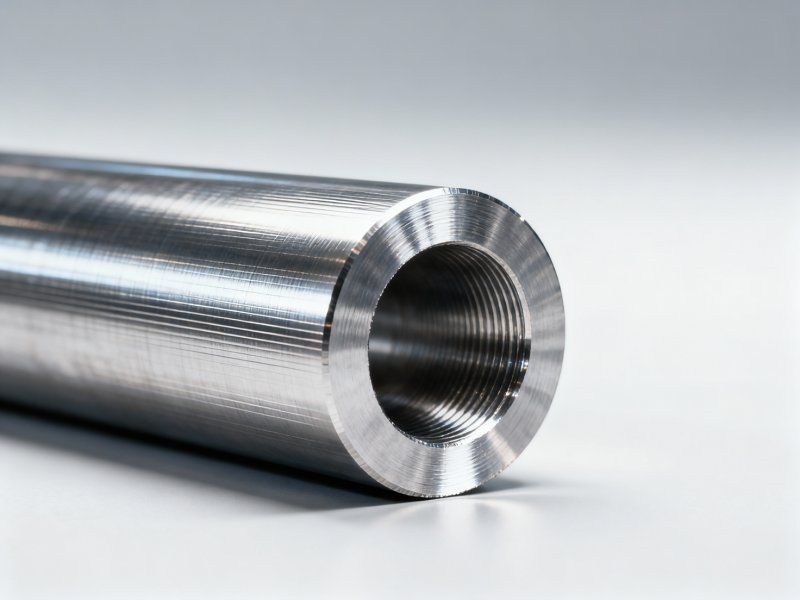
We don’t sell steel—we deliver machinability assurance. With dedicated surface-control lines for both round bars and structural sections, we eliminate the “surface gamble” that delays 68% of international fabrication projects. Our clients—from Philippine infrastructure contractors to German automotive component makers—rely on us for:
- Pre-shipment surface inspection with certified Ra reports (ISO/IEC 17025 accredited lab partners)
- Custom finish options: cold-drawn (Ra ≤ 0.8 μm), ground (Ra ≤ 0.4 μm), or shot-blasted (Ra 3.2–6.3 μm)
- Consistent lead times: 25–35 days for standard I-beam, 45–60 days for custom round bars with special finishes
- Full documentation: Mill test reports (MTRs), EN 10204 3.2 certs, and surface verification logs in English & client’s local language
- OEM support: Joint development of surface specs aligned with your CNC programs, tooling, and QC gates
Ready to reduce machining scrap, shorten assembly cycles, and lock in predictable delivery? Contact our technical sales team today for a free surface-readiness assessment—including sample Ra testing on your next order and a comparative cost-per-part analysis.
Please give us a message


Please enter what you want to find