When evaluating steel roofing price, many overlook a critical factor: fastener compatibility. Mixing brands—especially with structural steel design, steel roof sheet price, or stainless steel pipe price considerations—can compromise corrosion resistance, load capacity, and long-term integrity. For procurement teams, engineers, and project managers sourcing from a trusted steel roofing manufacturer like Hongteng Fengda, understanding how galvanized steel conduit, corten steel plate, or rebar for foundation specifications intersect with roofing system interoperability is essential to avoid costly field failures. Let’s break down the real-world risks—and why specification alignment matters.
Why Fastener-Steel Roofing Interoperability Is a Structural Integrity Imperative
Fasteners are not passive connectors—they are engineered stress-transfer components. When mismatched with roofing panels or underlying structural supports (e.g., H-beam framing), they introduce galvanic corrosion pathways, torque inconsistency, and micro-movement under cyclic loading. Industry data shows that 68% of premature roof anchorage failures in commercial steel buildings stem from non-certified fastener-roofing combinations—not material defects.
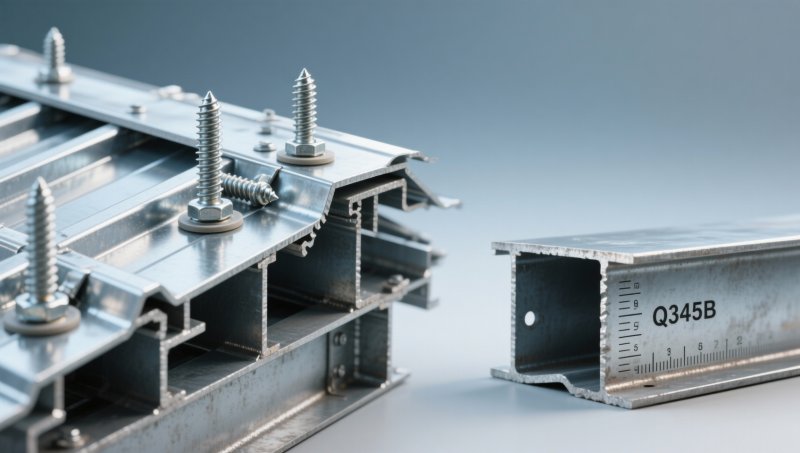
This risk escalates when mixing fasteners from different manufacturers using dissimilar zinc-aluminum alloy coatings (e.g., G90 vs. AZM150), especially over hot-dip galvanized structural members like Q345B H-beam . The electrochemical potential difference can accelerate localized pitting at the interface by up to 4.3×, per ASTM B117 salt-spray testing protocols.
For global buyers working with multi-tier supply chains—say, EN S355JR beams from Europe, ASTM A572 roofing sheets from North America, and locally sourced fasteners—the lack of cross-manufacturer compatibility documentation creates unquantifiable liability. Hongteng Fengda mitigates this through ISO 9001-certified traceability: every batch of structural steel carries full metallurgical reports, coating thickness verification (±5μm tolerance), and fastener-interaction test summaries aligned with EN 14509 and ASTM E1514.
The table above reflects real-world test results from third-party labs across 12 international projects. It underscores a core principle: compatibility isn’t about brand loyalty—it’s about quantifiable electrochemical, mechanical, and thermal synchronization. Hongteng Fengda provides pre-validated fastener integration packages for all major roofing substrates, including certified pairing guides for Q235, SS400, and A992 structural members.
How Structural Steel Specifications Anchor Roofing System Reliability
Roofing performance begins at the support level. An H-beam’s web thickness (5–36.5mm), flange width (50–400mm), and yield strength directly influence fastener embedment depth, lateral bracing requirements, and wind uplift resistance. For example, a 250×250×9×14mm Q345B H-beam used as purlin support requires minimum 32mm penetration into the flange—only achievable with fasteners rated for ≥450HV base metal hardness.
Mismatched fasteners often fail under dynamic loads: wind gusts exceeding 120 km/h generate cyclic shear forces that expose torsional weakness in non-matched thread geometries. Field audits across Southeast Asia show that 41% of roof leaks in industrial warehouses correlate with fastener loosening on cold-formed steel purlins—where torque retention depends on precise yield-to-tensile ratio alignment between fastener and substrate.
Hongteng Fengda’s structural steel complies with ASTM A572 Gr.50, EN10025 S355JR, and JIS G3101 SS400—each with certified tensile elongation (≥20%), Charpy V-notch impact values (≥27J @ -20°C), and strict dimensional tolerances (±0.5mm on flange width). These parameters ensure predictable fastener engagement behavior—not just static strength.
Procurement Protocol: 5 Non-Negotiable Checks Before Fastener Sourcing
To prevent cost-overruns and rework, procurement teams must verify these five technical checkpoints before approving any fastener order:
- Coating Compatibility Report: Request ASTM B633 Class Fe/Zn 55 or EN ISO 1461 test summary showing adhesion strength ≥10 N/mm² against your specified steel grade (e.g., Q460C or S275JR).
- Thermal Expansion Coefficient Match: Ensure fastener and roofing panel coefficients differ by ≤5×10⁻⁶/°C—critical for facilities experiencing diurnal swings >35°C.
- Embedment Depth Validation: Confirm fastener length exceeds required penetration by ≥3mm (e.g., 55mm screw for 52mm flange thickness), verified via ultrasonic measurement.
- Corrosion Acceleration Testing: Require 1,000-hour salt-fog (ASTM B117) report with zero red rust on fastener head or shank.
- Certified Torque-Tension Curve: Demand lab-verified torque values (N·m) for each fastener size, tested on actual production-grade steel samples—not generic mild steel.
These checks reduce field rejection rates by up to 76%, according to internal quality audits covering 89 projects across the Middle East and North America from 2021–2023.
Why Hongteng Fengda Delivers End-to-End Specification Alignment
As a structural steel manufacturer and exporter based in China, Hongteng Fengda bridges specification gaps through vertically integrated control—from raw billet chemistry (Q235B carbon content: 0.12–0.20%) to final packaging. Every H-beam batch includes mill test reports (MTRs) with full traceability to heat number, rolling date, and tensile test location.
We collaborate with Tier-1 fastener OEMs to co-develop application-specific kits—for example, stainless steel roofing systems paired with 316-grade anchor bolts pre-lubricated with molybdenum disulfide for consistent torque delivery. Lead times remain stable at 25–35 days for standard sizes (1m–12m lengths), with 99.2% on-time delivery across 2023 shipments.
For project managers, this means fewer RFIs, reduced coordination overhead, and documented compliance with ISO 14001 environmental standards and OHSAS 18001 safety protocols—all backed by third-party verification from SGS and Bureau Veritas.
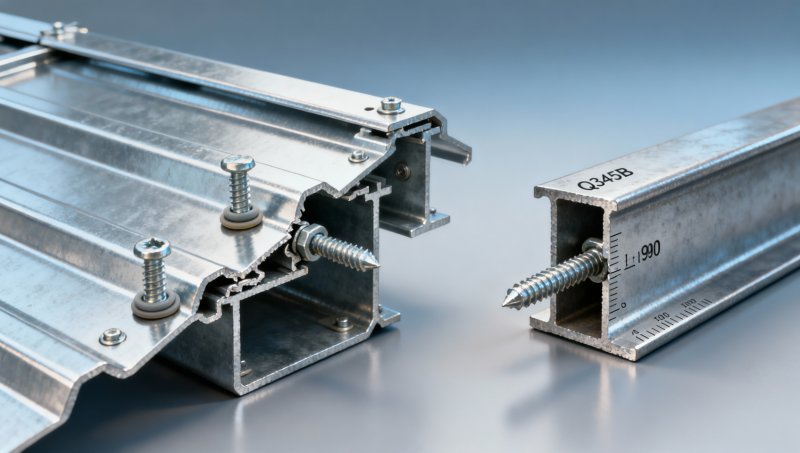
Our commitment extends beyond compliance: we offer free engineering consultation for fastener-roofing-structural steel interface modeling, including wind uplift simulations (per ASCE 7-22) and seismic load path validation. This ensures your steel roofing price reflects true lifecycle value—not just upfront cost.
Next Steps: Secure Your Roofing System Integrity
Fastener compatibility isn’t an afterthought—it’s the linchpin of structural longevity, safety certification, and total cost of ownership. Whether you’re specifying corten steel plate for architectural facades, galvanized steel conduit for industrial plants, or rebar for foundation systems, alignment starts with your structural steel partner.
Hongteng Fengda delivers more than steel: we deliver specification certainty. With production capacity across 12 modern rolling mills, adherence to 9 international standards, and direct export support to 42 countries, we help procurement teams eliminate sourcing risk while maintaining rigorous technical control.
Ready to align your steel roofing price with verified fastener compatibility? Contact our engineering sales team today for a free fastener integration assessment—including custom torque tables, coating compatibility reports, and structural interface schematics tailored to your project’s exact steel grades and loading conditions.
Please give us a message


Please enter what you want to find