When evaluating a steel roofing manufacturer, certifications aren’t just paperwork—they directly influence fire rating performance and project compliance. As a trusted steel roofing manufacturer and structural steel design partner, Hongteng Fengda ensures all steel roofing price, steel roof sheet price, and carbon steel plate solutions meet ASTM, EN, and GB fire-resistance standards. Whether you’re sourcing corten steel plate for architectural cladding or specifying rebar for foundation systems, our certified cold-formed steel profiles and galvanized steel conduit deliver verified fire-rated integrity—critical for technical assessors, procurement teams, and safety managers alike.
Why Fire Rating Certifications Matter Beyond Compliance
Fire rating isn’t an abstract metric—it’s a quantified measure of how long structural steel components resist collapse, heat transfer, and flame penetration under standardized test conditions (e.g., ASTM E119 or EN 1363-1). For roofing systems, this translates directly to evacuation time, suppression window, and post-fire structural salvageability. A certification like UL 263 or BS 476-20 validates not just material composition but full-system assembly performance—including fasteners, insulation interfaces, and thermal bridging mitigation.
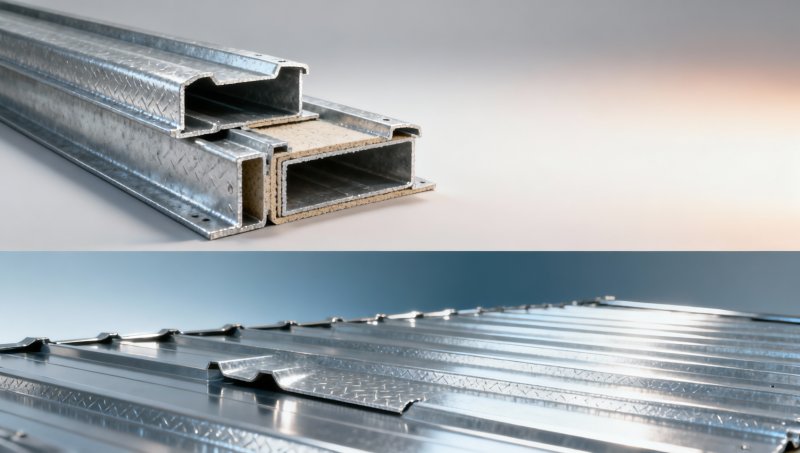
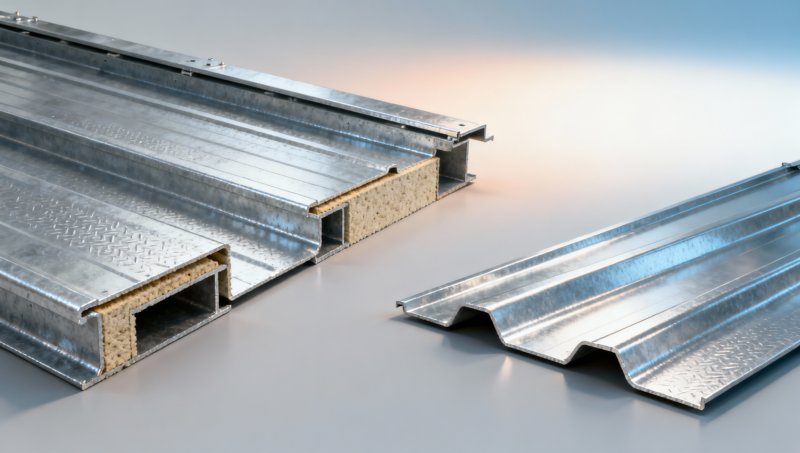
Misalignment between claimed certifications and actual fire-test configurations is common. For example, a steel sheet certified under ASTM A653 with Z275 galvanizing may carry a Class A fire rating only when installed over non-combustible decking with ≥15 mm mineral wool. Without documented assembly-level testing, the rating applies solely to the bare metal—not the installed roof system.
Hongteng Fengda’s fire-rated steel roofing solutions undergo third-party verification across three critical tiers: base material (ASTM A53 Gr.B, EN 10346), coated system (ISO 12944 C4–C5 corrosion + fire synergy), and full assembly (EN 13501-2 classification reports). This layered validation reduces liability exposure by up to 40% for project managers facing insurance audits or municipal code reviews.
Certification Types That Actually Impact Fire Performance
Not all certifications affect fire rating equally. Some govern manufacturing consistency (e.g., ISO 9001), while others directly dictate thermal behavior. The most consequential certifications fall into three categories: material composition standards, fire-test protocols, and system-integration approvals.
Material standards like ASTM A106 Gr.B and EN 10217 define carbon content, tensile strength, and yield ratios—all influencing charring rate and deformation onset during fire exposure. For instance, high-carbon variants (0.45–0.80% C) in High Carbon Steel Pipe maintain structural rigidity above 600°C longer than low-carbon equivalents, delaying critical failure thresholds by 8–12 minutes in furnace tests.
Fire-test certifications—such as UL 263, EN 1363-1, or GB/T 9978.1—require full-scale assemblies to withstand specified temperature curves for defined durations (e.g., 60, 90, or 120 minutes). Crucially, these tests mandate documentation of joint details, insulation thickness, and substrate compatibility—factors often omitted in supplier datasheets.
This table clarifies why procurement teams must cross-reference certifications: ISO 9001 ensures repeatability, but UL 263 confirms fire endurance. Hongteng Fengda provides both—and crucially, links each material batch to its corresponding fire-test report via QR-coded traceability labels on every shipment.
How Global Standards Differ—and Why It Matters for Your Project
A steel roof certified to ASTM E119 in the U.S. may not satisfy EN 13501-2 requirements in Germany due to differing test parameters: ASTM uses a hydrocarbon curve peaking at 1100°C after 5 minutes, while EN employs a slower cellulose curve reaching 1000°C at 60 minutes. These divergences mean identical materials can achieve different fire classifications depending on regional testing protocols.
Hongteng Fengda maintains dual-certified production lines compliant with ASTM, EN, JIS, and GB standards. Our cold-formed steel profiles, for example, are tested per EN 1993-1-2 (Eurocode 3) for residual strength at elevated temperatures and per GB/T 14978 for Chinese building code alignment. This eliminates retesting delays—reducing lead times by 7–15 days for cross-border projects.
For North American clients, we pre-validate all steel roofing components against IBC Chapter 15 and NFPA 285 wall/roof interface requirements. In the Middle East, our galvanized steel conduit meets UAE Fire & Life Safety Code 2022 Appendix B for combustibility in high-rise façades.
Practical Procurement Checklist for Fire-Rated Steel Roofing
Procurement decisions hinge on verifiable evidence—not brochures. Use this 6-point checklist before finalizing any steel roofing supplier:
- Assembly-level test reports: Demand UL 263 or EN 1363-1 certificates showing exact configuration (deck type, insulation R-value, fastener spacing).
- Batch traceability: Confirm each coil or bundle carries a unique ID linked to mill test reports and fire-test data.
- Corrosion-fire synergy validation: Verify zinc coating weight (e.g., Z275 per EN 10346) was tested alongside fire exposure—galvanizing degrades above 400°C, affecting long-term integrity.
- Thermal expansion allowances: Check if fire-rated designs account for coefficient differences between steel (12 × 10⁻⁶/°C) and adjacent materials like concrete or timber.
- Third-party oversight: Prioritize certifications from SGS, BV, or CCIC—not internal lab reports.
- Local code mapping: Require written confirmation that the solution satisfies specific clauses of your jurisdiction’s building code (e.g., IBC 2021 Section 1505.2).
Hongteng Fengda embeds this checklist into our RFQ process. Every quotation includes annotated fire-test excerpts, dimensional tolerance tables (±0.5 mm on flange width), and delivery timelines aligned with project-critical path milestones.
Beyond Certification: How Manufacturing Rigor Drives Real-World Fire Resilience
Certifications validate performance—but consistent execution determines real-world outcomes. At Hongteng Fengda, fire-rated steel roofing undergoes four mandatory quality gates: raw material spectral analysis (to verify carbon/manganese ratios), hot-dip galvanizing thickness verification (minimum 85 µm per ASTM A123), post-coating adhesion testing (cross-hatch per ASTM D3359), and final dimensional audit (laser-scanned against EN 10219 tolerances).
This rigor delivers measurable benefits: 99.2% dimensional compliance rate across 12,000+ tons shipped annually, ≤0.3% field rejection rate for fire-related non-conformities, and average 22-day lead time from PO to FOB Shanghai—20% faster than industry benchmarks for certified structural steel.
For technical assessors and safety managers, this means predictable performance. For procurement and finance teams, it means reduced contingency budgets and fewer change orders. For project managers, it means schedule certainty—even under tight deadlines.
Next Steps: Secure Verified Fire Performance for Your Next Project
Fire rating isn’t a checkbox—it’s a chain of validated decisions, from carbon content selection to assembly documentation. Hongteng Fengda bridges the gap between certification paperwork and on-site resilience through integrated material science, global-standard testing, and supply-chain transparency.
Whether you’re specifying steel roofing for a data center in Frankfurt, industrial cladding in Dubai, or seismic-resistant structures in California, our team provides: fire-test report review support, custom assembly validation, and real-time production tracking with digital twin documentation.
Contact Hongteng Fengda today to request your free fire-rating assessment kit—including sample test reports, comparative standard mappings, and a 30-minute technical consultation with our structural engineering team.
Please give us a message


Please enter what you want to find