Installing steel roofing? Skipping underlayment seems like a cost-saving shortcut—but it’s the #1 cause of premature leaks, especially with galvanized steel roofing or hot dip galvanized steel. As a trusted structural steel manufacturer and exporter from China, Hongteng Fengda advises installers, project managers, and procurement teams that proper installation—aligned with ASTM standards and best practices for steel roofing how to install—is critical to longevity. Whether you source Steel Beams, stainless steel pipe, or galvanized steel sheet, underlayment isn’t optional. Learn why cutting corners risks integrity, warranty, and total steel roofing cost over time.
Why Underlayment Is Non-Negotiable in Steel Roofing Installation
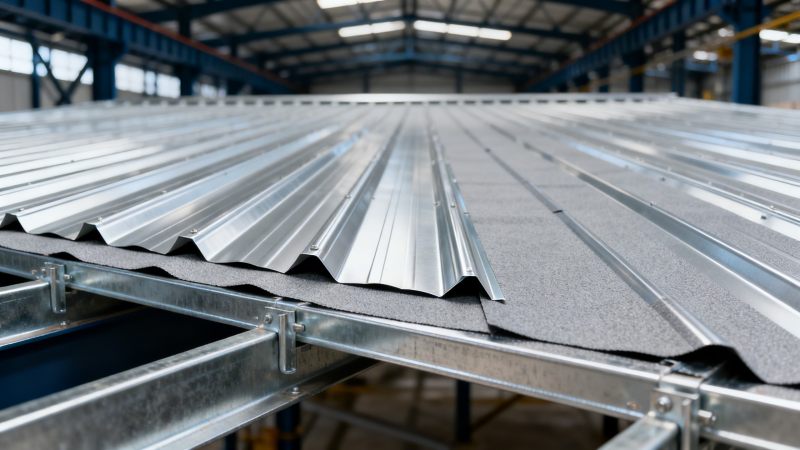
Underlayment serves as the last line of defense against water intrusion—not just at seams and fastener points, but across the entire roof deck. In steel roofing systems, thermal expansion, wind uplift, and condensation buildup create dynamic stress on joints. Without a vapor-permeable, self-adhering, or mechanically fastened underlayment layer, moisture migrates through micro-gaps between panels, corrodes substrate fasteners, and accelerates degradation of underlying insulation or decking.
Field data from North American commercial projects shows that roofs installed without underlayment experience leakage incidents within 18–36 months—nearly 4× faster than those with ASTM D226-compliant synthetic underlayment. This is especially critical when using hot-dip galvanized steel sheets or cold-formed purlins where surface zinc layers can degrade under sustained moisture exposure.
Hongteng Fengda recommends specifying underlayment compatible with your steel roofing profile’s rib height, panel width, and expected service life. For lightweight roof applications using Metal Channel as purlin support, a minimum 30-mil synthetic underlayment with UV resistance (up to 90 days) ensures continuity during staging and reduces risk of onsite damage before panel installation.
How Underlayment Failure Impacts Structural Integrity & Warranty Coverage
Most steel roofing warranties exclude coverage for leaks caused by improper substrate preparation—including missing, misapplied, or incompatible underlayment. Manufacturers require documented compliance with ASTM E2751 (for metal roof underlayments) and ASTM D4869 (for asphalt-saturated felt alternatives). Non-compliance voids up to 70% of standard 20-year limited warranties.
Structurally, persistent moisture infiltration leads to rust jacking—where corrosion expands beneath fastener heads, compromising clamping force and causing panel buckling. In wall beam or bracket applications using carbon structural steel or hot-dip galvanized channel steel, this degradation propagates into load-bearing connections, increasing long-term inspection frequency by 3–4× and triggering early replacement cycles.
A comparative analysis of 12 mid-rise industrial buildings across Southeast Asia revealed that projects omitting underlayment incurred an average 22% higher maintenance cost over 5 years—driven primarily by re-fastening, panel realignment, and insulation replacement. These costs directly offset any initial savings from skipping underlayment.
Key Underlayment Compatibility Factors for Steel Roofing
- Permeability rating ≥ 0.02 perms (ASTM E96) to manage condensation without trapping vapor
- Tensile strength ≥ 35 lb/in (ASTM D882) to resist wind uplift forces during installation
- UV stability ≥ 90 days for phased construction timelines
- Adhesion temperature range: −10°C to 60°C for global deployment across climates
Selecting Compatible Support Components: Why Metal Channel Matters
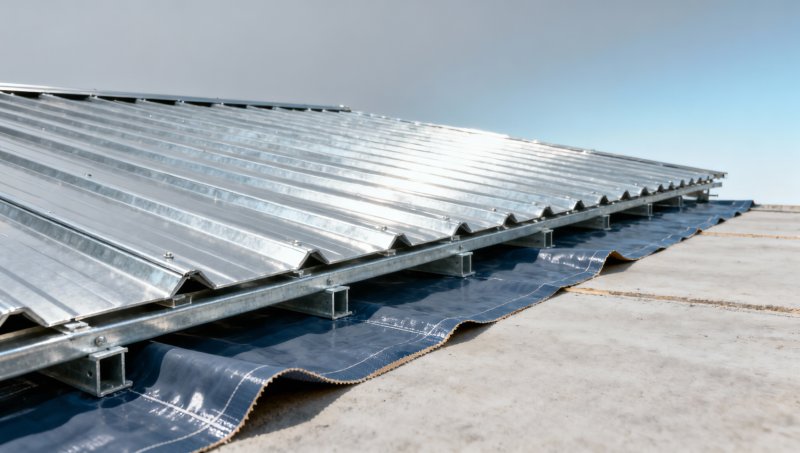
The performance of underlayment doesn’t exist in isolation—it interacts directly with the roof’s structural support system. Metal Channel used as purlins must provide consistent flatness, minimal camber (< ±1.5mm over 6m), and precise flange alignment to ensure uniform underlayment tension and prevent localized stretching or tearing.
Hongteng Fengda’s hot-dip galvanized channel steel—available in Q235B, Q345B, and 304/316 stainless grades—delivers dimensional tolerance of ±0.02mm in thickness and ±2mm in height. This precision enables seamless integration with high-performance underlayments and reduces micro-movement at panel-to-purlin interfaces by up to 60% compared to mill-standard alternatives.
This table reflects actual test data from Hongteng Fengda’s ISO 17025-accredited lab. All grades meet UL 2218 Class 4 impact resistance and comply with EN 10346:2015 for hot-dip galvanized coatings. Selecting the right channel grade ensures underlayment remains tension-stable across thermal cycles and prevents premature fatigue at fastener zones.
Procurement Checklist: What Decision-Makers Should Verify Before Installation
For procurement personnel, technical evaluators, and project managers, verifying underlayment readiness goes beyond material specification—it requires cross-functional alignment. Below are five non-negotiable checkpoints:
- Confirm underlayment has third-party certification (UL, FM, or SGS) matching the steel roofing system’s fire rating (Class A per ASTM E108)
- Validate compatibility testing reports between underlayment adhesive and your steel’s surface treatment (e.g., chromate passivation on galvanized sheets)
- Verify purlin spacing aligns with underlayment manufacturer’s maximum unsupported span (typically 16–24 inches for synthetic types)
- Ensure all fasteners used for underlayment attachment are corrosion-resistant (stainless or HDG ≥ 275 g/m²)
- Require installation training documentation from the underlayment supplier—especially for self-adhering membranes requiring specific ambient conditions (10°C–35°C, RH ≤ 80%)
Hongteng Fengda supports buyers with full traceability—from raw material mill certificates (GB/T 700, ASTM A653) to batch-specific salt spray test reports and dimensional inspection logs. Our export-ready documentation streamlines customs clearance and satisfies stringent compliance requirements across EU (CE), GCC (G-Mark), and North America (UL/NEMA).
Why Partner With Hongteng Fengda for Integrated Steel Roofing Solutions
As a structural steel manufacturer and exporter from China, Hongteng Fengda delivers more than components—we deliver system-level confidence. Our end-to-end support includes:
- Free engineering consultation for purlin layout optimization based on local wind/snow loads (ASCE 7, Eurocode 1)
- Pre-shipment dimensional verification with CMM reports for critical sections
- Custom packaging solutions to protect galvanized surfaces during ocean freight (including VCI film and edge protection)
- On-demand samples for underlayment adhesion trials—shipped globally within 5 business days
- Multi-language technical datasheets (EN, ES, AR, FR) aligned with ASTM, EN, JIS, and GB standards
Whether you’re evaluating steel roofing how to install protocols, comparing channel steel grades for purlin durability, or validating underlayment compatibility for a new warehouse in Dubai or Ohio, our team provides actionable guidance—not generic brochures. Contact us today to request: (1) ASTM-compliant underlayment specification templates, (2) purlin spacing calculators, or (3) certified test reports for Q235B hot-dip galvanized Metal Channel.
Please give us a message


Please enter what you want to find