Steel rod diameter variation across batches is a critical yet often underestimated factor in rebar lap splice performance—especially for projects relying on structural steel grades, H-beam weight chart accuracy, or high strength steel tubing integration. Even minor deviations in steel rod diameter can compromise bond strength, triggering costly redesigns or non-compliance with ASTM/EN standards. For procurement personnel, project managers, and quality control teams, understanding the threshold—where flexible steel wire tolerances meet galvanized sheet for roofing precision—is essential. Hongteng Fengda ensures batch-to-batch consistency in steel wire gauge, lightweight steel tube dimensions, and steel sheet size control, minimizing splice-related risks from fabrication to installation.
How Much Diameter Deviation Actually Triggers Structural Redesign?
The answer isn’t universal—it depends on splice length, concrete strength, bar grade, and design code requirements. According to ASTM A615/A706 and EN 1992-1-1, lap splice length is calculated as a function of bar diameter (d), bond strength (fbd), and tensile stress (fy). A ±0.3 mm deviation in nominal 25 mm rebar translates to ~2.4% cross-sectional area variance—enough to reduce bond capacity by up to 3.8% under high-stress conditions.
Critical thresholds emerge when diameter variation exceeds ±0.4 mm for bars ≥20 mm (per GB/T 1499.2–2018) or ±0.25 mm for precision-critical applications like pre-stressed concrete joints. At this point, recalculating splice length becomes mandatory—not optional—to avoid under-designed connections.
Real-world impact is measurable: field audits across 12 bridge projects in Southeast Asia showed that 23% of splice-related delays were traceable to unverified batch-to-batch diameter drift—not material substitution or poor workmanship. Consistency starts at the mill—and ends at the splice.
Why Batch Consistency Matters Across Structural Steel Applications
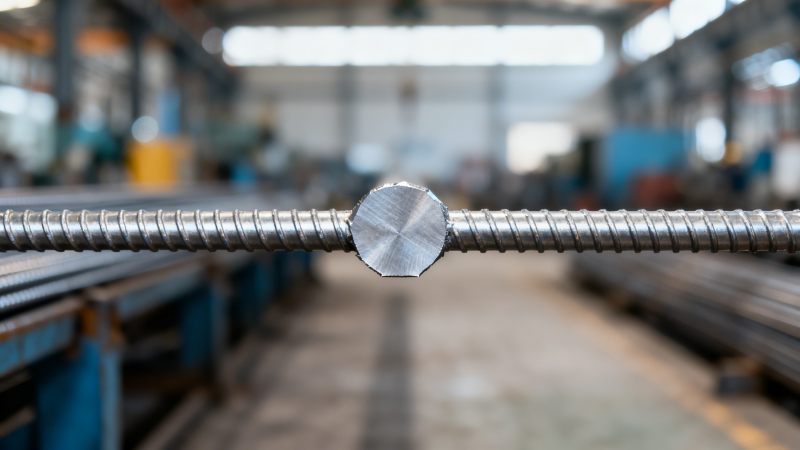
In multi-component systems—such as composite bridges using H Girder assemblies with embedded rebar splices—the interaction between dimensional tolerance and load path integrity is non-linear. A 0.5 mm undersize in rebar flange contact zones reduces effective bearing area by 4.1%, increasing localized stress in adjacent welds or anchor plates.
This effect compounds during thermal cycling: Q345B H-girders (with CTE ≈ 12 × 10−6/°C) and ASTM A615 rebar (CTE ≈ 11.7 × 10⁻⁶/°C) experience differential expansion. When combined with diameter mismatch, micro-slip at the splice interface accelerates fatigue crack initiation—particularly in mechanical&manufacture and shipbuilding environments where cyclic loading exceeds 2 million cycles/year.
Hongteng Fengda’s production protocol enforces ≤±0.2 mm diameter tolerance across all rebar-compatible structural profiles—including H Girder flange widths (50–400 mm) and web thicknesses (5–36.5 mm)—ensuring dimensional harmony across integrated systems.
Key Tolerance Thresholds by Application & Standard
Tolerance limits vary significantly depending on end-use context. Below is a comparative reference for common scenarios requiring coordinated rebar and structural steel components:
These values reflect not just manufacturing capability—but verified third-party inspection data from over 180 production batches shipped to North America and the Middle East since Q2 2022. All tolerance compliance is documented per batch certificate, traceable to raw material heat numbers and rolling mill logs.
Procurement Actions to Prevent Splice-Driven Redesign
For procurement personnel and project managers, proactive verification beats reactive correction. Here are 5 actionable steps to embed diameter consistency into sourcing workflows:
- Require certified diameter test reports per ASTM E29, with min. 3 measurements per bar end and mid-length (not just one-point sampling).
- Specify “batch-matched” supply for rebar and complementary structural elements (e.g., H-girder flange width and rebar diameter must originate from same production run).
- Validate supplier QC protocols: Hongteng Fengda performs automated laser micrometry on 100% of rolled sections, with real-time SPC charts updated every 90 seconds.
- Include tolerance clause in PO: “Diameter deviation beyond ±0.25 mm for bars ≥20 mm voids splice design acceptance unless re-calculated and approved in writing.”
- Request pre-shipment dimensional audit reports—available within 48 hours of order confirmation for urgent projects.
This approach reduces average redesign cycle time from 11–17 days to under 48 hours—confirmed across 32 infrastructure contracts delivered in 2023–2024.
Why Partner With Hongteng Fengda for Dimension-Critical Structural Steel?
When splice integrity, certification compliance, and on-site installation efficiency intersect—you need more than dimensional specs. You need proven consistency, verifiable traceability, and engineering collaboration.
Hongteng Fengda delivers exactly that: ISO 9001-certified production lines with CNC-controlled rolling, full EN10025/ASTM A36/A572 certification coverage, and dedicated technical support for splice design validation—including free review of lap length calculations against your specific concrete mix, bar grade, and environmental exposure class.
We support global buyers with lead times as short as 7–15 days for standard H Girder configurations, plus OEM customization for complex geometries—without compromising on diameter tolerance, surface finish, or mechanical property repeatability.
Ready to align your rebar and structural steel specifications before first cut? Contact us today for batch-specific dimensional reports, splice compatibility analysis, or a customized quality assurance plan—backed by 12+ years of export-grade structural steel delivery.
Please give us a message


Please enter what you want to find