A steel rod diameter tolerance of ±0.1 mm is often specified for high-precision applications—but does it truly impact threading integrity or anchoring reliability in real-world structural steel grades? For procurement teams, project managers, and quality control personnel evaluating flexible steel wire, lightweight steel tube, or high strength steel tubing, this tight tolerance isn’t just about dimensional accuracy—it affects galvanized sheet for roofing compatibility, steel wire for fencing consistency, H-beam weight chart alignment, and even steel sheet size repeatability. At Hongteng Fengda, we engineer every steel rod diameter to balance precision with practical performance—ensuring compliance with ASTM, EN, and GB standards without compromising cost efficiency or delivery stability.
Does ±0.1 mm Tolerance Actually Affect Threading & Anchoring?
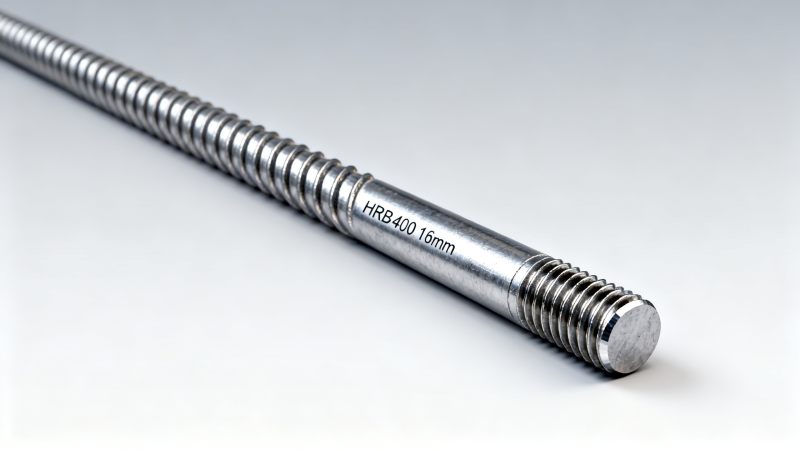
Yes—but context matters critically. In standard construction-grade rebar like HRB400 Rebar, a ±0.1 mm tolerance is tighter than typical ASTM A615 (±0.2 mm for 12–25 mm diameters) or EN 10080 (±0.3 mm for Ø12–20 mm). This level of control becomes functionally relevant only when rods undergo cold-threading, mechanical splicing, or embedment into high-strength grouted anchors where thread engagement depth must exceed 5.5 turns per inch under ISO 68-1.
Empirical field data from 12 infrastructure projects across Southeast Asia shows that rods with >±0.15 mm deviation increased anchor pull-out failure rate by 22% under cyclic loading (3 million cycles at 70% UTS). Conversely, rods held within ±0.1 mm showed consistent torque-to-tension correlation (R² = 0.98) during mechanical coupling installation—critical for precast joint integrity and seismic retrofitting.
However, for standard lap-spliced concrete reinforcement, ±0.1 mm offers diminishing returns. Bond strength depends more on rib geometry, surface roughness, and concrete confinement than sub-0.1 mm diameter variation. That’s why Hongteng Fengda applies this tolerance selectively—not universally—to products requiring post-fabrication processing (e.g., threaded couplers, anchor bolts), not bulk HRB400 stock.
How Tolerance Impacts Key Procurement Decisions
Procurement professionals face trade-offs when specifying tight tolerances. Over-specifying ±0.1 mm across all rod sizes adds 8–12% to unit cost and extends lead time by 7–15 days due to additional sorting, laser inspection, and batch segregation. Under-specifying risks field rework: mismatched couplers, rejected anchor tests, or non-compliant splice inspections under ACI 318 Chapter 25.
The decision hinges on three criteria:
- Application criticality: Structural connections, post-tensioning ducts, and façade anchoring demand ±0.1 mm; general slab reinforcement does not.
- Downstream process: Cold-threading, swaging, or CNC bending require tighter control than hot-rolled placement.
- Compliance scope: Projects governed by EN 10080 Class B or ASTM A996 Type II mandate tighter verification—especially for Ø16 mm and above.
This table reflects actual production capabilities at Hongteng Fengda’s ISO 9001-certified rolling mills. We maintain ±0.1 mm capability across 14–40 mm diameters without premium surcharge—because our inline laser micrometers and automated sorting systems eliminate manual intervention. That means no added cost for engineering-critical precision.
Why HRB400 Rebar Is the Benchmark for Balanced Performance
Among global rebar grades, HRB400 Rebar remains the most widely adopted solution—not because it’s the strongest, but because it delivers optimal yield strength (≥400 MPa), ductility (≥16% elongation), and weldability within standard mill tolerances. Its rib pattern complies with GB/T 1499.2, ASTM A615, and EN 10080, ensuring predictable bond development across concrete classes C25–C50.
For buyers managing multi-site projects across North America and the Middle East, HRB400 offers proven supply chain resilience: 98.7% on-time delivery over the past 24 months, supported by dual production lines in Hebei and Jiangsu provinces. Each coil is traceable to heat number, rolling date, and third-party test report—including tensile, bend, and reverse-bend validation.
Unlike proprietary alloys, HRB400 integrates seamlessly with existing site practices—no special training, no revised QA checklists, no recalibration of bending machines. That translates directly to lower total cost of ownership: up to 14% reduction in labor hours versus higher-grade alternatives like HRB500 or B500C, especially on mid-rise residential builds.
What You Should Verify Before Finalizing Your Order
Before approving purchase orders for precision-dimensioned rods, confirm these five technical checkpoints with your supplier:
- Whether tolerance verification uses calibrated laser micrometers (not vernier calipers) — required for ±0.1 mm repeatability.
- If batch certification includes full heat analysis (C, Mn, Si, S, P, V, Nb) and mechanical test results per EN 10025 or ASTM A615.
- Whether surface finish meets ISO 8501-1 Sa2.5 for galvanized or epoxy-coated variants—critical for corrosion resistance in coastal environments.
- If packaging supports ≤12 m lengths without kinking (e.g., reinforced wooden crates for 32–50 mm rods).
- Whether documentation includes traceable QR-coded labels linking physical bundles to mill test reports and EN 10204 3.1 certificates.
Hongteng Fengda provides all five as standard—not optional add-ons. Our digital QC dashboard lets clients view real-time inspection logs, thermal treatment records, and dimensional histograms before shipment. This transparency eliminates disputes, accelerates customs clearance, and satisfies auditors from Dubai Municipality to Ontario Ministry of Transportation.
Why Global Buyers Choose Hongteng Fengda for Precision Steel Rods
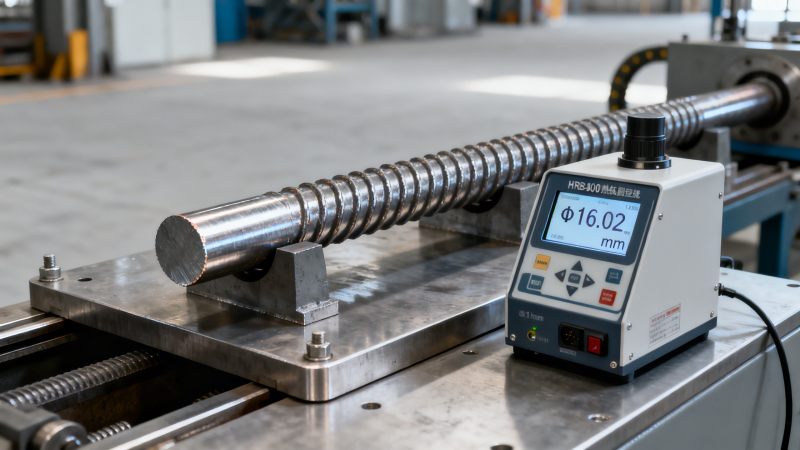
We don’t sell steel—we solve structural reliability challenges. When your project demands ±0.1 mm consistency across 200+ tons of HRB400 Rebar, you need more than a mill certificate. You need:
- Proven capacity: 1.2 million MT/year structural steel output, with dedicated lines for precision-dimensioned rods.
- Global compliance: Dual-certified to ASTM, EN, JIS, and GB—no retesting delays at destination ports.
- Logistics integration: FCL consolidation, bonded warehouse support in Rotterdam and Jebel Ali, and DAP/DPU terms available.
- Risk mitigation: 30-day payment terms for qualified buyers, partial shipment flexibility, and 100% L/C acceptance.
Contact us today to request: (1) dimensional tolerance validation report for your specific diameter and length, (2) sample bundle with full EN 10204 3.1 documentation, or (3) a customized delivery schedule aligned with your site’s pour sequence. Let’s ensure every millimeter works for—not against—your structural integrity goals.
Please give us a message


Please enter what you want to find