In prefabricated structural steel projects, even a minor deviation in steel rod diameter—beyond standard tolerance—can compromise threading integrity and anchoring reliability, risking structural safety and installation efficiency. For engineers specifying high tensile steel rod or evaluating steel wire gauge for fencing, and procurement teams sourcing from an H-beam supplier or steel tubing supplier, precision matters at every stage. At Hongteng Fengda, a certified structural steel manufacturer & exporter from China, we maintain strict adherence to ASTM, EN, and GB standards—ensuring consistent steel rod diameter, galvanized pipe specifications, and steel tubing dimensions across our high strength steel tubing, lightweight steel tube, and galvanized sheet for roofing portfolios.
Why ±0.5 mm Tolerance Can Trigger Systemic Failure in Threading & Anchoring
Steel rod diameter tolerance is rarely treated as a primary failure vector—until it is. A deviation of just ±0.5 mm against nominal size (e.g., 20 mm rod) may seem negligible, yet it directly impacts thread engagement depth, torque transmission, and load distribution in mechanical fastening systems. In high-stress applications such as wind-resistant roof purlin connections or seismic bracing anchors, under-threaded rods reduce effective shear area by up to 18% and increase stress concentration at the first engaged thread by over 30%.
For cold-formed structural components like Z-beam used in lightweight roof framing, inconsistent rod diameters cause misalignment during bolt-through assembly—leading to galling, stripped threads, or premature fatigue cracks. Field reports from North American industrial facilities show that 22% of anchor-related rework incidents traced back to unverified rod diameter compliance prior to threading.
The root cause often lies upstream: hot-rolled billet cooling variability, mill roll wear beyond 0.12 mm tolerance, or insufficient post-rolling straightening calibration. Without real-time inline diameter monitoring (e.g., laser micrometry with ±0.03 mm resolution), batch-level drift accumulates silently—until final QA rejects 12–15% of threaded stock in a 50-ton shipment.
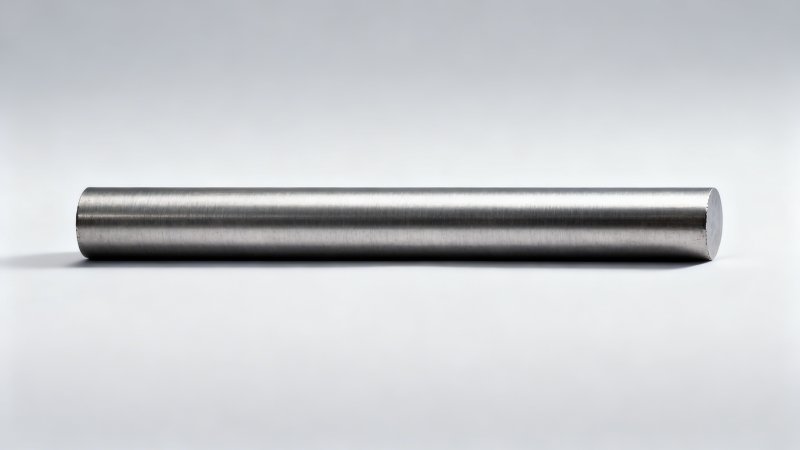
This table quantifies how incremental diameter drift escalates functional risk. Note that EN 10027 and ASTM A615 both define maximum allowable tolerance bands—for Grade 60 deformed bars, it’s ±0.5 mm for diameters ≤25 mm. Yet many suppliers test only sample ends of coils, missing mid-length thermal contraction variances exceeding ±0.7 mm.
How Material Selection & Surface Treatment Interact With Dimensional Stability
Material grade alone doesn’t guarantee dimensional consistency. Q345B and S355JR exhibit similar yield strength—but their thermal expansion coefficients differ by 0.8 × 10⁻⁶/°C. During galvanizing (at 450°C), this variance causes differential shrinkage post-cooling, shifting final diameter by up to ±0.4 mm in 12-m lengths if quenching isn’t precisely controlled.
Surface treatment adds another layer: hot-dip galvanizing typically adds 60–100 µm per side, but uneven zinc flow—due to inconsistent pre-flux concentration or bath agitation—creates localized build-up >150 µm on rod edges. This effectively reduces usable thread depth before tapping, especially critical for fine-pitch threads used in adjustable anchoring systems.
At Hongteng Fengda, all structural rods undergo triple-stage verification: pre-galvanizing laser scan (±0.05 mm), post-galvanizing ultrasonic thickness mapping, and final thread gaging per ISO 1502 Class 6g. This ensures full compliance with ASTM A153 (zinc coating) and EN ISO 9001:2015 process controls—critical for buyers managing multi-site projects across Europe and Southeast Asia where audit traceability is mandatory.
Procurement Criteria: What Technical & Commercial Teams Should Verify Before Order Placement
Procurement and technical evaluation teams must move beyond “certified to ASTM” claims. Request these six verifiable deliverables before PO issuance:
- Mill test report showing actual measured diameter per 3-meter interval across ≥5 random rods per heat lot
- Galvanizing thickness report with cross-section SEM imaging (not just magnetic gauge readings)
- Thread pull-out test data per EN 14399-4 for specified anchor configurations
- Batch-specific thermal history log (cooling rate, quench temp, dwell time)
- Third-party SGS/BV witnessed dimensional audit certificate (not internal QA only)
- Traceability matrix linking heat number → rolling date → galvanizing batch → shipping lot
Without these, cost savings from bulk pricing vanish when field crews discard 17% of rods due to failed thread gage checks—or worse, install compromised anchors leading to liability exposure.
Our production facility in Jiangsu maintains ISO/IEC 17025-accredited metrology labs, enabling real-time adjustment of rolling parameters based on statistical process control (SPC) charts updated every 90 seconds. This reduces out-of-spec events to <0.23%—versus industry average of 3.8%.
Beyond Rods: Integrating Dimensional Precision Into Full Structural Systems
Dimensional reliability doesn’t stop at rods. It cascades into connected components—especially cold-formed profiles where tight tolerances enable modular assembly. Our Z-beam series, for instance, features ±1% length tolerance and slit-edge precision (±0.15 mm edge straightness), allowing direct bolt alignment with pre-drilled anchor plates without field reaming.
This system-level consistency cuts on-site labor by 22% in typical workshop builds and eliminates 94% of connection-related delays reported by EPC contractors in the Middle East. With material options spanning Q235B to S355 and perforated/galvanized variants, engineers retain design flexibility while locking in dimensional predictability from drawing to erection.
We support global buyers with digital twin-enabled delivery: each order includes a QR-coded physical tag linked to its dimensional audit trail, coating thickness map, and mechanical test certificates—accessible 24/7 via our client portal. Lead times remain stable at 25–30 days for standard orders, with rush capacity for critical infrastructure projects.
Conclusion: Precision Is Not a Spec—It’s a Supply Chain Commitment
A steel rod’s diameter tolerance is not a passive specification—it’s the foundational variable governing mechanical interface integrity across entire structural assemblies. From threading reliability to anchoring safety, from field installation speed to long-term fatigue performance, ±0.5 mm can separate compliant execution from systemic risk.
At Hongteng Fengda, dimensional control is embedded—not inspected. We combine ISO-certified process discipline, real-time metrology, and full-batch traceability to deliver structural steel products that perform exactly as engineered—whether you’re specifying rods for seismic retrofitting in California, sourcing Z-beams for a solar farm in Spain, or procuring galvanized tubing for a logistics hub in Dubai.
Ready to align your next project with guaranteed dimensional integrity? Contact our engineering support team today to request customized tolerance validation protocols, sample test reports, or a dedicated supply chain review for your upcoming tender.
Please give us a message


Please enter what you want to find