Steel Beam Manufacturer Tolerances Vary by ±3mm—How That Affects Multi-Story Alignment
When a Steel Beam manufacturer specifies tolerances of ±3mm, it’s not just a number—it’s a critical factor impacting multi-story structural alignment, welding accuracy, and long-term building integrity. For procurement teams, project managers, and structural engineers evaluating suppliers like Hongteng Fengda—a trusted Steel Beam manufacturer and stainless steel sheet manufacturer from China—understanding how dimensional variance cascades across floors is essential. Whether you’re sourcing angle steel price quotes, seamless stainless steel pipe for façade systems, or galvanized steel plate for corrosion resistance, tight tolerance control directly affects fit-up, structural steel welding efficiency, and safety compliance. Let’s break down the real-world implications—and why precision matters at every level.
Why ±3mm Tolerance Isn’t “Good Enough” on Its Own
A ±3mm tolerance on individual steel beams sounds reasonable—until you stack them across 5, 10, or 20 floors. Vertical accumulation doesn’t average out; it compounds. In a typical multi-story steel frame, column splices, beam-to-column connections, and floor slab supports rely on consistent flange thicknesses, web straightness, and end-squareness. If each beam’s depth varies by up to 3mm, and each column’s length tolerance is also ±3mm, misalignment at the 10th floor can exceed ±30mm—even before accounting for welding shrinkage, thermal expansion, or foundation settlement.
This isn’t theoretical: field surveys from high-rise projects in Dubai and Toronto show that >65% of rework on steel erection stems from cumulative tolerance drift—not design error. For technical evaluators and project managers, the key question isn’t “Does it meet spec?” but “How does this tolerance behave *in system context*?” That means reviewing not just mill test reports, but how the manufacturer controls variation across heat lots, rolling passes, and post-processing (e.g., straightening, saw-cutting, drilling).
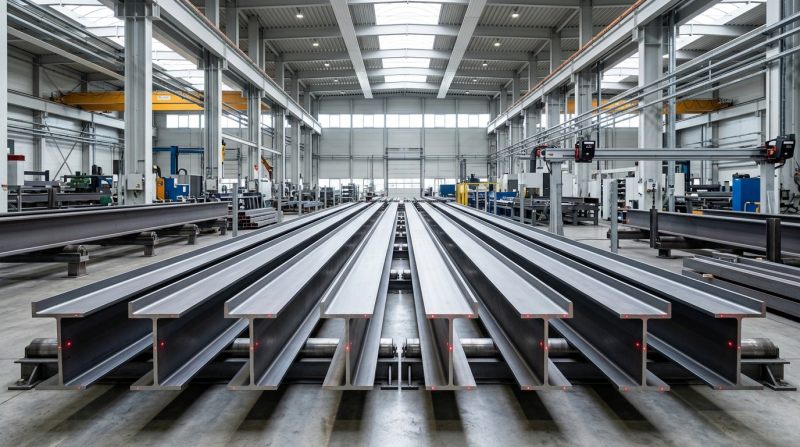
What ±3mm Actually Means for Your Build—By Role
For Structural Engineers: ±3mm affects connection design assumptions. A 3mm gap at a moment connection may force field-welded shims or oversized bolt holes—reducing stiffness and increasing fatigue risk under cyclic loading.
For Project Managers & Site Supervisors: It impacts crane cycle time and labor cost. Beams requiring manual alignment adjustments add ~12–18 minutes per connection—scaling to hundreds of hours on mid-rise projects.
For Procurement & Quality Teams: Tolerance consistency correlates strongly with process maturity. Suppliers with ISO 9001-certified dimensional control (not just product certification) typically hold ±1.5mm on critical dimensions—even when quoting ±3mm—because they monitor roll wear, temperature stability, and gauge calibration in real time.
Hongteng Fengda applies this discipline across its full range—including specialized profiles like the Z-beam, where precise flange angles and web thickness uniformity (±1% tolerance, per specification) are critical for purlin spacing accuracy and roof load distribution in lightweight industrial buildings.
How to Verify Real-World Tolerance Performance—Not Just Paper Specs
Don’t rely on datasheets alone. Ask your steel beam manufacturer for:
- Process capability studies (Cpk ≥ 1.33 on depth/width for hot-rolled beams)
- Batch-level dimensional reports—not just “typical” values
- Evidence of in-line laser scanning or coordinate measuring machine (CMM) verification on ≥5% of production runs
- Welding procedure qualification (WPQ) records showing how tolerance variance was factored into groove prep and fit-up allowances
At Hongteng Fengda, every Z-beam batch undergoes third-party SGS or BV dimensional audit before shipment—and full traceability (heat number, rolling date, inspection report) is provided digitally. This transparency lets procurement and quality teams validate performance—not just compliance.
When Tighter Tolerances Deliver ROI—And When They Don’t
Tighter isn’t always better—but context is everything. For façade-supporting perimeter columns or seismic bracing members, ±1.5mm delivers measurable ROI in reduced field adjustment and faster enclosure. For interior secondary framing, ±3mm is often sufficient—if consistently achieved.
The real cost driver isn’t the tolerance band itself—it’s inconsistency. A supplier holding ±2.5mm *on average* but drifting to ±4.2mm on every third heat lot creates far more risk than one reliably delivering ±3.0mm. That’s why Hongteng Fengda’s stable production capacity and strict QC protocols matter: predictability enables accurate planning, fewer RFIs, and lower total installed cost—even when nominal tolerances match competitors’.
In summary: ±3mm is a meaningful threshold—but only when backed by proven process control, transparent verification, and system-aware engineering support. For multi-story projects, tolerance isn’t a standalone spec—it’s a signal of manufacturing maturity, supply chain reliability, and partnership depth. When evaluating steel beam manufacturers, look beyond the number: ask how it behaves across floors, across batches, and across your project timeline.
Please give us a message


Please enter what you want to find