When selecting steel wire for fencing, gauge is more than a number—it directly affects shape retention, durability, and installation performance. For buyers comparing steel rod diameter, coating options, and long-term value, understanding which gauge holds shape better helps reduce maintenance and sourcing risks. Backed by expertise in structural steel components and global steel supply, this guide explains how to choose the right fencing wire for practical, cost-effective results.
Why wire gauge matters more than many fence buyers expect
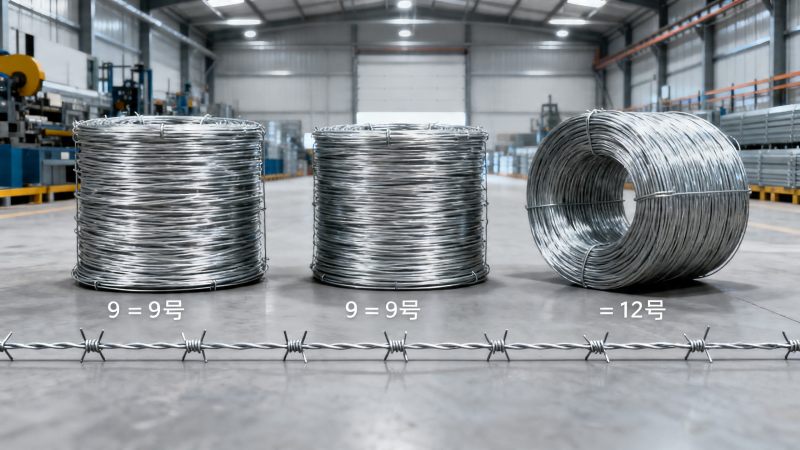
In fencing applications, wire gauge determines much more than visual thickness. It influences stiffness, resistance to bending, tension stability, and how well a fence line keeps its original form after installation. For operators, installers, and project managers, the question is practical: which steel wire gauge holds shape better under real site loads, repeated handling, and seasonal weather changes?
In general, thicker wire with a lower gauge number holds shape better than thinner wire with a higher gauge number. For example, 9 gauge steel wire is usually stiffer than 12 gauge steel wire, while 12 gauge is commonly stiffer than 14 gauge in like-for-like material and coating conditions. That does not mean the thickest option is always the best choice, because fencing type, post spacing, installation tension, and budget also matter.
For procurement teams and technical evaluators, the most common mistake is comparing gauge alone. Shape retention depends on at least 4 factors working together: base steel quality, wire diameter, tensile behavior, and coating system. A fence wire that looks thick but uses inconsistent raw material or weak galvanizing may still deform early during transport, stretching, or field use.
In agricultural, industrial, and perimeter fencing, buyers often balance 3 priorities at once: stiffness, corrosion life, and installed cost per meter. A practical specification process should therefore focus not only on nominal gauge, but also on the expected load cycle, exposure condition, and required service interval over 3–10 years or longer depending on environment and maintenance planning.
What “holds shape better” really means in fencing
For fencing wire, shape retention usually refers to the ability to remain straight, maintain line tension, resist kinks during handling, and avoid permanent deformation after moderate impact. End users notice it when the fence sags less, installers notice it during uncoiling, and quality teams notice it when wire consistency varies from coil to coil.
- A wire with better shape retention normally shows lower risk of visible waviness after installation.
- It usually tolerates field tensioning more predictably across runs of 30–100 meters.
- It reduces rework caused by twisting, buckling, or deformation at bends and ties.
- It supports more stable fence geometry where wind, livestock pressure, or light impact is expected.
Which gauge holds shape better in common fencing scenarios?
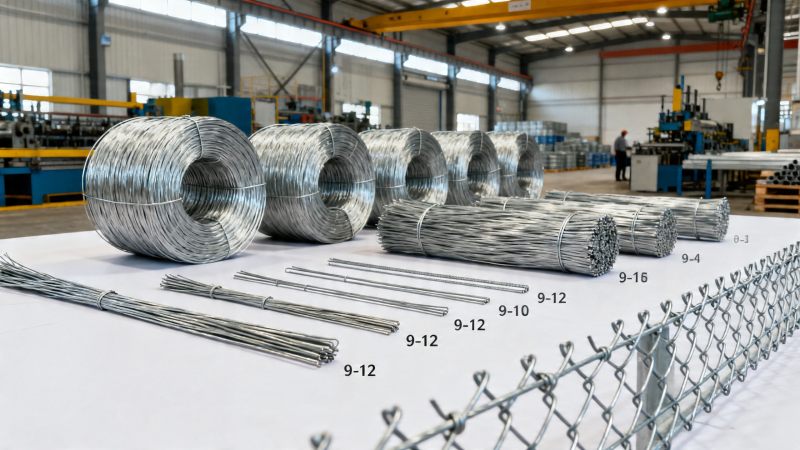
The best fencing wire gauge depends on the fence design and the loading condition. As a rule, lower gauge wire offers higher rigidity and better shape retention, but that extra stiffness can also increase weight, coil handling effort, and material cost. Buyers should compare not only stiffness but also what happens during installation, transport, and service life.
For light garden fencing or temporary barriers, thinner wire such as 13–14 gauge may be acceptable when spans are short and visual neatness matters more than heavy impact resistance. For agricultural fencing, welded mesh, chain link support wires, or perimeter barriers, 9–12 gauge is often considered more stable, especially when post spacing reaches 2–3 meters and continuous line tension is required.
To make a useful comparison, buyers should view gauge as part of a complete system. A 12 gauge galvanized steel wire may outperform a thinner coated option in shape retention, but a heavier gauge may still underperform if coating adhesion is poor, tensile consistency is unstable, or the wire has residual stress from uneven processing.
The table below summarizes how common gauge ranges perform in practical fencing decisions. Values are presented as application guidance rather than absolute performance claims, because final behavior also depends on steel grade, manufacturing method, and environmental exposure.
This comparison shows why many buyers settle in the 11–12 gauge range for everyday fencing projects. It often delivers enough shape retention for standard use while keeping coil weight, installation difficulty, and budget within a manageable range. For high-load applications, moving down to 9–10 gauge is usually justified when line stability is the main goal.
How coating and processing change gauge performance
A galvanized coating or PVC layer does not automatically make a thin wire hold shape like a thicker one. Coatings primarily improve corrosion resistance and service life, although they can slightly affect handling feel and surface hardness. When comparing fencing wire, always separate 2 issues: structural rigidity from the steel core, and durability from the coating system.
Processing quality matters too. Uniform drawing, controlled tension, and proper coiling reduce residual stress and improve straightness. In supply chains serving North America, Europe, the Middle East, and Southeast Asia, buyers often request consistency over multiple batches, because even small variation in wire behavior can disrupt field installation schedules by several hours or more on large projects.
How technical teams and buyers should evaluate fencing wire
A strong purchasing decision should not start with price alone. It should begin with a short technical checklist that aligns with the actual fence purpose. Is the fence decorative, security-focused, agricultural, or industrial? Will it face salt air, frequent contact, or repeated tensioning? These answers determine whether gauge, coating, and manufacturing tolerances should be optimized for stiffness, corrosion life, or both.
For quality managers and procurement officers, it helps to evaluate fencing wire in 5 checkpoints: gauge consistency, steel grade suitability, coating type, coil condition, and documentation against applicable standards such as ASTM, EN, JIS, or GB where relevant. Even when the wire itself is a smaller-value item, failure can lead to labor waste, site delay, and higher replacement costs over 6–24 months.
In practical sourcing, buyers also compare supplier capability. Stable production capacity, repeatable quality control, and dependable lead times can be as important as the nominal product spec. This is especially true when fencing wire is part of a larger steel procurement package that may include posts, channels, beams, or fabricated structural members for industrial and construction projects.
For projects that include both fencing and structural support elements, coordinated sourcing can reduce mismatch risk. Hongteng Fengda supplies structural steel products under ASTM, EN, JIS, and GB-aligned production practices, helping global buyers simplify communication on dimensions, tolerances, and delivery planning across more than one steel category.
A practical selection table for fencing wire decisions
The following table gives a procurement-oriented view that technical reviewers, purchasing teams, and project owners can use during supplier comparison. It combines shape retention, application load, and budget considerations in one place.
This table highlights a key purchasing reality: wire gauge should be selected with service condition, not in isolation. A cheaper thin wire may look attractive in quotation review, but the total cost can rise if the fence needs earlier retensioning, partial replacement, or more frequent maintenance checks every season or every year.
Mid-project integration with structural steel packages
Many industrial sites do not buy fencing wire alone. They also source support frames, posts, platforms, or plant structures. In such cases, combining fencing procurement with structural steel planning can improve schedule control. For industrial structure applications, I-beam options in Carbon Steel are available in common grades including Q195-Q235, Q345, SS355JR, SS400, A36, ST37-2, S235J0, S235J2, and St52, with length typically 6–12 m/pc and tolerance around ±1%.
For project managers comparing multiple steel items, such products support fabrication operations like bending, welding, punching, cutting, and decoiling-related processing workflows, depending on project needs. Standard references such as JIS, ASTM, DIN, GB, and EN are useful when technical teams need one supplier capable of handling both fencing-related steel procurement and broader industrial steel components with coordinated documentation.
Common mistakes, hidden costs, and how to avoid rework
One frequent mistake is assuming a thicker wire always lowers total project cost. A lower gauge wire may reduce deformation, but if the fence design is light-duty, the extra material may not create proportional value. Another mistake is selecting by gauge without checking coating mass, surface finish, and coil uniformity, which can affect corrosion behavior and installation efficiency within the first 3–12 months.
A second hidden cost comes from installation difficulty. Heavier wire can be harder to uncoil, align, and tie, especially for smaller crews. On multi-run fencing, this may add labor hours even if the material itself performs well later. For distributors and contractors, it is important to evaluate the whole chain: delivery condition, site handling, tensioning tools, and the skill level of operators.
A third issue is inconsistent supply. If one batch of steel wire differs in gauge tolerance or stiffness from the next, fence appearance and performance may vary across the same project. That can create quality disputes between installer, buyer, and end user. Working with a manufacturer that emphasizes stable production capacity and batch consistency helps reduce these risks.
The checklist below is useful before finalizing a fencing wire order, especially for B2B buyers handling technical review, cost approval, and project execution at the same time.
- Confirm the target application: decorative fence, security perimeter, livestock control, or industrial boundary.
- Define 3 key site factors: humidity or salt exposure, expected impact load, and post spacing.
- Ask for gauge tolerance, coating details, and relevant standard references before quotation approval.
- Check whether the supplier can support mixed steel procurement if the project includes posts, beams, channels, or fabricated sections.
- Review delivery planning, especially if the required lead time is within 2–4 weeks or involves staged shipments.
FAQ for buyers comparing steel wire for fencing
Is lower gauge always better for shape retention?
Usually yes, because lower gauge means thicker wire and higher stiffness. However, “better” depends on the job. If the fence is light-duty and cost-sensitive, moving from 12 gauge to 9 gauge may improve rigidity but not necessarily create the best value. Match the wire to the load, spacing, and service environment.
Does galvanized steel wire hold shape better than plain steel wire?
Galvanizing mainly improves corrosion resistance, which helps preserve long-term usability. It does not replace the stiffness contribution of wire diameter. A galvanized thin wire may still deform more easily than a thicker plain wire. The strongest purchasing decision considers both diameter and coating together.
What gauge is commonly used for general fencing?
For many standard projects, 11–12 gauge is a common working range because it balances shape retention, handling, and cost. Heavier applications may move toward 9–10 gauge, while lighter decorative or temporary uses may accept 13–14 gauge. Final choice should be reviewed against the fence design and expected service duration.
What should procurement teams request from suppliers?
At minimum, request wire gauge specification, coating description, applicable standards, dimensional tolerance where relevant, packing condition, and lead time. For larger or repeated orders, it is also useful to ask about batch consistency, sample availability, and support for combined steel products if the project includes other structural materials.
Why global buyers work with a steel manufacturer that understands the full project picture
Choosing steel wire for fencing is not only a material question. It is a sourcing decision that affects installation efficiency, maintenance frequency, and overall project reliability. Buyers who work across multiple regions often need more than a basic quote. They need responsive communication, realistic lead times, and product recommendations that fit both technical requirements and budget approvals.
Hongteng Fengda supports international buyers as a structural steel manufacturer and exporter from China, supplying angle steel, channel steel, steel beams, cold formed steel profiles, and customized structural steel components. With modern manufacturing facilities and strict quality control, the company helps customers reduce sourcing risk, align with common standards such as ASTM, EN, JIS, and GB, and coordinate supply for industrial and construction applications.
If you are comparing fencing wire gauge, steel rod diameter, coating options, or related structural steel items, a useful next step is to discuss 6 points clearly: target application, required gauge range, corrosion environment, quantity, delivery window, and any standard or documentation expectations. That short review often prevents misquotation and avoids changes after order confirmation.
Contact us to discuss parameter confirmation, fencing wire selection, mixed steel procurement, delivery timing, custom processing needs, certification references, sample support, or quotation planning. If your project includes both fencing materials and structural members, we can help you compare options in one supply conversation and improve cost control before purchase approval.
Please give us a message


Please enter what you want to find