Steel Wire for concrete reinforcement plays a critical role in improving crack control, load distribution, and long-term durability in concrete structures. For on-site users and operators, understanding the correct selection, handling, placement, and quality checks of reinforcement wire helps ensure safer construction and more reliable project results. This guide explains practical usage points, common application scenarios, and key considerations to help construction teams work efficiently while meeting structural and project requirements.
In practical construction, reinforcement performance is not decided by wire strength alone. It also depends on storage, tying method, concrete cover, spacing accuracy, and coordination with beams, columns, slabs, and embedded steel components.
For users and operators, small mistakes can create measurable risks. A 10 mm spacing deviation, poor overlap, or rust-contaminated surface may reduce crack control and increase rework during inspection.
Understanding Steel Wire for Concrete Reinforcement on Site
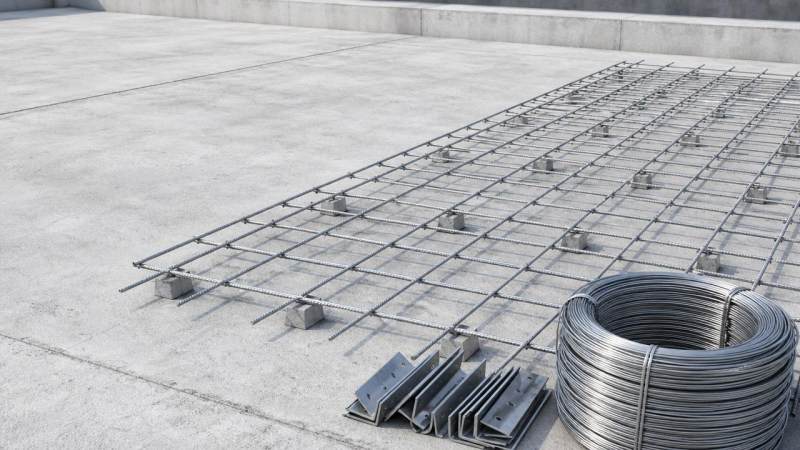
Steel Wire for concrete reinforcement is commonly used in slabs, walls, precast elements, tunnels, pavements, and light structural concrete. It can appear as straight wire, coiled wire, welded mesh, or tied reinforcement assemblies.
Its core function is to help concrete resist tensile stress. Concrete performs well under compression, but reinforcement wire improves crack distribution when shrinkage, temperature variation, or service loads occur.
What operators should recognize before installation
Before placement, operators should confirm 4 basic items: wire diameter, surface condition, specified spacing, and required concrete cover. These checks usually take minutes but prevent costly corrections.
- Diameter and grade must match drawings, purchase documents, or approved bar schedules.
- Wire should be free from heavy scaling, oil contamination, and deep mechanical damage.
- Spacing should be checked using gauges, measuring tapes, or approved layout marks.
- Concrete cover should match exposure conditions, often ranging from 20 mm to 50 mm in typical applications.
Common use scenarios and site priorities
Different concrete components require different handling priorities. The following table helps operators connect application scenarios with the most important reinforcement control points.
The key conclusion is simple: reinforcement wire must stay in the designed position. Even qualified steel loses effectiveness if it moves during walking, pouring, or vibration.
How to Select the Right Reinforcement Wire
Selecting Steel Wire for concrete reinforcement starts with drawings and specifications, not only price. Operators should not substitute diameter, grade, or mesh spacing without engineering approval.
For procurement teams, selection usually involves 5 practical factors: steel grade, diameter range, surface condition, delivery form, and compliance with ASTM, EN, JIS, or GB standards.
Important parameters for selection
The following table summarizes selection points that operators, supervisors, and buyers can discuss before ordering reinforcement materials for a concrete project.
A good selection process reduces both structural risk and operational waste. For large projects, confirm drawings, packing, labeling, and test reports before shipment.
Compatibility with surrounding structural steel
Concrete reinforcement often works around structural steel frames, embedded plates, supports, and temporary construction platforms. Coordination prevents conflicts during installation and concrete placement.
Hongteng Fengda supplies structural steel products for global construction and industrial projects, including angle steel, channel steel, steel beams, cold formed profiles, and customized components.
For example, Q195 angle steel can be used in building structures, engineering structures, transmission towers, cable trench supports, warehouse shelves, and other steel assemblies.
Available angle steel configurations include equal and unequal sections, with common thickness from 3 mm to 24 mm, width from 20 mm to 200 mm, and length options from 3 m to 19 m or customized.
Surface appearance can include pickled, black, bright, polishing, or blasting finishes. Materials such as A36, A53, Q235, and Q345 can support different project requirements.
Operator note for mixed steel systems
When reinforcement wire is placed near angle steel, brackets, or embedded supports, keep the required cover and clearance. Do not cut reinforcement wire without approval.
Handling, Storage, and Placement Procedures
Correct handling is essential for Steel Wire for concrete reinforcement because deformation, contamination, and incorrect positioning can affect performance before concrete reaches its designed strength.
On most job sites, reinforcement wire should follow a 6-step workflow: receiving, inspection, storage, cutting or straightening, placement, and final pre-pour verification.
Receiving and storage checklist
Operators should inspect each batch when it arrives. Labels, bundle condition, diameter, and quantity should match delivery documents before materials enter the working zone.
- Check supplier documents, including material grade, standard reference, and batch identification.
- Measure wire diameter at several points using a calibrated tool where required.
- Store bundles on timber, steel racks, or raised supports at least 100 mm above ground.
- Cover materials against rain while maintaining ventilation to reduce trapped moisture.
- Separate different grades or diameters to avoid wrong placement during busy shifts.
- Record nonconforming items immediately and isolate them from approved materials.
Placement practices for crack control
Steel Wire for concrete reinforcement should be placed according to layout drawings, with stable chairs, spacers, or supports. Walking directly on mesh can displace reinforcement.
Overlap length must follow project requirements. In many applications, laps are measured as multiples of wire diameter or specified mesh spacing, not guessed by eye.
Where concrete is pumped or vibrated, operators should observe reinforcement movement. A quick check after the first 2 to 3 cubic meters of concrete can prevent hidden defects.
Tying and fixing recommendations
- Use tie wire at intersections required by the method statement, especially near edges, openings, and construction joints.
- Avoid overtightening ties, which may distort mesh geometry or pull wire from its intended level.
- Maintain cover blocks at regular intervals, commonly 600 mm to 1000 mm depending on design and site practice.
- Recheck wire position after MEP conduits, sleeves, anchors, or embedded steel items are installed.
Quality Checks, Risks, and Troubleshooting
Quality control for Steel Wire for concrete reinforcement should combine document review, visual inspection, dimensional checks, and site supervision. No single check is enough.
A practical inspection routine can be completed in 3 stages: before placement, before concrete pouring, and after concrete placement begins.
Common site risks and corrective actions
The table below helps operators identify frequent reinforcement wire problems and choose reasonable corrective actions before they develop into structural or inspection issues.
Most reinforcement wire defects are preventable. The strongest control method is early detection, because correcting wire before pouring is faster than repairing hardened concrete.
Inspection points before concrete pouring
Before concrete is placed, supervisors should review at least 7 points: material grade, wire diameter, spacing, lap, cover, cleanliness, and stability under expected site movement.
If project specifications require test reports, the document should match batch markings. Any mismatch should be clarified before the reinforcement is accepted for use.
When to stop work and escalate
Operators should stop and report if they find unapproved cutting, major deformation, missing lap zones, unclear material identification, or reinforcement conflict with embedded steel components.
Procurement and Supplier Coordination for Reliable Results
Reliable use of Steel Wire for concrete reinforcement starts before materials arrive. Procurement teams should define specifications clearly and align supplier capability with project schedules.
For international buyers, 4 commercial factors are especially important: standard compliance, stable production capacity, packing protection, and dependable lead times for phased construction.
What to confirm before placing an order
- Confirm applicable standard, such as ASTM, EN, JIS, or GB, according to design documents.
- Specify diameter, delivery form, bundle weight, packing method, and required labeling format.
- Agree on inspection documents, including mill test certificate requirements where applicable.
- Plan delivery in batches if the project requires 2 to 4 construction stages.
- Check compatibility with other structural steel materials used on the same project.
Working with a structural steel manufacturer
Hongteng Fengda is a China-based structural steel manufacturer and exporter supporting construction, industrial, and manufacturing projects across North America, Europe, the Middle East, and Southeast Asia.
The company supplies angle steel, channel steel, steel beams, cold formed steel profiles, and customized structural steel components under major international standards.
For contractors and operators, this broader steel supply capability can simplify coordination when reinforcement work must align with steel frames, supports, racks, pipe supports, or OEM components.
Practical FAQ for Users and Operators
The following questions reflect frequent job-site concerns about Steel Wire for concrete reinforcement, especially where speed, inspection readiness, and material control must be balanced.
Can slightly rusted reinforcement wire still be used?
Light surface rust may be acceptable in many projects if it is not flaky, oily, or reducing section size. Heavy rust requires inspection and possible rejection.
How often should spacing be checked?
Spacing should be checked during layout, after tying, and before pouring. For large slabs, checking every few bays helps detect cumulative deviation early.
Is welded mesh always faster than loose wire?
Welded mesh can reduce placement time, but it may be less flexible around openings, embedded plates, and irregular shapes. Project geometry decides the best option.
What should operators do if reinforcement conflicts with conduits?
Operators should not cut reinforcement without approval. The conflict should be reported to the supervisor, engineer, or site coordinator for an approved adjustment.
Building Safer Concrete Work with Better Steel Coordination
Steel Wire for concrete reinforcement supports crack control, load distribution, and long-term durability when it is selected, stored, placed, and inspected correctly.
For users and operators, the most valuable habits are practical: verify documents, protect materials, maintain cover, control spacing, and report conflicts before pouring.
For global buyers, a dependable steel partner helps reduce sourcing risk, maintain delivery schedules, and coordinate reinforcement work with structural steel components.
Hongteng Fengda provides reliable steel products and customized solutions for construction and industrial projects. To discuss specifications, delivery needs, or project coordination, contact us for product details or a tailored steel solution.
Please give us a message


Please enter what you want to find