Choosing the right steel wire rope specifications directly affects load capacity, safety, service life, and project cost. For buyers, engineers, and operators comparing steel tube specifications, galvanized pipe specifications, steel bar cost, or rebar price list, understanding rope construction and material performance is essential. This guide explains the key factors that change load performance and supports smarter sourcing decisions in demanding industrial and construction applications.
Which Steel Wire Rope Specifications Matter Most for Load Performance?
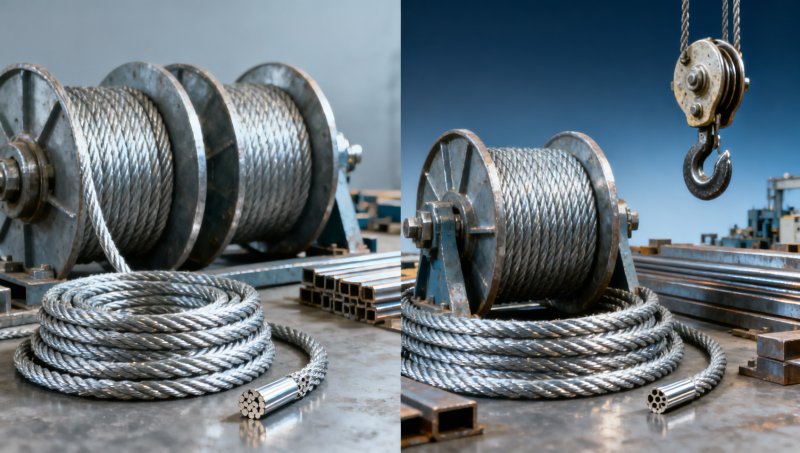
If your main concern is whether a steel wire rope can safely handle the required load, the answer is straightforward: yes, specifications can significantly change load performance. Two ropes may look similar in diameter, yet perform very differently in lifting, pulling, anchoring, or support applications.
The most important specifications usually include rope diameter, construction type, wire grade, core type, lay direction, surface finish, and safety factor. These factors influence not only the rope’s breaking strength, but also flexibility, fatigue resistance, abrasion resistance, crush resistance, and service life.
For practical decision-making, buyers and engineers should not evaluate steel wire rope by diameter alone. A larger diameter does not automatically mean better real-world performance. In many cases, the correct construction and material grade deliver safer and more cost-effective results than simply choosing a thicker rope.
For example, a rope used on cranes, hoists, winches, or marine systems may need a different balance of flexibility and strength than one used for static structural support. That is why specification review should always be linked to the actual operating conditions.
How Diameter, Construction, and Wire Grade Change the Actual Load Capacity
Diameter is the first specification most people check because it directly affects metallic cross-sectional area and nominal strength. In general, increasing diameter increases load capacity. However, it also adds weight, affects drum compatibility, and may reduce bending performance if the system uses small sheaves.
Construction refers to how the rope is built, such as 6x19, 6x36, 8x19, or compacted designs. This has a major effect on load behavior:
- Fewer, thicker outer wires usually improve abrasion resistance.
- More, finer wires usually improve flexibility and bending fatigue resistance.
- Compacted ropes often provide higher breaking loads and better surface contact.
Wire grade also matters. Higher tensile wire can increase minimum breaking force, but that does not automatically make it the best choice for every application. In some duty cycles, fatigue performance, shock loading, and wear resistance are more important than maximum theoretical strength.
For technical evaluators, the key question is not just “How strong is the rope?” but “How does this rope behave under the actual combination of tension, bending, vibration, environment, and operating frequency?” That question leads to better specification decisions and fewer field failures.
Why Core Type, Lay Pattern, and Surface Finish Affect Safety and Service Life
The rope core supports the strands and helps maintain shape under load. Common choices include fiber core and steel core.
- Fiber core generally offers better flexibility and can retain lubricant well.
- Steel core usually provides better support, higher strength, and improved resistance to crushing.
For heavy-duty lifting or multi-layer drum winding, steel core is often preferred because it maintains rope geometry more effectively under pressure.
Lay pattern affects how the rope handles bending and wear. Regular lay ropes are often easier to handle and more stable in operation, while lang lay ropes may offer better abrasion resistance in some applications. However, they can also be more prone to rotation or handling issues in certain systems.
Surface finish is another important variable. Bright rope may be suitable for indoor or controlled environments, while galvanized steel wire rope offers better corrosion resistance for outdoor, marine, humid, or chemically exposed conditions. If corrosion is part of the operating environment, surface protection should be treated as a load-performance issue, not only an appearance issue, because corrosion reduces effective metallic area and accelerates failure.
At this stage of evaluation, procurement teams and safety managers should compare the full life-cycle cost, not just unit price. A lower-cost rope with weak corrosion protection or poor fatigue performance can create much higher replacement, downtime, and inspection costs later.
How to Match Rope Specifications to Real Application Conditions
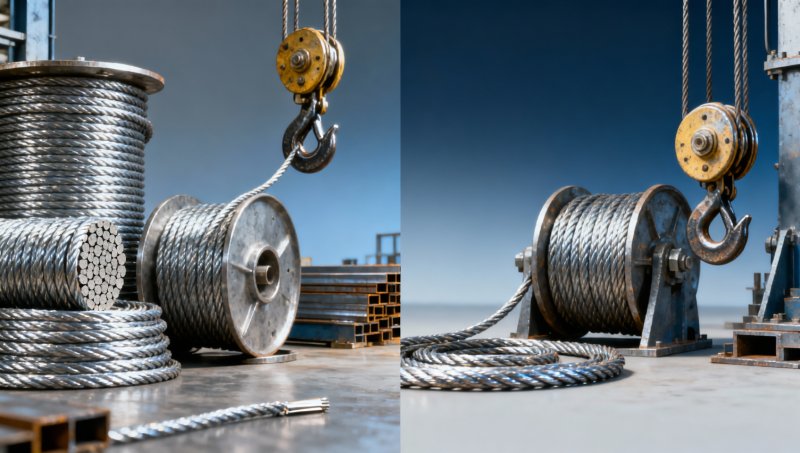
The best steel wire rope specifications depend on how and where the rope will be used. Matching the rope to the application is what turns technical data into safe performance.
Key operating conditions to review include:
- Working load and peak load
- Static or dynamic loading
- Shock loading frequency
- Sheave and drum diameter
- Bending cycles
- Outdoor exposure, moisture, salt, or chemicals
- Temperature range
- Inspection and maintenance conditions
For example, in construction lifting, ropes may face repeated bending and variable loads, so fatigue resistance and correct lubrication are critical. In mining or port handling, abrasion and crushing resistance may take priority. In bridge or structural support systems, long-term stability, corrosion resistance, and predictable elongation may be more important than extreme flexibility.
In broader project procurement, steel buyers often evaluate multiple load-bearing products together. A contractor sourcing rope systems may also be comparing structural sections, pipes, and rail products for related infrastructure work. For projects involving transport or structural guidance systems, Rail options are also selected based on load transfer, dimensional accuracy, material grade, and service environment. Available grades such as U74, U71Mn, PD2, PD3, BNbRE, Q235, 55Q, 50Q, U71, and 45Mn are used in applications including railway rail, bridge railings, and deck handrails, with specifications ranging from 4kg/m to 50kg/m and QU series models. This kind of specification-based thinking is the same principle buyers should apply when selecting steel wire rope: real performance depends on matching material, dimensions, and duty conditions to the job.
What Buyers, Engineers, and Safety Teams Should Check Before Ordering
Before placing an order, it is important to confirm more than a catalog description. The following checklist helps reduce technical and commercial risk:
- Confirm required minimum breaking force and working load limit
- Verify rope construction and core type
- Check applicable standards and test documentation
- Review coating or galvanization requirements
- Confirm tolerance, length, lubrication, and packaging needs
- Match rope design to sheave, drum, and equipment geometry
- Define inspection frequency and replacement criteria
- Check supplier consistency, traceability, and export capability
For procurement and management teams, supplier reliability is as important as product specification. Stable quality control, consistent lead times, and compliance with international standards help prevent hidden costs in installation, downtime, claims, and rework.
For financial approvers, the best purchasing decision is usually the one that balances safety margin, expected service life, and total operational cost. The cheapest option may not be the most economical if it shortens replacement cycles or increases operational risk.
Common Specification Mistakes That Lead to Poor Load Performance
Several common mistakes can reduce performance even when the nominal specification appears acceptable:
- Choosing rope by diameter only
- Ignoring dynamic load conditions
- Using the wrong core for drum pressure or crushing conditions
- Overlooking corrosion exposure
- Using unsuitable sheave or drum diameters
- Failing to apply the correct safety factor
- Comparing price without checking test standards or quality consistency
These errors often cause premature wear, wire breaks, deformation, reduced fatigue life, or unsafe operation. In many cases, the root problem is not manufacturing defect but specification mismatch.
That is why technical review should involve not only purchasing staff, but also operators, engineers, and safety personnel. Cross-functional evaluation improves the chance of selecting a rope that performs well in service rather than only on paper.
Conclusion: Better Steel Wire Rope Specifications Lead to Better Project Outcomes
Steel wire rope specifications change load performance in very real ways. Diameter, construction, wire grade, core type, lay pattern, and surface finish all influence how much load a rope can carry and how safely it performs over time. The right choice depends on the full operating context, not just a basic size comparison.
For buyers, engineers, and project managers, the smartest approach is to evaluate load capacity together with fatigue resistance, corrosion resistance, equipment compatibility, maintenance needs, and total life-cycle cost. When these factors are matched correctly, steel wire rope becomes safer, lasts longer, and delivers better value across the project.
In short, better specification decisions reduce sourcing risk, improve operational safety, and support more reliable industrial and construction performance.
Please give us a message


Please enter what you want to find