Steel wire mesh demand is shifting toward safer and smarter use
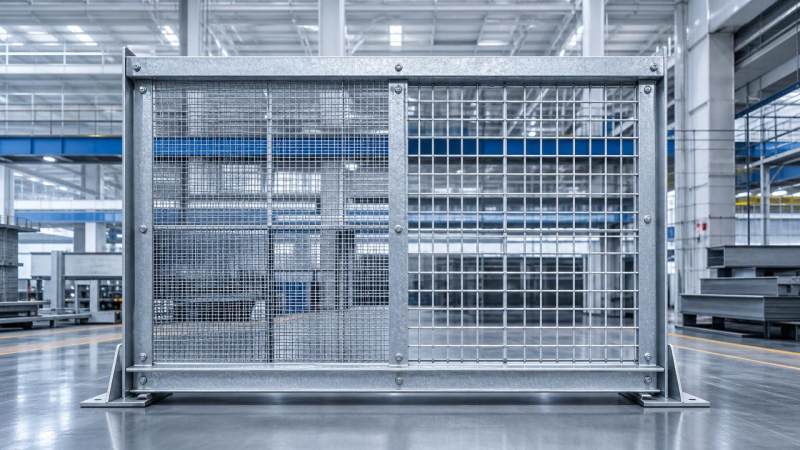
Steel wire mesh is no longer chosen only by price or appearance.
Across construction, processing, and industrial support, performance requirements are rising quickly.
Openings, wire diameter, corrosion resistance, and load limits now shape purchasing decisions more directly.
This matters because the wrong steel wire mesh can reduce safety, shorten service life, and increase replacement costs.
Steel wire mesh is widely used in construction, safety barriers, filtration, and industrial support systems, but choosing the right type depends on openings, wire diameter, and load limits.
For operators and project users, understanding these factors helps improve safety, performance, and cost control.
This guide explains how steel wire mesh works in practical applications and how to select the right specification for reliable results.
Use conditions are becoming more demanding across steel applications
In many projects, steel wire mesh now serves more than a simple covering or partition function.
It often supports guarding, screening, reinforcement, storage, enclosure, or load-bearing tasks.
That shift changes how openings and load limits must be evaluated.
Large openings may improve airflow and visibility, but they can reduce containment strength.
Smaller openings can improve filtering, safety control, and debris retention, but add weight and material cost.
At the same time, global projects increasingly require compliance with ASTM, EN, JIS, and GB related expectations.
This has increased attention on steel quality, coating consistency, weld strength, and dimensional tolerance.
Why these changes are happening
- Higher safety standards in walkways, machine guards, and perimeter barriers.
- Greater need for corrosion protection in outdoor and humid environments.
- Pressure to reduce maintenance and extend service cycles.
- More customized structural designs that combine mesh with steel framing systems.
- Broader use of steel wire mesh in logistics, factories, and equipment platforms.
Openings and wire diameter now define real-world performance
When selecting steel wire mesh, opening size should be reviewed together with wire diameter.
Looking at only one factor creates risk.
A wide opening with thick wire may still handle moderate impact or support loads.
A narrow opening with thin wire may improve screening but fail under repeated force.
How opening size changes application value
Wire diameter directly affects tensile strength, rigidity, and deformation resistance.
Heavier wire usually improves load performance, but also increases cost and installation effort.
This is why steel wire mesh selection should always match actual duty conditions.
Load limits are receiving more attention in integrated steel systems
Load limits are one of the most misunderstood parts of steel wire mesh use.
Many assume the mesh itself carries the full force.
In practice, performance depends on span, frame support, fastening method, and impact direction.
A properly framed panel often performs far better than loose mesh with the same wire specification.
For this reason, steel wire mesh is often paired with structural sections for better stiffness and stability.
In support frames, purlins, wall beams, and lightweight structural assemblies, matching mesh with reliable steel sections improves safety margins.
A practical option in these systems is Channel Steel Supplier, especially where high strength, weldability, and anti-corrosion matter.
Common grades include Q195, Q235, Q235B, Q345B, and stainless options like 304 or 316.
Typical thickness ranges from 1.5mm to 25mm, with lengths of 6m to 12m.
These sections are widely used in construction, automobile manufacture, brackets, mechanical columns, and lightweight roof structures.
Key factors that influence mesh load capacity
- Wire material and tensile strength
- Welded or woven mesh structure
- Mesh opening size and wire diameter combination
- Panel span between supports
- Frame stiffness and anchor quality
- Static load, dynamic load, or impact load conditions
- Surface treatment and long-term corrosion exposure
Different applications are changing what steel wire mesh must deliver
The same steel wire mesh specification does not fit every environment.
Application-specific expectations are getting sharper.
Construction and enclosure systems
Projects often require steel wire mesh for reinforcement, partitioning, guarding, and infill panels.
Here, dimensional consistency and frame compatibility are critical.
Industrial safety and machine protection
Safety barriers need reliable impact resistance, clear visibility, and secure mounting points.
Poorly selected steel wire mesh may deform and reduce protection value.
Filtration and screening uses
Fine mesh applications depend heavily on opening accuracy and corrosion resistance.
In these cases, the wrong coating or alloy can quickly shorten service life.
Storage, racks, and support platforms
These uses place more focus on distributed load and long-term deformation.
The mesh panel and support section must work as one system.
The most useful selection priorities are becoming clearer
Current market direction shows that better decisions come from matching specification to risk level.
The following points deserve close attention before ordering steel wire mesh.
- Define whether the mesh is for containment, support, screening, or protection.
- Check opening size against object size, airflow, and visibility needs.
- Review wire diameter together with expected load and impact frequency.
- Confirm coating type for indoor, outdoor, marine, or chemical exposure.
- Evaluate frame material, especially for larger panels and longer spans.
- Request standard compliance and tolerance information before production.
- Compare lifecycle cost, not only initial steel wire mesh price.
A practical response is to compare conditions before specification
A strong supplier relationship also improves outcomes.
With modern manufacturing and strict quality control, Hongteng Fengda supports global steel projects with stable production, standard compliance, and customized solutions.
This matters when steel wire mesh must align with broader structural steel systems.
The next step is to match steel wire mesh to the real service environment
Steel wire mesh performs best when specification follows function, not assumption.
Openings affect control, airflow, and visibility.
Wire diameter affects strength and rigidity.
Load limits depend on the full system, including support spacing and steel framing.
Before final selection, compare operating conditions, expected loads, corrosion risk, and installation method.
That approach reduces failure risk, improves service life, and helps control total project cost.
If the application also requires integrated structural support, reviewing mesh together with framing components can deliver more reliable results.
Please give us a message


Please enter what you want to find