Steel Sheet Pile for retaining walls is a critical solution for excavation support, waterfront structures, basements, and infrastructure projects where lateral earth pressure, groundwater control, and installation efficiency must be carefully evaluated. For technical assessment teams, selecting the right sheet pile profile involves more than comparing section modulus—it requires reviewing soil conditions, corrosion allowance, driving performance, connection integrity, and compliance with ASTM, EN, JIS, or GB standards. This article outlines key design notes to support safer specification, better procurement decisions, and more reliable project execution.
In B2B steel procurement, sheet pile decisions often sit between geotechnical design, structural verification, site logistics, and commercial risk control. A technically suitable pile must satisfy stability, durability, drivability, and availability requirements without creating avoidable schedule pressure.
Design Context for Retaining Wall Sheet Piles
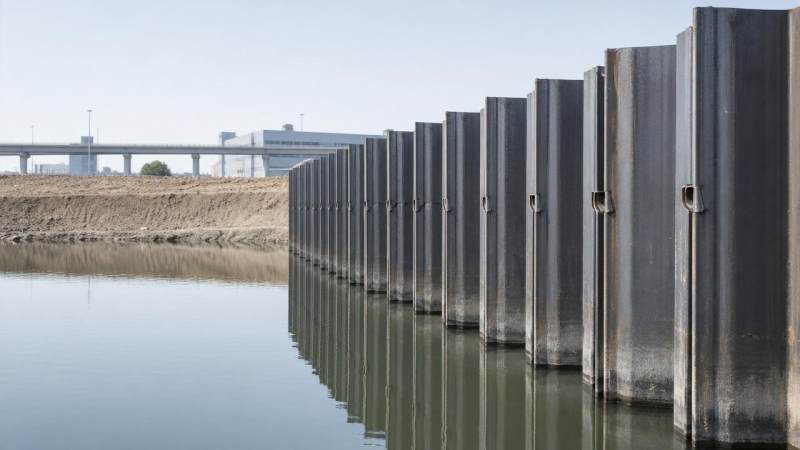
Steel Sheet Pile for retaining walls is commonly specified for temporary excavations, permanent quay walls, flood protection, underground basements, bridge abutments, and trench support. Each application imposes different requirements on section stiffness, interlock performance, corrosion protection, and installation method.
For technical evaluators, the first step is to define whether the wall is temporary, semi-permanent, or permanent. A 3-month excavation support system may tolerate different corrosion assumptions than a 50-year waterfront structure exposed to chloride-rich water.
Typical Retaining Wall Applications
The same sheet pile profile can behave very differently depending on embedment depth, surcharge load, groundwater level, and installation tolerance. Early classification helps reduce redesign cycles and procurement changes after tender release.
- Excavation support for basements, utility trenches, and cut-and-cover construction.
- Waterfront retaining walls for ports, riverbanks, cofferdams, and flood barriers.
- Infrastructure retaining systems near roads, railways, bridges, and industrial plants.
- Temporary earth retention where extraction, reuse, and driving damage must be assessed.
Key Project Inputs Before Profile Selection
Before comparing hot-rolled or cold-formed sheet piles, design teams should confirm at least 6 technical inputs: soil stratigraphy, groundwater level, retained height, surcharge, design life, and installation constraints.
A retaining height of 4 m, 8 m, or 12 m can lead to completely different wall behavior. Cantilever walls may suit lower retained heights, while anchored or strutted systems are often required for deeper excavations.
For procurement teams, these inputs also influence steel grade, pile length, coating scope, delivery batching, and inspection documents. Missing one parameter can increase lead-time risk by 2–4 weeks if replacement profiles are needed.
Structural Checks and Section Selection
A reliable Steel Sheet Pile for retaining walls must satisfy bending, shear, deflection, embedment, and global stability requirements. Section modulus is important, but it is not the only indicator of performance.
Technical assessment teams usually compare elastic section modulus, moment of inertia, steel grade, web thickness, flange geometry, interlock type, and pile weight per meter. These values directly affect both structural capacity and driving behavior.
Core Engineering Parameters
The following table summarizes common evaluation parameters used during preliminary specification. Actual design values should be verified by the project engineer according to soil investigation data and the applicable design code.
The key conclusion is that capacity, stiffness, and installation practicality must be reviewed together. A heavier pile may improve bending resistance, but it may also require larger cranes, stronger vibratory hammers, or longer fabrication scheduling.
Cantilever, Anchored, and Braced Systems
Cantilever sheet pile walls are simpler to install but become less efficient as retained height increases. For deeper cuts, anchor rods, walers, struts, or tie-back systems can reduce bending moment and deflection.
A preliminary design may consider 3 structural arrangements: cantilever for shallow work, anchored walls for waterfront or deep excavations, and internally braced systems where property boundaries restrict anchor installation.
Deflection Control
Deflection limits are often governed by nearby assets rather than steel strength. In urban basement works, movement control may be more critical than reaching the maximum allowable stress of the selected profile.
Soil, Groundwater, and Corrosion Considerations
Soil conditions strongly influence the design of Steel Sheet Pile for retaining walls. Dense sand, soft clay, fill material, gravel lenses, and weathered rock can each require different driving strategies and embedment assumptions.
Groundwater adds hydrostatic pressure and may create seepage or piping risks. For cofferdams and basement excavations, water tightness at the interlocks and toe penetration into low-permeability layers are essential review points.
Corrosion Allowance and Protective Measures
Corrosion allowance is usually determined by exposure environment, design life, inspection access, and coating strategy. A temporary wall may use uncoated piles, while marine permanent works may require coating, cathodic protection, or thicker sections.
For long-service structures, technical teams may evaluate loss of thickness over 25, 50, or 75 years. Conservative corrosion allowances help prevent underestimation of bending capacity at the end of design life.
Related Stainless Components in Steel Projects
Although carbon steel sheet piles dominate retaining wall structures, stainless components may appear in accessories, fabrication fixtures, drainage details, architectural connections, and exposed urban decoration interfaces where corrosion resistance or formability is needed.
For such supporting requirements, Hongteng Fengda also supplies Stainless Square steel rod in 201 stainless steel, with square bar sizes from 18 mm to 47 mm and customized lengths from 1 m to 6 m.
This material offers tensile strength of at least 520 MPa, yield strength of at least 275 MPa, elongation around 55–60%, hardness not exceeding 183 HB, and practical formability for construction and manufacturing uses.
Specification Boundaries
Stainless bars should not be treated as a substitute for engineered sheet pile profiles. They are better considered as complementary steel items when a project requires rods, bars, trims, or fabricated components under ASTM, AISI, JIS, GB, DIN, or EN references.
Installation Feasibility and Site Risk Control
Even a correctly designed Steel Sheet Pile for retaining walls can fail commercially if installation constraints are ignored. Driving method, equipment access, vibration limits, noise control, and underground obstructions should be checked before procurement.
Common installation methods include vibratory driving, impact driving, hydraulic pressing, and pre-augering. The best method depends on soil density, pile length, environmental restrictions, and allowable disturbance to nearby structures.
Driving Performance Checklist
A practical site review should include 5 installation factors: hammer capacity, pile straightness, interlock lubrication, refusal criteria, and monitoring plan. These factors reduce the risk of damaged interlocks or incomplete penetration.
- Confirm crane radius, lifting height, and safe working platform conditions.
- Match hammer energy or vibratory force to pile length and soil resistance.
- Inspect interlocks before driving and after delivery unloading.
- Set acceptable verticality tolerance, commonly reviewed per project requirement.
- Record penetration rate, refusal depth, and abnormal noise or deviation.
Common Site Risks
Hard inclusions, boulders, old foundations, and dense gravel can increase driving resistance. If not identified during investigation, these conditions may cause pile buckling, interlock tearing, or delays of several days per work zone.
In vibration-sensitive areas, hydraulic pressing may be preferred, although productivity can be lower than vibratory driving. Technical evaluation should balance installation speed, environmental limits, and equipment availability.
Standards, Procurement, and Quality Documentation
For international projects, steel sheet pile procurement must align design intent with measurable acceptance criteria. Standard reference, grade, dimensional tolerance, mill test certificate, and inspection scope should be clear before contract approval.
Hongteng Fengda manufactures and exports structural steel products from China, supporting global buyers with standard specifications and customized solutions under ASTM, EN, JIS, and GB requirements where applicable.
Procurement Decision Matrix
Technical buyers often compare suppliers using engineering, production, and logistics criteria. The table below outlines practical checkpoints for Steel Sheet Pile for retaining walls and related structural steel orders.
The most useful supplier is not simply the one offering the lowest unit price. A dependable partner should provide traceable material, stable lead times, clear communication, and practical support when specifications change.
Quality Documents to Request
For technical review, typical documents include mill test certificates, packing lists, dimensional inspection records, coating reports if applicable, and shipment photos. For larger projects, a pre-shipment inspection can be arranged before loading.
Procurement teams should also define marking rules, bundle weight limits, and unloading sequence. A clear bundle plan can save 1–2 handling steps per delivery and reduce confusion at congested construction sites.
Practical Specification Notes for Technical Teams
A concise specification helps align designers, contractors, manufacturers, and inspectors. It should state project application, design standard, pile type, grade, length, quantity, coating requirement, testing scope, and delivery destination.
For Steel Sheet Pile for retaining walls, ambiguous wording can create costly interpretation gaps. For example, “suitable sheet pile” is weaker than specifying section properties, steel grade, allowable tolerance, and required documentation.
Recommended 6-Step Review Process
A structured technical review reduces sourcing risk before purchase order confirmation. The following 6-step approach is practical for contractors, EPC teams, distributors, and engineering procurement departments.
- Confirm design assumptions, including retained height, groundwater, surcharge, and design life.
- Select profile based on moment capacity, stiffness, embedment, and interlock requirements.
- Check installation feasibility against hammer capacity, access, vibration limits, and soil resistance.
- Define corrosion allowance, coating, or protection measures for the exposure category.
- Verify standards, mill certificates, dimensional tolerance, and inspection points.
- Align delivery schedule, packing method, shipping route, and site unloading sequence.
Frequent Specification Mistakes
One common mistake is selecting only by weight per meter. Weight matters for cost and handling, but it does not fully describe bending capacity, stiffness, interlock durability, or compatibility with existing wall systems.
Another mistake is ignoring extraction requirements for temporary works. If piles must be reused, driving damage, interlock wear, and coating damage should be assessed before assuming recovery value.
When to Consult the Manufacturer Early
Manufacturer consultation is valuable when quantities exceed several hundred tons, when non-standard lengths are required, or when delivery must be coordinated across multiple construction stages.
Early communication also helps identify available profiles, equivalent standards, cutting optimization, and realistic production cycles. This is especially important for cross-border projects serving North America, Europe, the Middle East, and Southeast Asia.
Working with a Structural Steel Export Partner
Hongteng Fengda supports buyers who need structural steel products, including angle steel, channel steel, steel beams, cold formed steel profiles, and customized components for construction and industrial applications.
For retaining wall projects, the value of a reliable supplier is measured in 4 practical areas: consistent steel quality, responsive specification review, predictable lead time, and export documentation accuracy.
What Technical Buyers Can Expect
A professional supply process begins with drawings, specifications, project location, quantity, standard requirement, and expected delivery schedule. From there, the manufacturer can confirm feasibility and provide a suitable quotation basis.
- Support for standard and OEM structural steel requirements.
- Quality control aligned with major international standards where applicable.
- Production planning for stable supply and dependable delivery windows.
- Export experience for global construction, manufacturing, and infrastructure projects.
Steel Sheet Pile for retaining walls should be evaluated as part of a complete engineering and procurement system, not as an isolated commodity. Soil behavior, section properties, corrosion allowance, installation method, and documentation all influence project success.
If your team is reviewing sheet pile options, structural steel components, or customized steel supply for an upcoming project, contact Hongteng Fengda to discuss specifications, delivery requirements, and tailored sourcing solutions.
Please give us a message


Please enter what you want to find