Understanding Steel Sheet Pile technical specifications is essential for technical evaluators comparing load performance, section geometry, steel grade, corrosion resistance, and compliance standards.
For global construction and infrastructure sourcing, the right specifications directly affect structural safety, installation efficiency, lifecycle cost, and project risk.
This guide explains the Steel Sheet Pile technical specifications that matter most, and how to assess them with practical engineering and sourcing logic.
What are the most important Steel Sheet Pile technical specifications?
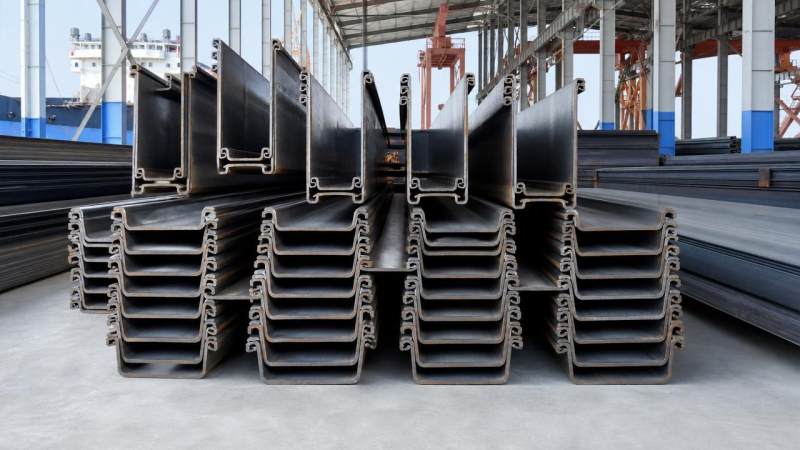
The most important Steel Sheet Pile technical specifications usually fall into five groups: section shape, section modulus, steel grade, dimensions, and corrosion performance.
These parameters determine whether a sheet pile wall can resist bending, transfer loads, lock tightly, and survive the project environment.
Section geometry includes profile type, effective width, web depth, flange shape, and interlock design.
Common profiles include U-type, Z-type, straight web, and trench sheets. Each serves different structural and installation needs.
Section modulus is one of the key Steel Sheet Pile technical specifications because it reflects bending resistance.
A higher section modulus usually supports higher earth and water pressure, especially in deep excavation or quay wall applications.
Steel grade affects yield strength, tensile strength, weldability, and toughness. Typical references include ASTM, EN, JIS, and GB standards.
Dimensional tolerances also matter. Inaccurate width, thickness, or interlock alignment can slow installation and reduce wall integrity.
For marine or corrosive ground conditions, coating systems, steel chemistry, and corrosion allowance must be reviewed early.
How do load performance and section properties affect selection?
Many comparisons begin with price, but engineering reliability starts with section properties and expected loading conditions.
Important design data includes section modulus, moment of inertia, unit weight, pile length, and steel yield strength.
These Steel Sheet Pile technical specifications help estimate wall deflection, bending stress, and embedment behavior.
For temporary shoring, a lighter section may be acceptable if the excavation depth is limited and the soil is stable.
For permanent retaining structures, stronger sections often provide better durability and lower lifecycle risk.
Interlock strength should not be overlooked. Weak interlocks can lead to leakage, misalignment, or reduced composite wall performance.
Driving method also influences selection. Vibratory driving, impact hammers, and press-in methods impose different demands on pile shape and straightness.
When load-bearing surfaces are needed around equipment platforms or site access areas, related steel products may also be used together.
One practical complement is S335JR Patterned steel plate, valued for anti-skid performance and durable patterned surfaces.
It is available in 2-8mm thickness, widths from 600mm to 1800mm, and lengths from 2m to 12m or custom requirements.
With grades such as S335JR, Q235B, A36, 235JR, and SS400, it fits transportation, construction, machinery, decoration, and shipbuilding applications.
Which standards and material grades should be checked first?
Standards define the baseline for material chemistry, mechanical properties, tolerances, testing, and marking.
That is why compliance is among the most important Steel Sheet Pile technical specifications in international trade.
Frequently referenced standards include ASTM, EN, JIS, and GB. Project regions often specify one system, but equivalency review may still be needed.
The steel grade should match structural demand, welding requirements, and service temperature.
A higher strength grade may improve capacity, but it should not create fabrication or brittleness concerns.
Mill test certificates are essential. They confirm chemistry, yield strength, tensile strength, elongation, and inspection results.
Third-party certifications can add confidence, especially for exported structural steel products used in regulated markets.
Hongteng Fengda, a structural steel manufacturer and exporter from China, supplies steel products under strict quality control and major international standards.
Its production supports ASTM, EN, JIS, and GB requirements, helping reduce sourcing uncertainty across construction and industrial projects.
How should corrosion resistance and lifecycle cost be evaluated?
Corrosion is often underestimated during early comparison, yet it strongly affects maintenance cost and service life.
The right Steel Sheet Pile technical specifications must reflect the actual environment, not only the initial structural calculation.
Key conditions include seawater exposure, tidal zones, acidic soil, stray current, groundwater chemistry, and abrasion from sediment.
Common protection methods include corrosion allowance, coatings, galvanizing, cathodic protection, and splash-zone reinforcement.
A lower purchase price can become expensive if coating failure, section loss, or frequent repairs appear early.
Lifecycle evaluation should compare installation cost, expected maintenance, inspection intervals, and replacement risk.
For permanent waterfront or flood-control structures, corrosion design should be reviewed together with service-life targets.
It is also useful to confirm whether repaired, reused, or mixed-source piles are acceptable for the project specification.
What common mistakes lead to poor sheet pile decisions?
A frequent mistake is comparing only nominal size while ignoring section modulus and interlock performance.
Another is assuming all grades with similar names have equal mechanical properties or weldability.
Some buyers focus on tonnage price, but overlook driving efficiency, splicing needs, and loss from damaged interlocks.
Inconsistent tolerances can create field delays, especially when long pile runs require accurate alignment.
Reuse assumptions are another risk. Used sheet piles may have hidden wear, reduced section, or distorted locks.
Documentation gaps are also costly. Missing certificates, unclear origin, or incomplete inspection records can delay approval.
Below is a practical comparison table for reviewing Steel Sheet Pile technical specifications before commitment.
How can Steel Sheet Pile technical specifications be reviewed more efficiently?
A structured review process improves speed and reduces technical misunderstanding between design, procurement, and production.
Start with the project function: temporary shoring, permanent wall, marine edge, cofferdam, or flood barrier.
Then match the required Steel Sheet Pile technical specifications to that function.
Use this quick checklist:
- Confirm design loads, soil data, water conditions, and service life.
- Review section type, modulus, inertia, and unit weight.
- Check steel grade, standard system, and impact or welding requirements.
- Verify dimensions, tolerances, straightness, and interlock compatibility.
- Assess corrosion allowance and protective treatment.
- Request mill certificates, inspection records, and delivery lead time.
When supply stability matters, experienced structural steel exporters can simplify coordination across standards, production, and shipping schedules.
That support becomes especially valuable for projects spanning North America, Europe, the Middle East, and Southeast Asia.
Final takeaway: which specifications matter most before ordering?
The best decisions come from balancing engineering suitability, compliance, durability, and supply reliability.
In practice, the most critical Steel Sheet Pile technical specifications are section properties, steel grade, dimensional accuracy, interlock quality, and corrosion strategy.
If these items are reviewed carefully, project teams can improve safety, reduce installation issues, and control long-term cost.
For steel projects requiring dependable quality, international standard compliance, and customized structural solutions, a qualified Chinese structural steel supplier can provide strong technical and delivery support.
Use this guide as a practical reference, then compare data sheets, certificates, and application needs before final selection.
Please give us a message


Please enter what you want to find