Understanding steel roofing benefits is useful when roof decisions need to balance lifespan, energy performance, appearance, and long-term cost. For homes, warehouses, factories, retail sites, and public buildings, steel roofing is no longer a niche option. It has become a practical part of modern steel-based construction, especially where durability, predictable maintenance, and dependable supply matter.
Why steel roofing draws attention in today’s building market
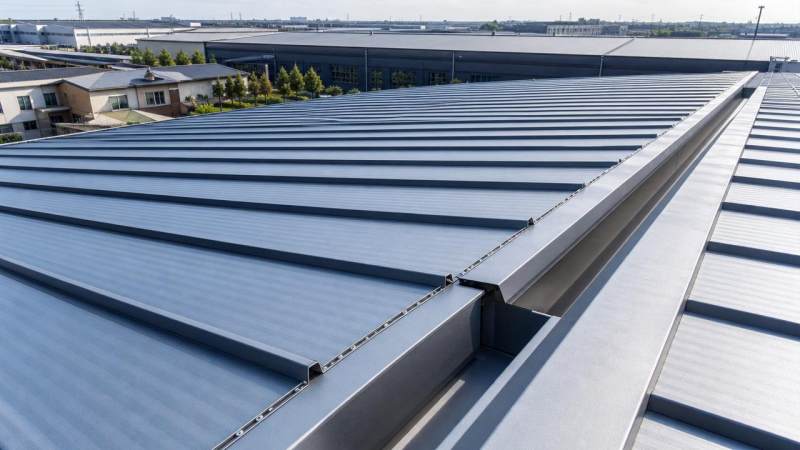
Roofing has moved beyond simple weather protection. It now affects operating cost, thermal comfort, project speed, and even structural design choices.
That is why steel roofing benefits are discussed more often in both residential and commercial planning. A roof system must perform for years, not just pass installation.
In steel-intensive projects, roofing also connects to the wider frame, purlin, and cladding system. Material compatibility becomes a real advantage.
This is especially relevant for projects supplied through experienced structural steel partners. Hongteng Fengda, a structural steel manufacturer and exporter from China, serves global construction and industrial projects with standardized and customized steel solutions that support stable execution.
What steel roofing really means in practice
Steel roofing usually refers to formed steel panels or sheets used as the outer roof covering. These can be corrugated, standing seam, ribbed, or tile-look profiles.
The base steel is often protected by galvanized or aluminum-zinc coatings. Paint systems add another defense layer while improving appearance and weather stability.
So when people talk about steel roofing benefits, they are not only talking about metal strength. They are also referring to coating technology, profile design, fastening method, and installation quality.
The core value behind the material
- Long service life under proper design and maintenance
- Lower dead load than many traditional roof materials
- Good resistance to wind, impact, and harsh weather
- Fast installation over large roof areas
- Consistent factory-made quality
Where steel roofing benefits are most visible
The advantages of steel roofing become clearer when viewed by use case. Different buildings value different outcomes.
For homes, the question is often long-term upkeep. For industrial sites, it is usually performance, speed, and total system efficiency.
The benefits that usually matter most
Many articles mention steel roofing benefits in general terms. The more useful approach is to look at which benefits affect real project outcomes.
Durability and weather resistance
A properly specified steel roof handles rain, snow, UV exposure, and wind very well. High-strength panels also perform well in demanding climates.
Lower structural burden
Steel roofing is lighter than many concrete or clay alternatives. That can simplify roof support design and reduce loads on the main structure.
Energy performance
Reflective coatings can help reduce solar heat gain. In warm regions, this may improve indoor comfort and reduce cooling demand.
Maintenance efficiency
Compared with brittle or porous roof materials, coated steel can be easier to inspect, clean, and maintain over time.
Design flexibility
Modern finishes allow different colors, gloss levels, and profiles. This matters in housing, retail, schools, and visible public-facing projects.
A practical roofing example in the middle of specification work
When evaluating steel roofing benefits, coated sheet selection deserves close attention. The roof panel is not only a cover layer. It is also a performance layer.
A common option for roofing and wall systems is PPGI Steel Sheet, used in construction, agricultural buildings, residences, commercial sites, and public buildings.
It is available on galvanized iron or aluminum-zinc steel bases, with thickness from 0.2mm to 1.2mm and widths from 600mm to 1250mm.
Paint options such as PE, SMP, HDP, and PVDF allow different weathering and appearance targets. Top and back coating thickness also affect durability expectations.
In real roofing use, its appeal comes from corrosion resistance, heat resistance, light weight, customizable RAL colors, and easier installation compared with heavier conventional materials.
For buyers comparing systems, details like primer type, coating build, and profile form can matter as much as panel price.
When steel roofing makes the most sense
Steel roofing is not automatically the best answer for every building. It makes the most sense when project priorities align with its strengths.
- The project needs long service life with predictable maintenance
- Dead load should stay low for structural efficiency
- Construction speed matters
- The building is exposed to severe weather
- Appearance and color retention are important
- Large roof areas require consistent factory quality
It is especially suitable for steel-framed industrial and commercial buildings. In those cases, roofing and structure can be planned as one coordinated system.
For residential applications, it often makes sense where owners want fewer replacements, better storm performance, and cleaner long-term maintenance.
What should be checked before choosing a steel roof
The best steel roofing benefits appear only when the specification matches the environment. A good-looking panel with the wrong coating may underperform.
Key decision points
- Local climate, including salt, humidity, heat, and rainfall
- Base metal type and corrosion protection level
- Paint system durability and color retention needs
- Panel profile, slope, drainage, and fastening details
- Compatibility with insulation and support members
- Compliance with ASTM, EN, JIS, or GB requirements
This is one reason supplier capability matters. Consistent production, strict quality control, and standard compliance reduce risk before materials reach the jobsite.
Companies with broader structural steel experience can also support better coordination between roofing sheets, secondary steel, and custom components.
How to judge value beyond the initial price
A low purchase price does not always mean a better roof. Roofing should be judged over its service period, not only at order stage.
When comparing options, include maintenance frequency, replacement risk, structural implications, installation speed, and energy impact. That gives a more accurate picture.
Many steel roofing benefits become financially visible only after several years. Reduced repairs and fewer disruptions can outweigh a higher starting cost.
A sensible next step for evaluation
Steel roofing works best when the material, coating, profile, and supporting structure are considered together. That is the difference between a roof that merely covers and one that performs.
If steel roofing benefits are part of an upcoming decision, start by mapping climate conditions, design life, appearance expectations, and structural load limits.
Then compare panel specifications, coating systems, and supply reliability in the same framework. That approach usually leads to a clearer and more durable choice.
Please give us a message


Please enter what you want to find